Your Recipes Deserve to Be Found by Google and AI
Here’s something that might challenge you…
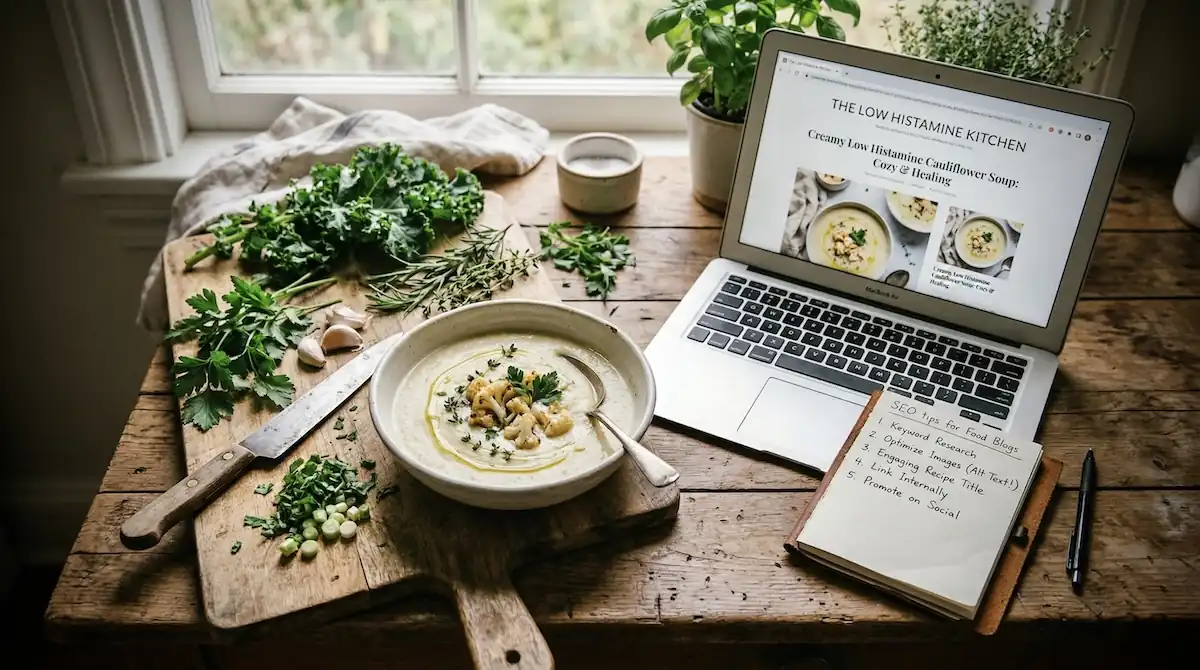
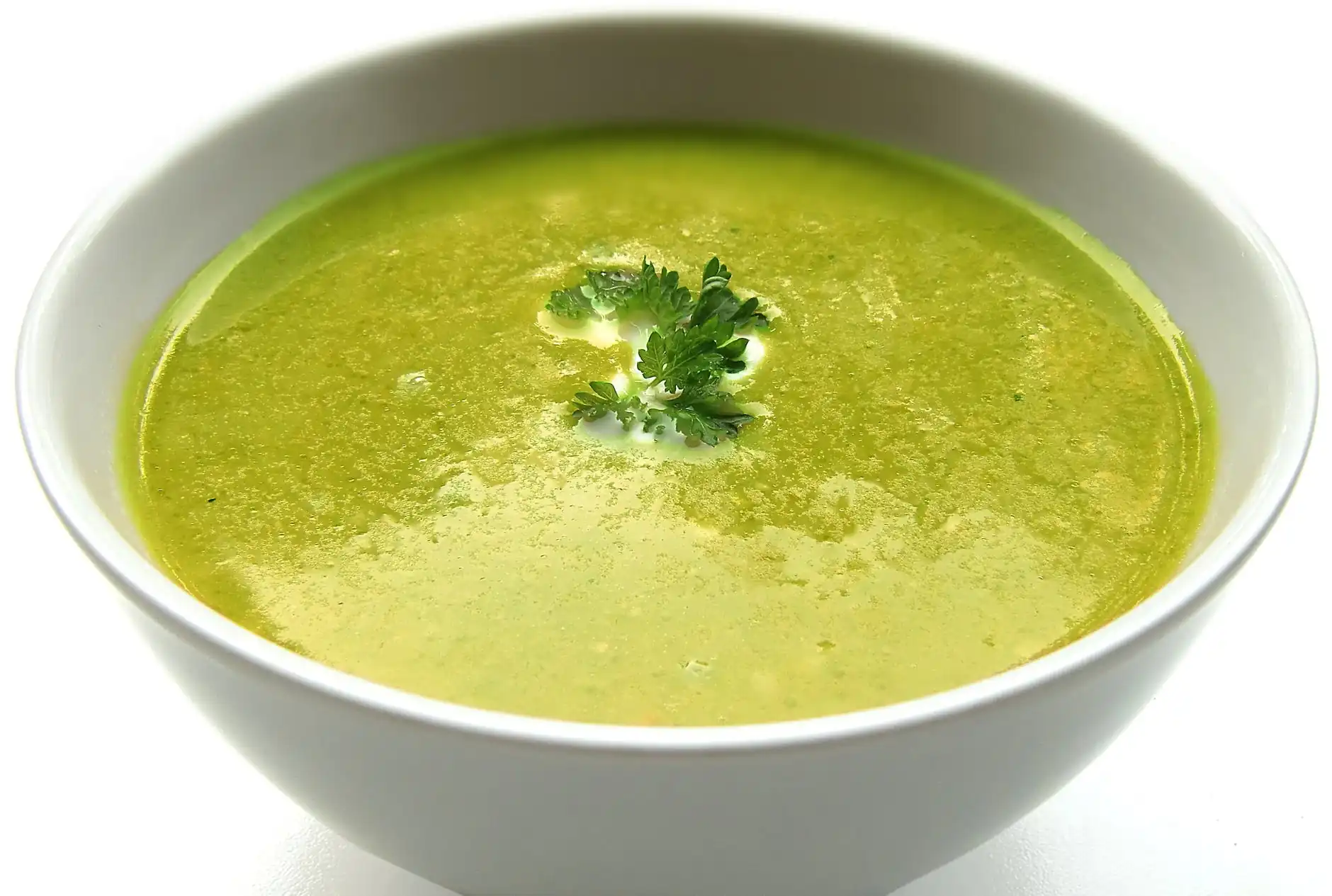
You spend 45 minutes lovingly crafting a low histamine cauliflower and kale soup. You photograph it beautifully. You write up the recipe with care, add your clinical insights about why it works for your clients, and hit publish.
And then… crickets.
Meanwhile, some random food blogger with zero clinical training ranks on page one for the same recipe. Worse still, when someone asks ChatGPT or Perplexity for a “low histamine dinner recipe”, your beautiful creation doesn’t even get a mention.
Sound familiar?
This blog post was actually sparked by a great question from community member Luanne Hopkinson, a clinical nutritionist who specialises in histamine intolerance and MCAS.
Luanne asked whether there are specific SEO and GEO tips for recipe blog posts, and it’s such a good question that I wanted to turn the answer into something every practitioner can use.
Because here’s the thing: if you’re already sharing recipes with your clients (and many of you are), you’re sitting on a goldmine of content that both Google and AI search engines would love to recommend. You just need to structure it properly.
Why Recipe Content Is a Secret Weapon for Practitioners
Before we get into the practical tips, let’s talk about why recipes are such powerful content for natural health practitioners specifically.
When Luanne publishes a low histamine burnt basque cheesecake recipe or a PMS-busting apple flax bircher, she’s not just sharing a meal idea. She’s demonstrating clinical expertise. She’s showing potential clients that she deeply understands their condition. And she’s creating content that answers the exact questions people are typing into both Google and AI platforms.
Think about it. Someone newly diagnosed with histamine intolerance isn’t just searching for “what is histamine intolerance”. They’re asking:
- “What can I eat on a low histamine diet?”
- “Low histamine dinner recipes that are actually tasty”
- “Can I still have dessert with histamine intolerance?”
- “What should I eat for breakfast if I have MCAS?”
Every one of those questions is a potential client finding you. Recipes are bottom-of-funnel content disguised as helpful meal ideas. The person searching for a specific dietary recipe is often someone who already knows they have a condition and is actively looking for professional support.
The Two Audiences Your Recipe Post Needs to Impress
Here’s where it gets interesting. Your recipe blog posts now have two audiences: humans and machines.
SEO (Search Engine Optimisation) is about getting found on Google. It’s still the foundation, and a well-structured website with great content remains the bedrock of everything.
GEO (Generative Engine Optimisation) is the new layer. It’s about structuring your content so AI engines like ChatGPT, Gemini, Perplexity, and Claude can cite you as the expert in your area. When someone asks an AI for recipe recommendations, GEO determines whether your content gets mentioned.
The good news? The foundational work is largely the same. Get the structure right, and you’re serving both audiences at once.
SEO Essentials for Recipe Blog Posts
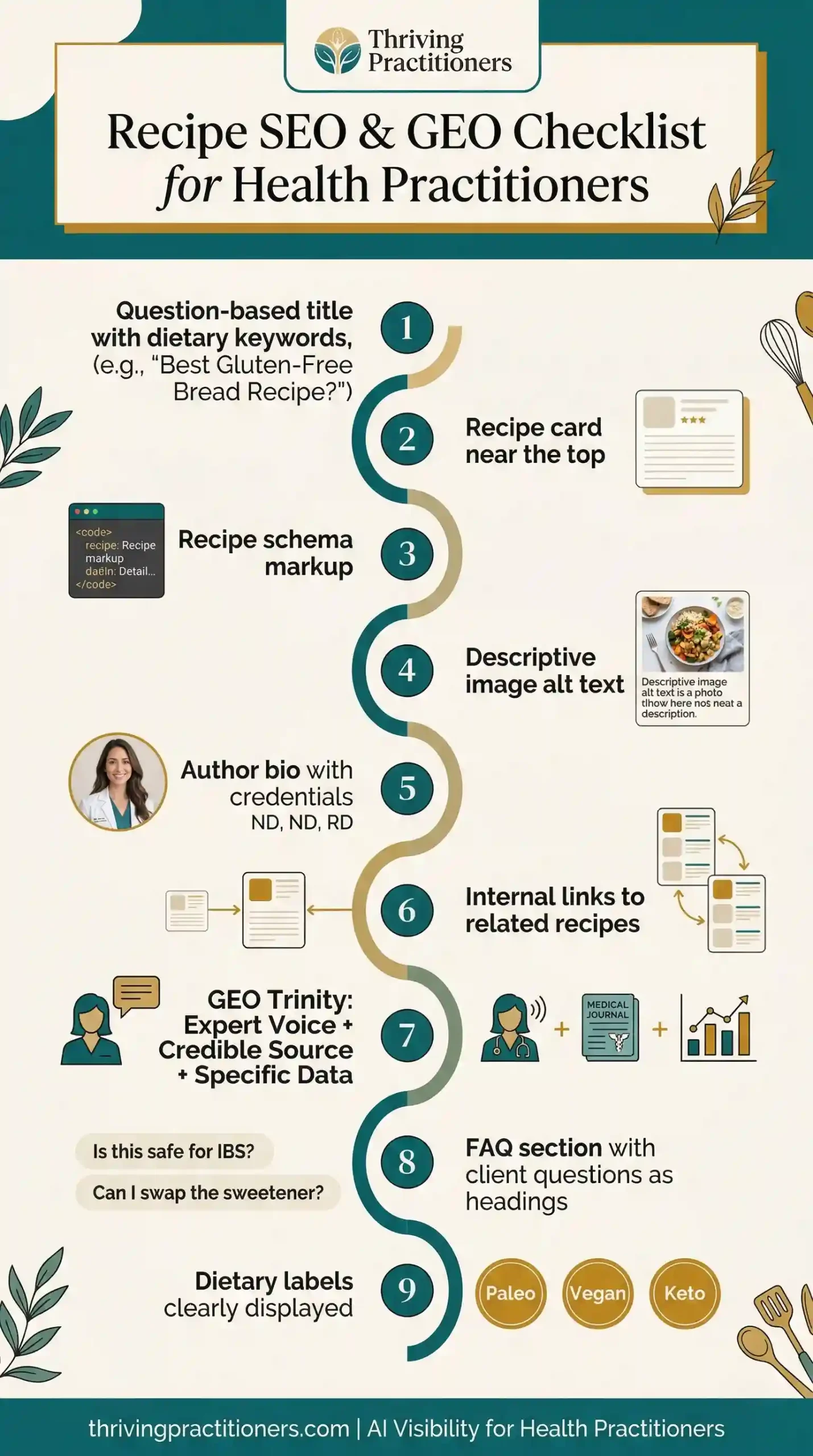
1. Use a Question or Bold Statement as Your Title (and Actually Answer It)
Instead of a title like “Cauliflower and Kale Soup”, try “Low Histamine Cauliflower and Kale Soup Recipe: Dairy-Free, Gluten-Free, and Ready in 45 Minutes”. The first version tells you what it is. The second version matches what people actually search for and includes the key dietary attributes your ideal clients care about.
Your title should include the condition or dietary need (“low histamine”), the recipe name, and ideally one or two key attributes (dairy-free, quick, family-friendly). This is your H1, and it’s the most important heading on the page.
2. Answer First, Story Second
You know that thing food bloggers do, where you scroll through 2,000 words about their childhood summers in Tuscany before finding the actual recipe? Don’t do that.
Put your recipe card near the top of the page. AI systems and Google both prioritise content that answers the user’s question directly and succinctly in the first one or two sections. You can absolutely include your clinical context and personal insights (you should!), but structure it so the recipe is accessible without excessive scrolling.
A great structure looks like this: brief clinical intro explaining why this recipe matters for the condition (two to three paragraphs), then the recipe card, then your deeper clinical notes, substitution guidance, and FAQ section below.
3. Recipe Schema Markup Is Essential
Schema markup is code that explicitly labels your content for AI, acting like a roadmap to your information. For recipes, there’s a specific Recipe schema type that tells both Google and AI engines exactly what your content contains.
If you’re using a recipe plugin in WordPress (like Luanne is), it probably generates basic recipe schema automatically. That’s a great start. But check that it includes all the essential fields:
- Recipe name and description
- Prep time, cook time, and total time
- Ingredients list (each ingredient as a separate item)
- Step-by-step instructions
- Yield/servings
- Cuisine type and category
- Dietary attributes (gluten-free, dairy-free, low histamine)
- Author name with credentials
- Nutrition information (if you have it)
You can validate your schema using Google’s Rich Results Test. Pop in your recipe URL and it will tell you if your schema is valid and complete.
4. Descriptive Image Alt Text (Not "IMG_4523")
Every image on your recipe post needs descriptive alt text. Not just “soup”, but something like “Creamy low histamine cauliflower and kale soup in a white bowl, garnished with fresh herbs and a drizzle of olive oil”. This helps both image search and AI systems understand your visual content. It also makes your content accessible to people using screen readers, which is just good practice.
5. Internal Linking Builds Your Recipe Authority
Luanne does this well already. Her cauliflower soup recipe links to her homemade vegetable stock recipe, which links to her chicken stock and beef stock recipes. This is exactly how topic clusters work. Supporting content feeds authority to your main pages over time.
Think of your recipes as a connected web: your low histamine meal plan page is the hub, and individual recipes link back to it (and to each other). If someone searches for “low histamine meal ideas”, the page with the most internal authority wins.
GEO Tips: Getting Your Recipes Cited by AI
This is where it gets really exciting for practitioners. Here’s why: AI systems don’t just want a recipe. They want a recipe from someone who knows what they’re talking about. And that’s you.
6. Apply the GEO Trinity to Every Recipe Post
The GEO Trinity framework uses three elements that make content irresistible to AI systems:
| Element | Recipe Blog Example |
|---|---|
| Expert Voice | "As a clinical nutritionist specialising in histamine intolerance, I’ve found that cauliflower is one of the most versatile low histamine vegetables. I recommend this soup to clients who are in the early elimination phase because..." |
| Credible Source | Reference why certain foods are low histamine. Link to relevant research or professional dietary guidelines. Cite your professional body or training. |
| Specific Data | "Prep time: 10 minutes. Cook time: 25 minutes. Serves 4–6. Suitable for: low histamine, low oxalate, dairy-free, gluten-free diets." |
This is what separates a practitioner recipe from a food blogger recipe. Your clinical knowledge IS the authority signal that AI systems are looking for.
7. Add a Practitioner FAQ Section to Every Recipe
This is the golden ticket. FAQs naturally mimic the conversational, question-and-answer nature of AI search. They allow you to target long-tail queries directly. And as a practitioner, you already know exactly what questions your clients ask.
For a low histamine soup recipe, your FAQ section might include:
- Is cauliflower low in histamine?
- Can I use bone broth in this soup instead of vegetable stock?
- How do I store this soup safely to keep histamine levels low?
- What other low histamine soups can I make?
- Will reheating this soup increase the histamine content?
- Can I freeze low histamine soup?
Each question should be an H2 or H3 heading with a clear, direct answer in the first sentence or two. Use the question as the heading, then answer it clearly in the first paragraph. This is exactly the format AI engines love to extract and cite.
Pro tip: Order your FAQs with the most action-oriented questions first (“Can I freeze this?”, “What can I substitute?”) and the more educational questions after. This is our BOFU-first approach, and it works beautifully for recipes.
8. Make Your Author Bio Work Overtime
AI systems evaluate the E-E-A-T signals on every page: Experience, Expertise, Authoritativeness, and Trust. Your recipe post should include a clear author bio that states your qualifications, your clinical specialisation, and why you’re qualified to be recommending dietary guidance.
For example: “Luanne Hopkinson is a Clinical Nutritionist and Neuroplasticity Coach specialising in histamine intolerance and MCAS. She creates low histamine recipes based on her clinical experience helping clients manage their condition through dietary changes.”
This bio should appear on every recipe post, not just your About page. It’s one of the strongest signals you can send to both Google and AI systems.
9. Recipe Roundup Posts Are GEO Gold
Luanne mentioned she does recipe roundup posts where several recipes are collected in one post. These are incredibly powerful for GEO because they’re the exact format AI systems love to cite.
When someone asks ChatGPT, “What are some low histamine snack ideas?”, the AI is looking for a comprehensive, well-organised list from a credible source. A practitioner-authored recipe roundup with clinical notes is exactly that. Structure your roundup posts with a clear H1 question title, a brief intro with your clinical context, then each recipe as an H2 with a short description, key dietary info, and a link to the full recipe.
Bonus: Quick Wins for Recipe Roundup Posts
- Give it a question-based title: “What Are the Best Low Histamine Snacks? 8 Recipes from a Clinical Nutritionist”
- Open with your clinical authority: A short paragraph explaining why you’ve curated these specific recipes and what makes them suitable
- Include dietary labels on each recipe: Low histamine, gluten-free, dairy-free, prep time, difficulty level
- Add a comparison table: AI systems find tables especially easy to extract and cite. A table comparing each recipe’s prep time, dietary suitability, and difficulty is a powerful GEO signal
- End with a practitioner FAQ: “How do I know which snacks are safe for my histamine level?” with a clear, citable answer
A Quick Note on Recipe Plugins and Platforms
Luanne mentioned she’s using a recipe plugin in WordPress and isn’t sure what will happen when she moves platforms. Here’s the reassuring news: the SEO and GEO principles stay the same regardless of your platform.
What matters is that your final recipe page has clean structure (proper headings, a scannable ingredient list, numbered steps), valid Recipe schema markup, and your practitioner authority signals. Whether that comes from a WordPress plugin, a PractitionerPro template, or hand-coded HTML, the search engines and AI systems don’t care. They’re reading the output, not judging your tech stack.
If your current plugin generates Recipe schema, check it with Google’s Rich Results Test before and after any platform migration. That way you’ll know exactly what you need to replicate.
Your Recipe Blog Post Checklist
Before you hit publish on your next recipe, run through this quick checklist:
| Title includes the dietary need/condition + recipe name | |
| Recipe card is near the top (not buried under backstory) | |
| Recipe schema markup is valid (test with Rich Results Test) | |
| Every image has descriptive alt text | |
| Author bio with clinical credentials appears on the page | |
| Internal links connect to related recipes and service pages | |
| FAQ section with 4–6 client questions, each as an H2/H3 | |
| FAQs answered directly in the first sentence | |
| GEO Trinity elements present: expert voice, credible source, specific data | |
| Clinical context explains WHY this recipe suits the condition | |
| Storage and preparation notes included (clients always ask!) | |
| Dietary labels clearly stated: gluten-free, dairy-free, etc. |
The Bottom Line: Your Clinical Knowledge Is the Unfair Advantage
Here’s what food bloggers don’t have that you do: genuine clinical expertise. When you explain why bone broth might spike histamine levels and offer a tested vegetable stock alternative, that’s not just a recipe tip. That’s E-E-A-T in action. That’s the kind of nuanced, experienced content that AI systems are actively looking for.
Your recipes aren’t just food content. They’re clinical authority wrapped in a casserole dish. They’re proof that you understand your niche at a level no generalist food blogger can match. And with the right structure, they become discoverable content that brings ideal clients to your door.
So next time you’re about to share a recipe with your clients, take an extra ten minutes to optimise it. Use the checklist above. Add your clinical FAQ. Include your schema markup. And watch what happens when both Google and AI start sending people your way.
Because a low histamine cauliflower soup doesn’t just nourish your clients. With the right SEO and GEO, it nourishes your practice too.
Want to Learn More About AI Visibility for Your Practice?
The Pathway to Practice Visibility course teaches natural health practitioners how to get found by both Google and AI search systems. From recipe pages to service pages, FAQ architecture to entity optimisation, we cover it all.