What is AI marketing for naturopaths, and how do you get cited by ChatGPT?

Quick Overview AI marketing for naturopaths means writing your website so that AI assistants such as ChatGPT, Perplexity and Google AI Mode can understand you and quote you when someone asks about a practitioner like you. It is also called Answer Engine Optimisation, or AEO. According to James Burgin, former naturopath and digital marketing strategist, the core of it is simple: turn your subheadings into the questions clients actually ask, answer each one in the first sentence, write every section as a self-contained capsule, and put one observation from your own clinical experience into each capsule. Keep your facts consistent everywhere online, keep your pages fresh, and check that your site is not accidentally blocking AI crawlers. You have just finished a good consult. The client is relieved, you are running ten minutes late, and somewhere between the notes and the next appointment you remember the website. The one that still says “Our Approach” at the top of the services page. The one a client last week said she could not find, even though she had asked ChatGPT for “a naturopath who understands perimenopause” and it named two other people. That is the whole problem in one moment. You are good at this. AI does not know. Why does AI keep naming other practitioners instead of you? [Capsule Answer] AI names the practitioners it can understand. It reads your pages in short chunks, looks for the passage that answers the question, and checks whether other places on the web agree with what your site says about you. If your answer is buried, vague or inconsistent, AI moves on to someone whose answer is clearer. When someone asks an AI assistant a health question, the assistant does not read your website the way a person would. It breaks each page into passages, pulls the passage that best answers the question, and weighs that passage against everything else it knows about you from directories, associations, reviews and videos. Three things about that process matter for a naturopath. AI reads in chunks, not pages. If the answer is in paragraph four, under a heading called “Our Approach”, it is effectively invisible. AI trusts consensus, not links. Ahrefs’ 2026 study of 75,000 brands found that mentions by other people and places predict AI visibility far better than backlinks or domain authority. AI likes fresh, specific pages. Ahrefs also reports that around three-quarters of ChatGPT’s most-cited pages were updated in the previous 30 days. None of this requires technical skill. It requires the same thing a good consult requires: clarity, specificity and the willingness to say what you actually know. What does AI marketing for naturopaths actually involve? [Capsule Answer] It involves four pillars: mapping the real questions clients ask, answering them clearly in a citable structure, making your credentials and experience visible and consistent, and being mentioned by other people and places. The 2026 update to those pillars adds three writing habits: question subheads, immediate answers and capsule content. At Thriving Practitioners, we teach AEO through four pillars. They have not changed. What has changed is how precisely we now understand what AI rewards inside each one, and the good news is that it keeps getting simpler. “AI isn’t about replacing the human touch in healthcare. It’s about amplifying your authentic voice so more people can discover your healing gifts.” James Burgin, former naturopath and digital marketing strategist, creator of Metaphysical SEO Pillar 1: Map the questions, then map the fan-out When a client asks an AI, “Is there a naturopath in Melbourne who can help with perimenopause?”, the assistant quietly runs several smaller searches before it answers: what a naturopath does for perimenopause, whether it is safe alongside HRT, what a first appointment involves, what it costs. Research suggests this fan-out can run to dozens of sub-queries for a single prompt. You may never rank for the big question. But if you have the clearest answer to “is it safe alongside HRT”, you get pulled into the answer anyway. So under each of your core topics, list six to ten sub-questions, and make sure each one has a home on your site. Pillar 2: Question subheads, immediate answers, capsules This is where most of the practical work lives, and it comes down to three habits. Question subheads. Every H2 is the exact question a client would ask. “Can I see a naturopath while I am on medication?” rather than “Our Approach”. Immediate answers. The first sentence under the subhead is the answer. Yes, no, or the number. Explanation comes after, never before. Capsule content. Each section is a self-contained passage of roughly 50 to 150 words that still makes complete sense if AI lifts it out on its own. Here is a capsule in full, so you can see the shape. EXAMPLE CAPSULE: 112 WORDS How long does it take to see results with naturopathy for bloating? Most people notice some change within two to four weeks, and a fuller picture takes around three months. Bloating usually has more than one driver, so the first month is about finding yours: meal timing, stress, fibre type, or a bacterial imbalance. In my Brunswick clinic the three things I check first are how quickly someone eats, whether symptoms follow particular foods, and what their stress looks like at 3pm. I use a food and symptom diary before any testing. If nothing has shifted by week six, we reassess rather than push on. Notice the fourth sentence. “The three things I check first” is a sentence only a practitioner can write. AI has read every general article about bloating. It has not read what you notice in the room. That single observational sentence is what the research world calls information gain, and it is your unfair advantage over every supplement company blog on the internet. Notice the specifics too: Brunswick, 3pm, week six, a food and symptom diary. Those are entities. They help AI build an accurate picture of who you are and what you
How Much of Your Natural Health Practice Should AI Actually Run?

Should AI in Practice be All or Nothing? AI in your practice is not an all-or-nothing decision. Stanford researchers developed the Human Agency Scale, a five-level framework that maps how much of any task should sit with you and how much can sit with AI. AI context for natural health practitioners… The consultation stays fully human Clinical thinking stays practitioner-led Marketing becomes an equal partnership Client education runs AI-led with your oversight Admin can be fully automated Map your ten highest-value weekly tasks against these five levels and you will know exactly where AI belongs in your practice, and where it never will. You have probably felt it. The quiet worry that using AI in your practice means handing over the very thing that makes your work matter: the human connection your clients come for. So you either avoid AI altogether, or you use it for everything and feel vaguely uneasy about both. Here is the good news. That all-or-nothing framing is the actual problem, and researchers at Stanford have given us a much better way to think about it. What is the Human Agency Scale? A five-level framework The Human Agency Scale (HAS) is a five-level framework developed by Stanford University researchers in 2025. It measures how much of a task should sit with a human and how much with AI, ranging from H5 (fully human) down to H1 (fully automated). Instead of asking whether to use AI, it asks how much agency each task deserves. The framework comes from a Stanford study on the future of work with AI agents, led by researcher Yijia Shao and colleagues. Rather than treating AI adoption as a switch you flip, the researchers built a shared language for the space between doing everything yourself and automating everything away. Business strategist Matt Kesby describes it neatly, using driving as a metaphor. Parking sensors help while you stay in control. Lane assist shares some of the work. Adaptive cruise takes over more while you keep watch. Some cars now drive themselves. You choose a different level of control for every journey, and Matt’s point is that AI in your business deserves the same choice. For practitioners, though, there is a frame even closer to home. If you have ever worked in or run a multi-practitioner clinic, you already make these decisions instinctively. Some things only you do. Some things a practice assistant helps with. Some things reception handles end-to-end without you having to think about them once. AI is simply a new team member who needs the same kind of job description. What do the five levels look like in a natural health practice? The short answer… H5 is your consultation room, fully human. H4 is your clinical thinking, practitioner-led with AI assistance. H3 is your marketing, an equal partnership. H2 is client education and follow-up, AI-led with your oversight. H1 is your admin, fully automated. Each level matches the task, not the technology. Here is the scale translated from the research language into your working week. H5: Full human agency. The consultation room. Case-taking, rapport, clinical intuition, hands-on work, and the moment a client feels truly heard. This is the irreplaceable core of your practice, and no part of it belongs to AI. Naming this clearly matters, because most practitioner anxiety about AI is really anxiety about this level. It is not up for negotiation, and it never was. H4: Human-led with AI assistance. Your clinical thinking. You own the reasoning behind every treatment plan. AI acts like a second set of eyes: helping you structure a complex case summary, surfacing questions you might want to ask at the next appointment, or organising your notes. Like parking sensors, it helps you see what you might have missed while you remain completely in control. H3: Equal partnership. Your marketing and content. This is where the leverage lives for most practitioners. You bring the clinical stories, the voice, the positioning and the lived experience. AI brings the drafting horsepower: turning one Q&A session into a blog article, a carousel and an email. Neither of you could do the job alone at the quality and pace you can do it together. H2: AI-led with human oversight. Client education and follow-up. Welcome sequences, appointment follow-up emails, FAQ answers on your website, article metadata. AI produces; you review before anything goes out. For Australian and New Zealand practitioners, this oversight step is not optional. Therapeutic goods advertising rules mean a human eye checks every claim before it is published, which is exactly what this level is designed for. H1: Full automation. The admin layer. Booking confirmations, appointment reminders, invoicing, calendar sync, review requests. Nobody’s healing work is diminished by automating an SMS reminder. This is the level where full automation is not a compromise. It is simply good practice management, and every hour it returns to you is an hour that can go back into H5. Why is marketing the sweet spot for AI in a naturopathic practice? The short answer Marketing sits at H3, equal partnership, because it needs both your authentic clinical voice and AI’s production capacity. You cannot delegate your positioning, and you should not hand-write every draft. The partnership produces content that sounds like you, publishes consistently, and gets found by the AI systems your future clients are already asking. Think about why client acquisition has always been hard for skilled practitioners. It is not a talent problem. It is a capacity problem. After a full clinic day, the blog article, the Google Business Profile update and the email to your list all compete with dinner and sleep. They usually lose. An H3 partnership changes the economics of that evening. You speak your clinical insight once, in your own voice, and AI does the structural heavy lifting: the article draft, the headings that answer real client questions, the metadata, the social versions. Your role shifts from producing every word to directing and approving the work, the same shift a clinic owner makes when
How Can Natural Health Practitioners
Create Professional Infographics with AI?

The overview for on-brand graphics You can create polished, on-brand infographics for your practice using Claude, with no design skills and no designer on retainer. Upload one or two images whose style you love, ask Claude to build a simple design system from them, then paste in your content and ask for an infographic. Because Claude builds it with code rather than painting a picture, every word is spelled correctly, your wording stays exactly as you wrote it, and edits take seconds. This guide gives you the exact prompts to create your first one this week. You spent an hour writing a thoughtful post about stress and the nervous system. It was accurate, warm and genuinely helpful. A handful of people saw it. Meanwhile, a colleague shared a simple visual explaining the same idea, and it was saved, shared and stuck to fridge doors. Sound familiar? Your knowledge is not the problem. The format is. People skim text, but they stop for a clear, beautiful visual, and your future clients are no different. A quick credit before we start: this guide adapts a method shared by AI educator Ruben Hassid, who built one of LinkedIn’s largest audiences largely by pairing his ideas with simple, striking images. His line stuck with me: “People forget what they read. They remember what they saw.” What follows is his approach, reworked for natural health practitioners. Why do infographics work so well for natural health content? Infographics turn complex health concepts into something a client can understand at a glance, remember for weeks and share with the people they care about. For practitioners, that means your knowledge travels much further than a wall of text ever could. Natural health is naturally visual. The gut-brain connection, the phases of a herbal infusion, what actually happens in a first consultation, a seasonal wellness wheel: these ideas almost draw themselves. Yet most practitioners publish text, because making visuals used to mean hiring a designer, wrestling with Canva at 10 pm, or giving up. That barrier has gone. What used to take a design brief, a week of back-and-forth and a few hundred dollars now takes a conversation. JAMES’S PERSPECTIVE “When I first discovered AI tools in 2022, I saw immediately how they could solve the biggest challenge facing practitioners: creating quality content consistently. But only if we use them to amplify our authentic voice, not replace it.” James Burgin, former naturopath and digital marketing strategist What is the easiest way to make an infographic with AI? The easiest and most reliable way is to ask Claude to build your infographic as a small web page (HTML) rather than generating it as a picture. It sounds technical, but you never touch the code. You describe what you want in plain English, and Claude builds it, shows you a preview and edits it on request. Here is the distinction that changes everything. AI image generators paint pictures. They can be gorgeous, but they routinely mangle text, misspell words and garble numbers, which is a real problem when your infographic is meant to educate. Claude takes a different route: it writes the infographic as code, just as a website is built. Think of it as the difference between drawing a table freehand and using a spreadsheet. One is an approximation. The other is precise. Every heading, every step, every word appears exactly as you wrote it, which matters enormously when you are sharing health education and want your careful, compliant wording left untouched. And edits are effortless. “Make the background cream.” “Swap step three for this.” “Make the headings bigger.” Each change takes seconds, and nothing else shifts. If you can write an email, you can do this. How do you create your first infographic? Do this week Gather one to three images whose style you love, ask Claude to turn them into a simple design system for your practice, approve the style preview, then paste in your content. Two prompts, both below, ready to copy. Collect your style references. Find one to three images whose look you love. Pinterest is brilliant for this: search one or two words like “wellness infographic” and follow the trail. Better still, take a screenshot of your website and logo, so Claude matches your existing brand. Open Claude and attach them. Start a new chat at claude.ai, click the plus button and upload your reference images. Paste the style prompt below. Claude will study your references, explain the style back to you in plain language and ask you a couple of simple questions. Answer them honestly; there are no wrong answers. Review the preview. Claude will show you a small style preview page. If something feels off, say so in ordinary words: “softer colours”, “less corporate”, “warmer”. Repeat until it feels like you. Paste the infographic prompt with your content. Then open the preview, download it, or take a screenshot, and share it. PROMPT 1: YOUR STYLE (COPY AND PASTE) You are my design lead. I am a natural health practitioner, not a designer, so talk to me in plain language. I have attached images showing the look I want (and screenshots of my own website and logo). Study them and create a simple design system for my practice: 4 to 6 colours with their hex codes, easy to find fonts, and a short description of the overall feel. Report back in under 150 words, no jargon. If a real decision is open, ask me a maximum of 3 simple questions with the trade-offs explained. Then build a one-page preview showing the colours, fonts and one example card, so I can approve the style before we make anything. Match my references faithfully rather than adding your own taste. PROMPT 2: YOUR INFOGRAPHIC (COPY AND PASTE) Using the design system we agreed on, build an HTML infographic titled “[YOUR TOPIC]”. Here is the content to include: [PASTE YOUR POINTS, IN YOUR OWN WORDS]. Keep it uncluttered and easy to read on a phone. Size it as [a square for Instagram / a tall 4:5 for
Why Are Natural Health Practitioners Embracing Claude Skills?

And how to build your first AI /Skill (Friday’s free Q&A session) Last weekend, inside the Thriving Practitioners WhatsApp community, Sarah McLachlan, The Perimenopause Naturopath, posted an update from her family holiday: “It’s created me 2 quizzes, 20 emails, reviewed my program content and rewritten it, and more, all while I’m on holiday and just popping in to answer its questions or give feedback.” Sarah McLachlan, The Perimenopause Naturopath She wasn’t describing a new employee. She was describing Claude, an AI assistant, working from a library of “skills” she built herself. So what are Claude Skills? They are reusable sets of instructions that teach AI to complete your recurring tasks your way, every time, without you having to re-explain yourself. According to James Burgin, former naturopath, digital marketing strategist and founder of Thriving Practitioners, skills are the difference between an AI that produces generic drafts and one that works like a well-trained team member. And this Friday, 17 July at 12 pm AEST, our free open-access Q&A session will show you exactly how to build and use your own AI skills. Brilliant with clients, stretched thin on everything else If you run a natural health practice, you know the squeeze. Clinical work fills the day, and then, if you have the energy, the blog, the newsletter, the service pages, the FAQs and the follow-up emails all compete for whatever inspiration is left. The marketing never quite gets the attention you know it deserves. And if you’ve dabbled with AI, you may recognise some of the honest hesitations voiced in our community recently. Kate Troup put it perfectly: “Chatty knows me and my business pretty well now… so I am somewhat reluctant to start again unless it is significantly better.” Susie confessed to feeling “so far behind and falling further behind.” And Ruth described an AI that overthinks, pushes back and takes forever to finish a simple rewrite. Here’s the reframe that changes everything: the problem usually isn’t the AI. It’s that nobody has taught the AI how you work. That is precisely the job of a skill. Teaching AI to work the way you do “AI isn’t about replacing the human touch in healthcare. It’s about amplifying your authentic voice so more people can discover your healing gifts.” James Burgin, Former Naturopath & Digital Marketing Strategist, Pioneer of AI-Powered Practice Growth The practical version of that philosophy is simple, and it’s advice James shares in the community almost weekly: “Whenever it has done something for you, especially if you like it, ask it to create a skill so it can repeat that same task in the future. If you improve on it next time, ask Claude to update the skill.” James Burgin, Founder, Thriving Practitioners One good result becomes a repeatable system. That’s the whole game. The gap between a skilled practitioner and a thriving practice has never been about talent; it’s about learnable systems, and skills are the most learnable system AI has ever offered. What is a Claude Skill, exactly? Think of a skill as training a new team member once, rather than re-briefing them every morning. It’s a saved set of instructions – your structure, your voice, your rules, that Claude follows every time you invoke it. You simply type the / symbol, choose your skill, and the work comes back your way. Why does this matter specifically for practitioners? Three reasons. First, consistency: your newsletter sounds like you in March and in November. Second, speed: no more rewriting the same long prompt from scratch. Third, economy: skills dramatically reduce wasted back-and-forth. Sarah runs her entire content engine on Claude’s entry-level plan ($20 USD/month) precisely because her skills make every session efficient. One clear note, because trust matters more than hype: skills can misfire when you make them too broad. Lisa Gumieniuk’s first attempt at an all-purpose page-writing skill “went on a bit of a tangent”, while her tightly focused AEO skill works beautifully. The lesson from our community is clear: start small, test, and let Claude update the skill each time you improve on it. What practitioners are actually doing with Claude This isn’t theory. Every example below comes from practitioners inside the Thriving Practitioners community in the past few months: Lisa Scarfo (“I am not a massive fan of tech!”) rebuilt her long-neglected website in a single six-hour Claude session, taking screenshots whenever she got stuck and asking Claude to guide her through. She now runs a weekly “Website Wednesday”. Mariangela Parodi cross-referenced six ancestral healing blogs, cleaned up her 404 errors, and now appears at #1 on Claude and Perplexity for her niche searches. She calls Claude “Claudia, my ally”. Luanne Hopkinson posted a four-word review after her first service page: “I got Claude to write a service page for me. Wow!” She has since built quizzes and a 90-day plan. Caro Uttley asked Claude’s Cowork mode to rename 60 downloaded website images in a single request. Done, no trouble. Karly Raven turned the course’s blog guidance into her own custom skill and is now systematically upgrading her entire blog library with it. Ayelet Center was, in James’s affectionate words, “married to ChatGPT”. Today she runs client journey reviews, service page FAQs and TGA compliance rewording through Claude: “I love Claude! It’s been brilliant! Without it I wouldn’t be able to do anything on my website.” And when Caro admitted she hadn’t built any skills yet, Sarah’s reply was the push the whole community needed: “You must do it! Turn on the skill creator, then ask Claude to turn your master prompt into a skill.” Meet this Friday’s special guests Sarah McLachlan, The Perimenopause Naturopath. In December, Sarah was running out of free Claude tokens within minutes. Today she is the community’s skills powerhouse, running her whole content engine, clinical templates included, on the entry-level plan. On Friday she’ll demonstrate her method live: how she creates a skill, tests it before saving, updates it as she improves, and how she chooses different Claude
AI Marketing for Naturopaths: How to Be the Answer When Clients Ask AI

AI marketing for naturopaths means shaping your online presence so AI tools such as ChatGPT, Google’s AI Overviews and Perplexity can recognise you, understand what you do, and recommend you when someone asks for help. It is less about chasing a Google ranking and more about becoming the answer the AI gives. The work has three parts: Help AI see you as a distinct, real practitioner Structure your content so AI can quote it Build the trust signals that make AI confident enough to name you. If you have ever felt invisible online despite being excellent in clinic, this is the most important shift to understand in 2026. The ‘front door’ to your practice is changing, and it is changing fast. Your next client is asking an AI, not Google The first conversation a person has about their health is increasingly with a chatbot, before any website is opened. ChatGPT alone reached around 900 million weekly users in 2026 (Reuters), and health is one of its largest uses. OpenAI reported that roughly 40 million health questions are asked of ChatGPT every day, and that about one in four regular users sends a health-related prompt each week. Your prospective clients are already there. The only open question is whether AI mentions you when they ask. As I often say to the practitioners I work with: “AI is not about replacing the human touch in healthcare. It is about amplifying your authentic voice so more people can discover your healing gifts.” How is AI marketing different from old-style SEO? Old SEO tried to win a click from a list of ten blue links – the links on the first page of a Google search. AI marketing aims to get a mention within a single, synthesised answer. That is a different game with different rules. Search has changed shape three times. First came the search engine, where a person browsed links and chose for themselves. Then came the answer engine, where tools like ChatGPT, Perplexity, and Google’s AI Overviews write a single answer and cite a few sources. Now we are entering the era of the AI agent, where the AI compares practitioners and shortlists them before a person ever sees a list. Each step moves the decision further from your website and closer to the machine. This has a name. Optimising to be the cited answer is called Answer Engine Optimisation, or AEO. Optimising specifically for AI-generated answers is often referred to as Generative Engine Optimisation (GEO). Both sit alongside traditional SEO rather than replacing it. SEO AEO GEO Full name Search Engine Optimisation Answer Engine Optimisation Generative Engine Optimisation Goal Rank in a list of ten blue links Be the cited answer in an AI summary Be named or quoted by a generative AI tool How AI sees you One of many results A trusted source The recommended practitioner Key signal Backlinks + keyword relevance Clear, answer-first content structure Statistics + citations + expert voice Where it shows up Google organic results Google AI Overviews, Bing Copilot ChatGPT, Perplexity, Gemini Best page type Service pages, location pages FAQ pages, explainer pages Comparison pages, concern pages Wins when you… Build authority over time Answer questions directly and plainly Apply the GEO Trinity to every piece For naturopaths “Naturopath Sydney” rankings “What does a naturopath treat?” answers “Best naturopath for perimenopause” recommendations Good SEO is still the foundation for AEO and GEO. A practitioner can succeed with ‘AI marketing for naturopaths’ by refining how they present their content online to satisfy humans, who want emotional resonance, and AI, which is looking for facts and well-structured content. Why are my Google impressions not turning into clicks? Because the click itself is shrinking. When Google places an AI summary at the top of the results, far fewer people click through to any website at all. The Pew Research Centre studied tens of thousands of real Google searches in 2025. When an AI summary appeared, users clicked a traditional result only 8 per cent of the time, compared with 15 per cent when no summary appeared. The links cited inside the AI summary were clicked just 1 per cent of the time. So a high-impression search term can deliver almost no clicks, not because your listing is wrong, but because the answer is being read on the results page instead. The takeaway for naturopaths is simple and a little confronting. Winning is no longer about ranking first. It is about being the source of the AI quotes. Well-structured, informative and authoritative content that also shows your experience and expertise can win the game. The good news: AI cites the clearest, not the biggest Here is the part that should encourage you. Answer engines do not simply pick the largest brand with the biggest budget. They pick the source that is best structured, most specific, and easiest to trust. Often, that is a smaller, well-focused practitioner site. A Princeton study on Generative Engine Optimisation (Aggarwal and colleagues, 2023) found that adding clear statistics, quotations and citations from credible sources lifted a page’s visibility in AI answers by up to 40 per cent, and that smaller, lower-ranked sites gained the most from getting their content right. Your clinical specificity – your clear niche focus – is an advantage that a generic health site cannot match. AI tends to cite the most specifically positioned practitioner, not the most comprehensive one. The window to claim your niche is open now, and it will not stay open. The practitioners who establish their authority this year are the ones AI learns to recommend. “This is the time to strike. In the early days of Google, businesses were climbing so fast and growing so fast. We are in the same early days of being recommended by ChatGPT, Perplexity or Google AI Mode. Even if you fast forward a year or two from now, while it will still be very doable to get ranking – it just becomes more competitive, it takes longer,
Five AI Leaders, One Message About 2026: What It Means for Your Practice
In the last few months, five of the most powerful people in artificial intelligence said almost the same thing about 2026. Sam Altman from OpenAI. Jensen Huang from NVIDIA. Sundar Pichai from Google. Satya Nadella from Microsoft. Even Elon Musk. Different companies, different audiences, one shared message. And buried inside it is a shift that quietly changes how patients will find you. The question has quietly changed For years, getting found online meant one thing: ranking on Google. Practitioners were told to chase keywords and climb the search results. That advice is now incomplete. The new question is not “does my page rank?” It is “does the AI recommend me when someone asks for help?” When a tired mum types “natural support for perimenopause near me” into ChatGPT, she does not scroll through ten blue links. She reads one answer. The AI has already done the research for her. It has decided who to mention and who to leave out. If this feels like one more thing to worry about, that is fair. Most natural health practitioners spend years mastering clinical skills and far less time on marketing. You did not train to optimise content for machines. But here is the encouraging part: this shift actually rewards the practitioners who have been overlooked. Clear, genuine, well-explained expertise is exactly what these systems are looking for. James Burgin’s perspective James Burgin has watched the natural health industry move through every major change of the past two decades, from print to web, web to mobile, and now from search to AI. As a former naturopath and clinic owner turned digital strategist, he sees this moment clearly. We’re entering an era where timeless wisdom meets cutting-edge technology. The practitioners who thrive will be those who embrace AI as a tool to amplify their authentic voice while maintaining the integrity of their healing practice. James Burgin, Founder, Thriving Practitioners The signal from those five AI leaders is consistent. They have stopped talking about AI models and started talking about AI systems and agents. In plain terms, AI is moving from a clever tool you open now and then to an assistant that researches, compares and recommends on a person’s behalf. That assistant pulls its answers from somewhere. The opportunity for practitioners is to become a source it knows, trusts and names. Three shifts, translated for practitioners You do not need to follow every twist in the AI industry. You only need to understand three shifts and what they mean for your practice. 1. Your audience has changed You are no longer writing only for a person skimming your website. You are also writing for an AI assistant reading on that person’s behalf. People skim. AI dissects. It looks for clear answers it can lift out and trust. Content that buries the point in paragraph twelve gets passed over. Content that answers the question clearly, near the top, gets cited. 2. The measure of success has changed Rankings and clicks used to be the scoreboard. In the agent era, what matters is whether AI mentions you by name when someone asks a relevant question. Marketing strategist Neil Patel of NP Digital reports that businesses investing in this kind of optimisation saw their return move from negative 28 percent in 2024 to positive 144 percent in 2025. Same approach, one year later, a very different result. He also notes that while AI platforms still send only a small share of website traffic, that traffic tends to convert at a much higher rate than ordinary search, because the visitor has already been pre-qualified by the AI. 3. The advantage has changed The old advantage was publishing more and outspending everyone. The new advantage is becoming the trusted source AI returns to by default. That is not built with one clever post. It is built with a simple, consistent system: clear, well-sourced content, published regularly, in your real voice. What AI still cannot do Here is the part worth holding onto. An AI assistant can tell someone their iron is low. It cannot sit with them and explain why, notice the patterns in their life that contributed, or adjust the plan as their body responds. It cannot hold space for healing. That is your work, and it is safe. This shift is not about competing with AI. It is about partnering with it, so more of the right people find their way to your door. That is exactly why Thriving Practitioners exists. The frameworks we teach, from the simple AI audit to the GEO Trinity, are built to make a busy practitioner’s genuine expertise visible to the systems patients now rely on. There is also a real window here. The practitioners who build a clear, citable presence over the next couple of years will hold an advantage that is hard for latecomers to undo. Early movers compound. Late movers scramble. Three things you can do this week You do not have to do everything at once. Start small and let it build. Run a quick AI audit. Ask ChatGPT, Google Gemini and Perplexity a question your ideal client would ask, such as “who can help with gut health in [your town]?” Note whether you are mentioned, and who is. Write one citable answer. Pick a single real client question and answer it clearly at the top of a page. Then add the GEO Trinity: an expert quote, a recent statistic, and a credible, named source. Think in systems, not bursts. Commit to one quality post a week. A steady rhythm beats an occasional flurry every time. Give it a few weeks. We have seen practitioners start to show up in AI answers faster than they expected. Questions practitioners are asking Is SEO dead for natural health practitioners? No. Search is not dying, it is changing shape. The work shifts from chasing a keyword ranking to becoming the clear, trustworthy source that AI selects when it answers a patient’s question. Do I need to be technical to do
The Visibility Gold Roadmap: A Personalised Path to AI Visibility for Natural Health Practitioners

How to Overcome the The Frustration Most Practitioners Know Too Well Now you can get a a complete roadmap to getting found online! You’ve spent years mastering your clinical craft. You can read a case Design a protocol Hold space for a patient in distress But when it comes to helping the right people find you online, the advice you keep getting is either generic, painfully technical, or written for industries that have nothing to do with natural health. Sound familiar? You’re not alone, and there’s a reason I designed the practical resource of the Visibility Gold Roadmap specifically for practitioners like you. What is the Visibility Gold Roadmap? The Visibility Gold Roadmap is a personalised, practitioner-specific implementation plan that shows you exactly what to change: On your website About page Service pages Google Business Profile …to become visible in AI search results (ChatGPT, Perplexity, Gemini, Google AI Overviews) and traditional Google search. It’s built using your real website data, your niche, your location, and the actual queries your ideal clients are asking AI tools right now. It’s not a generic SEO checklist. It’s not a 200-page audit you’ll never read. Your Visibility Gold Roadmap is a clear, prioritised, tick-off plan with a Quick Wins section so you can start seeing movement within days, not months. Why I Built the Visibility Gold Roadmap Natural health practitioners are the future of healthcare. I genuinely believe that. The shift toward root-cause, lifestyle-based, integrative care is already happening, and the practitioners doing this work need to be findable by the people who need them most. Here’s the challenge I kept seeing. Most practitioners have spent over 90% of their learning time on clinical skills, and very little on marketing. That was true for me when I ran my 18-practitioner clinic in Melbourne. It’s true for almost every practitioner I’ve worked with since. We learnt to take a case history. We didn’t learn how to structure a service page for AI, write entity-rich website copy, or build the digital signals that make a search engine confident enough to recommend us. And now we’ve entered an entirely new era. AI tools like ChatGPT and Perplexity are increasingly the first place people go when they’re searching for natural health support. The practitioners who establish AI visibility now will hold an enormous advantage as this shift accelerates over the next 24 months. The ones who don’t will quietly stay, or become invisible, regardless of how expert they are clinically. That’s why the Roadmap exists. Practitioners deserve a clear, specific, doable plan, not another generic checklist. They deserve to be told exactly what to fix on their site, in what order, and why each fix matters. What’s Inside Your Roadmap Every Visibility Gold Roadmap is built around four pillars: Your AI Visibility Audit A snapshot of where you currently stand in AI and Google search. We test how ChatGPT, Perplexity, and Gemini describe your practice today, identify gaps in entity recognition, and map exactly which queries your ideal clients are asking that you’re not yet answering. Your Quick Wins A prioritised list of changes you can make in the first week to start moving the needle. Things like rewriting your About page opening, sharpening your service descriptions, and tightening up entity signals. This section was the most loved feature in our last cohort. Your Page-Level Recommendations Specific instructions for your homepage, About page, individual service pages, and FAQ section. Not “improve your About page.” Instead: “Replace the opening paragraph with a clear entity statement that includes your name, qualification, niche, and location, structured like this.” Your Tick-Off Implementation Plan A clear, sequenced action list you can work through one item at a time. No overwhelm, no guesswork. Just a checklist of what to do next, in what order, and why. What Practitioners Are Achieving The recent Pathway to Practice Visibility (PTPV) cohort gave me some of the most powerful confirmation I’ve had that this approach works. Here’s what some of them shared in their feedback: “Within 24 hours of updating my About Me page I had a discovery call book in and then convert to a full consult. I have also started to get client enquiries and on asking how they found me it was via ChatGPT!” Nicole Peasnell, PTPV participant Nicole’s case is particularly striking. Before her Roadmap, Perplexity was describing her as an agricultural business. After implementing her recommendations, the AI tools now describe her practice accurately, and clients are finding her through them. Nicole also now has a triple display in Google’s organic listing… “I have started heading up the rankings in regards to becoming known as an expert in my field, and I haven’t even gotten halfway through my roadmap!” Lisa Scarfo, PTPV participant “The Visibility Gold Roadmap gave me specific insight on what I needed to change. No generic advice. Took away the overwhelm on what to change with clear and specific instructions.” ruthfellowes.com.au Ruth Fellowes, PTPV participant “It was easy to see where things needed improving and provided a ‘tick-off’ plan that was easy to use and follow.”innerpeacehealth.com.au Michelle Ringin, PTPV participant Sarah McLachlan reported moving up to the first page of Google search results and booking more clarity calls. Cherie Pash confirmed her website is now being recognised more accurately by AI tools. Michelle Ringin, who built on earlier AI Visibility Sprint work, is now showing up in AI and Google results where she previously had no presence at all. Why Personalisation Matters in the Age of AI There’s a reason generic SEO advice fails practitioners. AI systems aren’t ranking pages anymore, they’re recommending entities. They want to know: who is this person, what do they treat, where they’re based, what their methodology is, and whether the rest of the internet is consistent with what their website says. Generic advice can’t answer those questions for you, because every practitioner’s situation is different. A naturopath in Geelong specialising in fertility has different signals to build than a herbalist in Auckland working with
How Can Natural Health Practitioners Stand Out in an AI-Flooded Internet?

The Six Rules of Non-Commodity Content, with real wins from the first Pathway to Practice Visibility cohort Creating Unique Content: Overview To stand out in an internet flooded with AI-generated health advice, natural health practitioners must produce non-commodity content, that is, writing that only they could have produced. This means using proprietary clinical evidence, firsthand patient observations, deep specificity, a strong point of view, and material that AI cannot generate, and information gain over the generic articles already ranking. This guide translates the six rules into practical examples, with real wins from the first Pathway to Practice Visibility (PTPV) cohort, including practitioners who went from completely invisible to AI-cited within weeks. The Problem: Your Best Content Is Now a Commodity You spent years learning your craft. The post-graduate training, the supervised clinical hours, the late nights memorising materia medica. Then you wrote a careful, accurate, beautifully researched blog post on “the gut-brain axis.” So did ChatGPT. Twice. While you were brushing your teeth. This is the new reality for natural health practitioners. AI systems generate informational content faster, in greater volume, and at zero cost. The blog posts that once positioned you as knowledgeable now sit in the same bucket as a thousand identical articles. Patients reading them learn nothing about why they should book with you, and AI systems have no reason to quote you when the same information is available everywhere else. The practitioners who win in this environment do something different. They produce non-commodity content, the kind of writing only they could have written, drawn from a clinic only they run, shaped by experiences only they have lived. “The before version of you is invisible to AI. No mentions, no bookings. The after is you become the trusted expert, quoted by name, with a link to your content.” –James Burgin, Founder, Thriving Practitioners Here is how to apply the six rules of non-commodity content to grow a natural health practice. Rule 1: Use Proprietary Evidence Generic posts like “Top 10 Herbs for Digestion” can be written by any AI in three seconds. You cannot win bookings with content that sounds like every other practitioner’s content. The way out is to share evidence that exists only inside your clinic. Instead of listing remedies, write the case study version: “Why these specific probiotics caused a flare-up for my patient after four weeks.” Anonymised symptom logs, observations from your follow-up appointments, before-and-after measurements from biomarker reviews, these are data points AI cannot fabricate. The more specific the evidence, the harder it is to commoditise. A PTPV win. Nicole Peasnell rewrote her About page using the proprietary evidence approach, focusing on the kind of detail only she could supply. Within 24 hours of publishing, a discovery call booked in and converted to a full consultation. Within weeks, Perplexity, which had previously described her practice as an agricultural business, was accurately describing her work and sending her enquiries from people who had found her through ChatGPT. In her own words: “Within 24 hours of updating my About Me page I had a discovery call book in and then convert to a full consult. I have also started to get client enquiries and on asking how they found me it was via ChatGPT.” Rule 2: Rely on Firsthand Experience Stop publishing general advice. Start publishing what you have personally seen, done, and built. Instead of “the benefits of acupuncture for pain,” write the firsthand version: “What I observed releasing tension in a marathon runner’s IT band after three specific treatments.” Personal clinical stories build trust because they cannot be lifted from a textbook. They carry the texture of real consulting room experience. This is also how Google and the major AI engines now define quality. Google’s E-E-A-T framework places Experience ahead of expertise for a reason. AI systems are increasingly trained to identify content that demonstrates lived clinical work versus content that summarises someone else’s. “Practitioners have an incredible opportunity to add value, new distinctions, new ideas, new synthesis of concepts quoted by you, because you are the one with the distinctions.” –James Burgin A PTPV win. Lisa Scarfo started the course unsure how to translate her clinical experience into AI-friendly writing. She rewrote her About page and her main service page using firsthand language, the way she actually speaks to patients in clinic. Before she had even reached the halfway point of her Visibility Gold Roadmap, she was heading up the Google rankings as an expert in her field. Rule 3: Replace Generalities With Deep Specificity For every adjective in your content, ask whether you can replace it with a number, a name, or a date. Vague: “This supplement works fast for many people.” Specific: “In my clinic, the women I see typically begin to notice softer morning joint stiffness within the first ten to fourteen days, based on the first six follow-up reviews.” Specificity does three things at once. It signals genuine clinical experience to readers. It gives AI systems extractable data points to quote. And it makes your content sound like the expert in the room rather than a generalist describing the room. A note on TGA compliance. Specificity does not mean making outcome promises. Frame numbers as patterns of observation, ranges, or typical clinical experience rather than guarantees, and always within your scope of practice and the marketing language your professional association already approves. A PTPV win. Cherie Pash applied the specificity rule across her service descriptions, replacing generic phrases with the actual conditions, demographics, and approaches she works with most. Her website is now being recognised more reliably by AI systems, where it had previously been overlooked. Rule 4: Adopt a Strong Point of View Generic content tries to please everyone. Strong content takes a position, and quietly accepts that this will alienate some readers. That is the point. The patients who agree with your position are the right patients for your practice. The ones who do not, are not. Stop writing “which treatment is right for
Recipe SEO and GEO Tips for Natural Health Practitioners
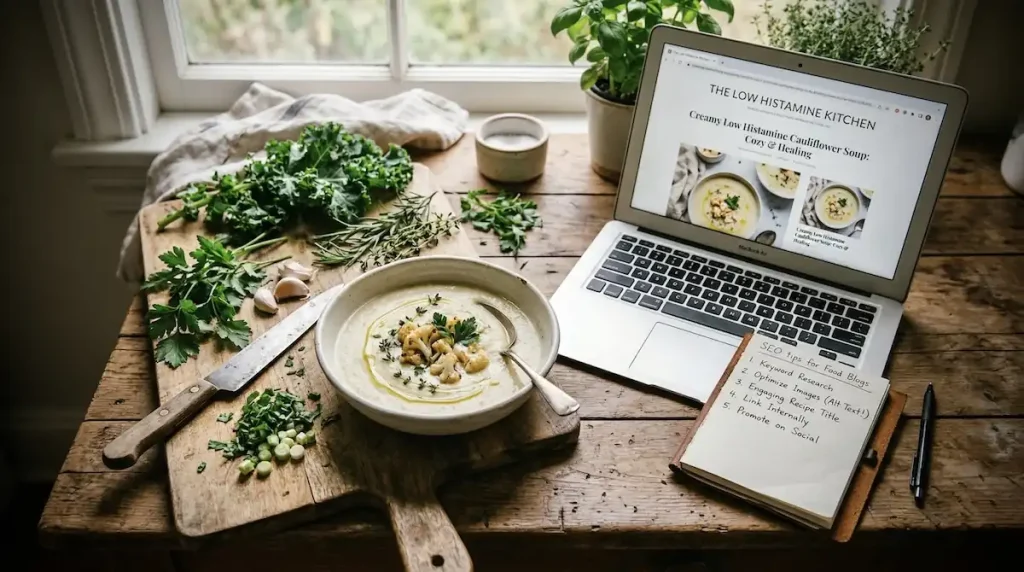
Your Recipes Deserve to Be Found by Google and AI Here’s something that might challenge you… You spend 45 minutes lovingly crafting a low histamine cauliflower and kale soup. You photograph it beautifully. You write up the recipe with care, add your clinical insights about why it works for your clients, and hit publish. And then… crickets. Meanwhile, some random food blogger with zero clinical training ranks on page one for the same recipe. Worse still, when someone asks ChatGPT or Perplexity for a “low histamine dinner recipe”, your beautiful creation doesn’t even get a mention. Sound familiar? This blog post was actually sparked by a great question from community member Luanne Hopkinson, a clinical nutritionist who specialises in histamine intolerance and MCAS. Luanne asked whether there are specific SEO and GEO tips for recipe blog posts, and it’s such a good question that I wanted to turn the answer into something every practitioner can use. Because here’s the thing: if you’re already sharing recipes with your clients (and many of you are), you’re sitting on a goldmine of content that both Google and AI search engines would love to recommend. You just need to structure it properly. Why Recipe Content Is a Secret Weapon for Practitioners Before we get into the practical tips, let’s talk about why recipes are such powerful content for natural health practitioners specifically. When Luanne publishes a low histamine burnt basque cheesecake recipe or a PMS-busting apple flax bircher, she’s not just sharing a meal idea. She’s demonstrating clinical expertise. She’s showing potential clients that she deeply understands their condition. And she’s creating content that answers the exact questions people are typing into both Google and AI platforms. Think about it. Someone newly diagnosed with histamine intolerance isn’t just searching for “what is histamine intolerance”. They’re asking: “What can I eat on a low histamine diet?” “Low histamine dinner recipes that are actually tasty” “Can I still have dessert with histamine intolerance?” “What should I eat for breakfast if I have MCAS?” Every one of those questions is a potential client finding you. Recipes are bottom-of-funnel content disguised as helpful meal ideas. The person searching for a specific dietary recipe is often someone who already knows they have a condition and is actively looking for professional support. The Two Audiences Your Recipe Post Needs to Impress Here’s where it gets interesting. Your recipe blog posts now have two audiences: humans and machines. SEO (Search Engine Optimisation) is about getting found on Google. It’s still the foundation, and a well-structured website with great content remains the bedrock of everything. GEO (Generative Engine Optimisation) is the new layer. It’s about structuring your content so AI engines like ChatGPT, Gemini, Perplexity, and Claude can cite you as the expert in your area. When someone asks an AI for recipe recommendations, GEO determines whether your content gets mentioned. The good news? The foundational work is largely the same. Get the structure right, and you’re serving both audiences at once. SEO Essentials for Recipe Blog Posts 1. Use a Question or Bold Statement as Your Title (and Actually Answer It) Instead of a title like “Cauliflower and Kale Soup”, try “Low Histamine Cauliflower and Kale Soup Recipe: Dairy-Free, Gluten-Free, and Ready in 45 Minutes”. The first version tells you what it is. The second version matches what people actually search for and includes the key dietary attributes your ideal clients care about. Your title should include the condition or dietary need (“low histamine”), the recipe name, and ideally one or two key attributes (dairy-free, quick, family-friendly). This is your H1, and it’s the most important heading on the page. 2. Answer First, Story Second You know that thing food bloggers do, where you scroll through 2,000 words about their childhood summers in Tuscany before finding the actual recipe? Don’t do that. Put your recipe card near the top of the page. AI systems and Google both prioritise content that answers the user’s question directly and succinctly in the first one or two sections. You can absolutely include your clinical context and personal insights (you should!), but structure it so the recipe is accessible without excessive scrolling. A great structure looks like this: brief clinical intro explaining why this recipe matters for the condition (two to three paragraphs), then the recipe card, then your deeper clinical notes, substitution guidance, and FAQ section below. 3. Recipe Schema Markup Is Essential Schema markup is code that explicitly labels your content for AI, acting like a roadmap to your information. For recipes, there’s a specific Recipe schema type that tells both Google and AI engines exactly what your content contains. If you’re using a recipe plugin in WordPress (like Luanne is), it probably generates basic recipe schema automatically. That’s a great start. But check that it includes all the essential fields: Recipe name and description Prep time, cook time, and total time Ingredients list (each ingredient as a separate item) Step-by-step instructions Yield/servings Cuisine type and category Dietary attributes (gluten-free, dairy-free, low histamine) Author name with credentials Nutrition information (if you have it) You can validate your schema using Google’s Rich Results Test. Pop in your recipe URL and it will tell you if your schema is valid and complete. 4. Descriptive Image Alt Text (Not “IMG_4523”) Every image on your recipe post needs descriptive alt text. Not just “soup”, but something like “Creamy low histamine cauliflower and kale soup in a white bowl, garnished with fresh herbs and a drizzle of olive oil”. This helps both image search and AI systems understand your visual content. It also makes your content accessible to people using screen readers, which is just good practice. 5. Internal Linking Builds Your Recipe Authority Luanne does this well already. Her cauliflower soup recipe links to her homemade vegetable stock recipe, which links to her chicken stock and beef stock recipes. This is exactly how topic clusters work. Supporting content feeds authority to your main pages over time. Think
Help Shape the Future of Ethical AI in Naturopathic Practice
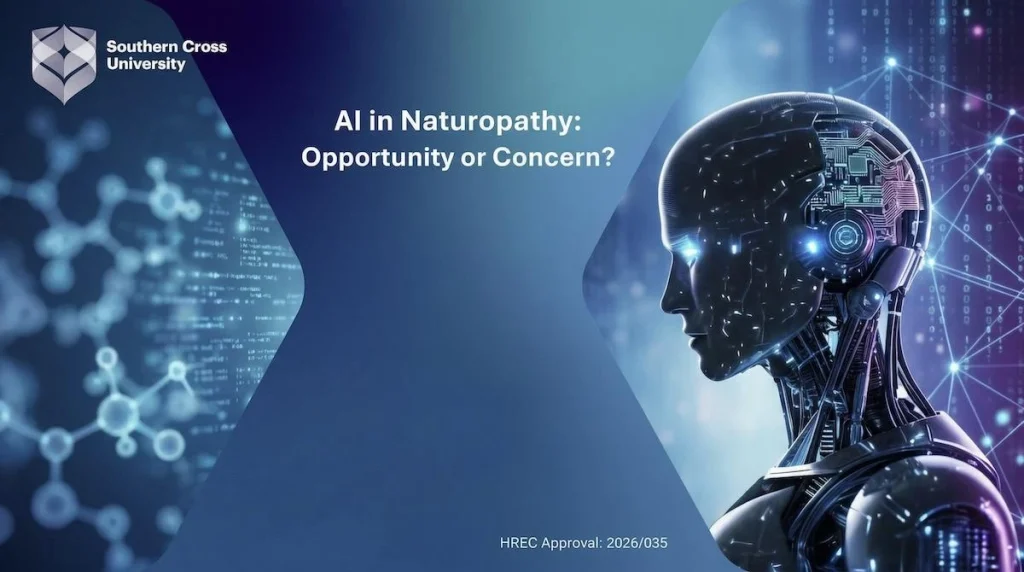
A national research survey needs your voice, and it takes less than 10 minutes. If you’ve been following the conversations inside Thriving Practitioners over the past year, you’ll know that AI is no longer a future consideration for natural health practitioners. It’s here, it’s influencing how patients search for help, and it’s already reshaping which practitioners get found, trusted, and recommended by the systems people increasingly turn to for health guidance. But here’s the thing that keeps me up at night: if naturopaths don’t actively contribute to how AI is understood and used within our profession, those standards will be set for us by people who may not understand holistic clinical reasoning, the therapeutic relationship, or the nuance of person-centred care. That’s why I’m excited to share this important research initiative with you. About the Ethical AI for Naturopathy Survey Sofia Silchenko, a presenter at the 2025 AI Summit for Natural Health Practitioners, is a clinical naturopath, educator, and researcher currently completing postgraduate study at Southern Cross University. Sofia is running a short, anonymous national survey exploring how Australian naturopathic practitioners currently use, understand, and respond to artificial intelligence in clinical and practice settings. This study has full ethics approval (HREC Approval: 2026/035) and aims to build an accurate, real-world snapshot of where our profession actually stands with AI right now. The research covers four key areas: Awareness and current use – Are practitioners using AI tools in practice, and if so, how? Perceived benefits – Where are naturopaths finding AI helpful, whether for efficiency, learning support, admin, or documentation? Concerns and risks – What worries practitioners most, from privacy and misinformation through to ethics and depersonalisation of care? Barriers to adoption – What’s standing in the way, whether that’s confidence, training, cost, or a lack of clear professional guidance? Why Your Perspective Matters(Especially If You’re Not Using AI) I want to be really clear about this: this survey isn’t just for practitioners who are already using AI. If you’re cautiously curious, completely sceptical, or haven’t touched an AI tool in your life, your perspective is just as valuable. In fact, it might be more valuable. Research that only captures the views of early adopters will paint a skewed picture. For this study to genuinely inform future education, professional guidance, and policy for naturopathy, it needs to reflect the full spectrum of practitioner experience and opinion. Whether you’re writing blog posts with ChatGPT or you think the whole thing is overhyped, your honest response helps build the evidence base our profession needs to navigate this well. Why This Research Matters Right Now We’re at a pivotal moment. AI is already influencing how patients find practitioners, how health information is surfaced and summarised, and increasingly, how clinical decisions are “supported” in conventional healthcare settings. The natural health profession has a choice: we can be passive observers of this technology wave, or we can be informed contributors who help define what ethical, safe, practitioner-led AI integration actually looks like. This survey is one concrete way to make sure naturopathic voices are part of that conversation, grounded in real practitioner experience rather than assumptions made by people outside our profession. How to Participate The survey is anonymous, takes under 10 minutes, and is open to naturopathic practitioners in Australia aged 18 or older who are currently practising or have practised within the past 12 months. Take the survey here A Personal Note One of the core principles behind everything we do at Thriving Practitioners is that our profession deserves to lead these conversations, not follow them. We’ve spent the past year helping practitioners understand AI visibility, build their digital presence, and use AI tools ethically and effectively. But our work is strengthened immeasurably when it’s backed by rigorous academic research. Sofia’s study will help ensure that future training, professional development, and governance on AI in naturopathy are grounded in what’s actually happening in clinics and practices across Australia, not speculation. That’s worth 10 minutes of your time. Thank you for supporting research that protects practitioner sovereignty, patient-centred care, and the thoughtful evolution of our profession. Survey link This research is conducted by Sofia Silchenko, SCU Masters in Naturopathy student, supervised by experienced researchers. HREC Approval: 2026/035.
Vibe-Coded Widgets for Practitioner Websites

Why Widgets Matter Static service pages tell. Widgets involve. They turn passive visitors into active participants — and active participants convert. A well-designed interactive widget can lift dwell time, capture leads at the moment of highest intent, generate FAQ-style content that AI systems love to cite, and differentiate a practitioner from every brochure-ware competitor. Every widget below is “vibe-codeable” — buildable as a single self-contained HTML/JS file with Claude in an afternoon. No developer required. No platform lock-in. No monthly subscription. The benefits stack up: Increased dwell time — a strong SEO and AI ranking signal Lead capture — at the moment of highest interest Structured FAQ content — that AI systems love to cite Differentiation — from every static-website competitor A taste of clinical thinking — before the visitor even books Organised by Theme 1. Assessment & Self-Discovery Widgets Perceived value: HIGH — visitors get personalised insight in exchange for engagement. Widget What It Does Best For Symptom Checker / Root Cause Quiz 8–12 questions producing a personalised root cause report with a CTA to book Naturopaths, functional medicine Hormone Balance Score Lifestyle quiz returning a 0–100 hormone health score with personalised recommendations Women’s health, perimenopause Gut Health Self-Audit Bristol stool chart plus symptom mapping producing a gut health profile Gut specialists, nutritionists Stress / Burnout Index HRV-style questionnaire returning a burnout risk level with next steps Wellness practitioners, coaches Sleep Quality Calculator Inputs sleep patterns to estimate sleep debt and offer 3 personalised tips Sleep specialists, naturopaths Metabolic Type Quiz Questions about energy, cravings and body composition produce a metabolic archetype Nutritionists, weight loss “Which Test Is Right For Me?” Selector Symptom checklist recommending GI-MAP, DUTCH, OAT, etc. Functional testing practitioners 2. Educational & Explainer Widgets Perceived value: MEDIUM-HIGH — builds authority and AI citations. Widget What It Does Best For Interactive Body Map Click a body part to see related symptoms, root causes and supportive nutrients Naturopaths, herbalists Nutrient Decoder Type a nutrient to get food sources, deficiency signs, synergists and interactions Nutritionists Herb Library Explorer Searchable card grid of herbs with traditional use, evidence and contraindications Herbalists, naturopaths Test Result Translator Paste a marker name to get plain-English explanation and functional ranges Functional medicine Supplement Interaction Checker Two dropdowns flag known interactions or synergies All practitioners Cycle Phase Educator Input a cycle day to learn what is happening hormonally and which foods support it Women’s health 3. Planning & Conversion Widgets Perceived value: HIGH — moves visitors from curious to committed. Widget What It Does Best For “Is This Right For Me?” Decision Tree Yes/no flow ending in either “Book a discovery call” or “Try our free guide first” Anyone with multiple offers Investment Calculator Pick goals plus timeframe to see estimated package and cost (transparent pricing) Coaches, longer programmes Discovery Call Pre-Qualifier 5 questions routing to the right service page or booking link High-volume practitioners Custom Protocol Preview Quiz returning a sample 7-day protocol snippet (full version with consultation) Naturopaths, nutritionists Programme Match-Maker Goals plus lifestyle return a recommended specific package Practitioners with 3+ offerings 4. Tracking & Return-Visit Widgets Perceived value: MEDIUM — builds habits and brings visitors back. Widget What It Does Best For Symptom Tracker Daily check-in form (saved to local state) producing a 7-day trend chart Chronic condition specialists Habit Streak Tracker Pick 3 habits and tick them off daily to see streaks Health coaches Hydration / Movement Reminder Simple interactive checklist with celebratory animations Wellness practitioners Cycle Tracker Lite Log periods to predict next cycle and fertile window Women’s health Mood + Energy Journal One-tap mood log producing a weekly visualisation Mental wellness, naturopaths 5. Social Proof & Trust Widgets Perceived value: HIGH — converts on-the-fence visitors. Widget What It Does Best For Animated Outcomes Counter “247 women helped · 12,400 symptoms reduced” with live ticker feel Established practitioners Before/After Carousel (anonymised) Swipeable case study cards with measurable outcomes All practitioners Testimonial Filter Wall Filter testimonials by condition, age or outcome Practitioners with many reviews “You’re In Good Company” Map Map showing anonymised client locations Online practitioners 6. AI-Citation Optimised Widgets Perceived value: MEDIUM (visitor) / VERY HIGH (AI visibility). Widget What It Does Best For FAQ Accordion with Schema Beautiful expand/collapse FAQ with embedded JSON-LD Every practitioner “Ask Me Anything” Knowledge Search Searchable index of practitioner blog and answer content Content-rich sites Glossary Tooltips Hover any clinical term for an instant plain-English explanation Educational sites Condition Encyclopedia Card Per-condition card with symptoms, root causes, how I help, and FAQs (with schema) Specialists Organised by Modality Naturopathy: Symptom Checker, Body Map, Test Selector, Protocol Preview, Herb Library Nutrition: Metabolic Type Quiz, Nutrient Decoder, Gut Self-Audit, Meal Planner Lite Herbal Medicine: Herb Library, Interaction Checker, “Which Herb For…” Selector Women’s Health: Hormone Score, Cycle Educator, Cycle Tracker, Perimenopause Quiz Functional Testing: Test Selector, Result Translator, “Is Testing Right For Me?” Quiz Health Coaching: Habit Tracker, Goal Match-Maker, Burnout Index, Discovery Pre-Qualifier Mental Wellness: Stress Index, Mood Journal, Sleep Calculator, Nervous System Quiz Organised by Value vs Build Effort HIGH Value / LOW Effort — Build First FAQ Accordion with Schema Symptom Checker Quiz “Is This Right For Me?” Decision Tree Glossary Tooltips Sleep Quality Calculator HIGH Value / MEDIUM Effort Hormone Balance Score Test Selector Custom Protocol Preview Programme Match-Maker Interactive Body Map HIGH Value / HIGHER Effort — Plan These Symptom Tracker (with persistence) Cycle Tracker Lite Searchable Herb / Nutrient Library “Ask Me Anything” Knowledge Search Design Principles for All Widgets One clear outcome — every widget should answer one question or deliver one insight Lead capture without friction — offer the result on screen, then offer a deeper version by email Brand voice intact — use the practitioner’s tone, not generic wellness language Mobile first — most traffic is mobile; thumb-friendly inputs only Embedded schema — every widget should output FAQPage, HowTo or Quiz schema where possible CTA at the end — every widget closes with a clear next step (book, download, subscribe) Honest disclaimers — “This
Vibe-Coded Widgets: The Quietly Powerful Way to Turn Your Website Into a Client Magnet
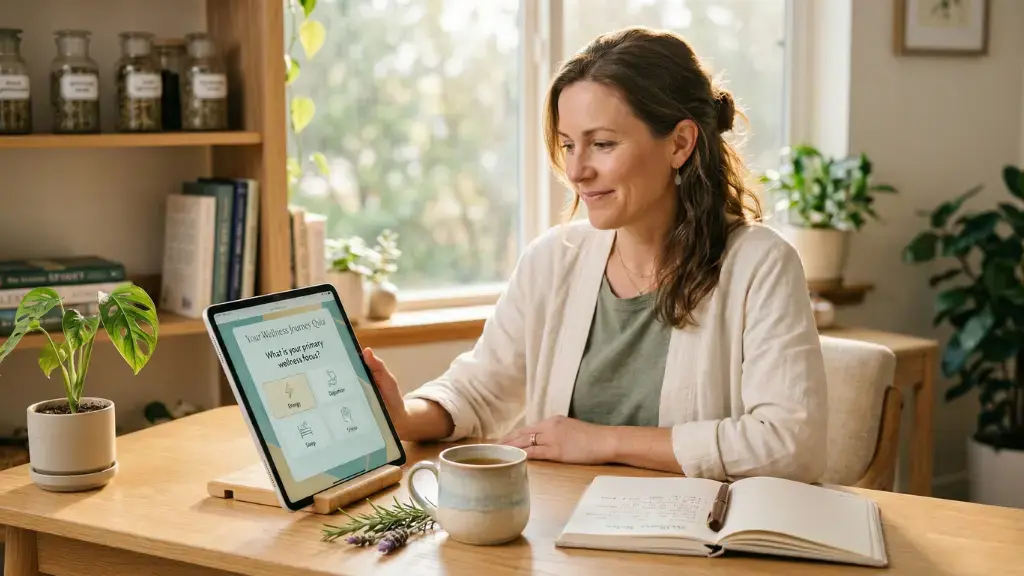
Quick Overview: Vibe‑Coded Widgets From Brochure to ExperienceVibe‑coded widgets transform static practitioner websites into interactive experiences that increase dwell time and engagement. Built by ConversationYou describe what you want to an AI like Claude, which generates a complete, self‑contained website widget. Boosts AI VisibilityInteractive widgets generate structured, conversational content that AI systems prefer to cite when answering health queries. Faster Leads & TrustQuizzes and calculators capture leads at high intent while letting visitors experience your clinical thinking. A new library of interactive widget ideas for natural health practitioners — and why they might be the most underused tool in your digital practice. The Problem With Most Practitioner Websites Most practitioner websites are brochures. They tell visitors who you are, what you do, and where to book. They are polite, professional, and entirely forgettable. The visitor arrives, scrolls, reads a little, and leaves. There is no moment of connection, no taste of your thinking, no spark of “this person understands me.” And then the visitor asks ChatGPT the same question they came to your site to answer. The problem is not that your website is badly written. The problem is that it asks nothing of the visitor. It gives them no way to participate. And participation is the single biggest driver of the three things every practitioner website needs: dwell time, lead capture, and the kind of structured content that AI systems cite when they answer questions about your area of expertise. There is a better way. And it is quietly becoming one of the most powerful tools available to practitioners who want to stand out. It is called vibe coding. And it is changing what a practitioner website can do. What Is a Vibe-Coded Widget? “Vibe coding” is the new term for building software by conversation. You describe what you want to an AI assistant like Claude — in plain English, the way you would describe it to a friend — and the AI writes the code. A vibe-coded widget is a small, interactive piece of your website that you build this way. Not a plugin. Not a subscription. Not a developer project. Just a single, self-contained file that lives on one of your pages and does one specific thing — beautifully. It might be a two-minute quiz that scores a visitor’s hormone balance. An interactive body map that reveals what each symptom might mean. A gentle decision tree that helps a visitor work out whether your three-month programme is right for them. A searchable library of the herbs you use most. A sleep quality calculator. A testimonial filter wall. A “which test is right for me” selector. The shift is profound. Instead of telling visitors what you do, you let them experience your thinking. Instead of a static page, you give them a moment of insight. Instead of a bounce, you get a lead, a CTA click, or at the very least, a visitor who stayed on your site twice as long as they would have otherwise — and whose data now signals to Google and to AI systems that your page is valuable. And the best part? You can build one in an afternoon. Why Widgets Work So Well Right Now Three forces are converging that make this exactly the right moment for practitioners to start using widgets. Search is changing. AI systems like ChatGPT, Gemini, Perplexity, and Claude are increasingly answering health questions directly. To be cited by them, your website needs structured, conversational content — exactly the kind of content that widgets naturally generate. A quiz that answers “what does my cycle tell me about my hormones?” is AI-citation gold. Attention is scarcer than ever. The average visitor gives a website about eight seconds before deciding whether to stay. Static text cannot hold them. But a progress bar on a quiz can. An animated body map can. A score circle filling in front of their eyes can. Interactivity is the single most powerful antidote to the scroll-and-bounce behaviour that is quietly killing most practitioner sites. Building software just got radically easier. Two years ago, a custom quiz on your website meant hiring a developer or using an expensive plugin with limited design control. Today, you can describe the quiz to Claude in plain English, copy the resulting HTML file, and upload it to your site. The technical barrier has effectively disappeared. What has not caught up yet is the number of practitioners actually doing this. That is your opportunity. The Library: Six Themes of Widgets Worth Building To help you see what is possible, we have compiled a library of over 35 widget ideas specifically for natural health practitioners, organised six different ways. Assessment and self-discovery widgets give visitors personalised insights in exchange for their attention — symptom checkers, root-cause quizzes, hormone balance scores, gut health self-audits, sleep quality calculators, metabolic type quizzes, and “which test is right for me” selectors. Educational and explainer widgets build your authority and generate AI-citable content — interactive body maps, nutrient decoders, herb libraries, test result translators, supplement interaction checkers, and cycle phase educators. Planning and conversion widgets turn curiosity into commitment — decision trees, investment calculators, discovery call pre-qualifiers, custom protocol previews, and programme match-makers. Tracking and return-visit widgets build habits and bring visitors back — symptom trackers, habit streak trackers, cycle trackers, and mood journals. Social proof and trust widgets convert the on-the-fence visitor — animated outcomes counters, anonymised before/after carousels, filterable testimonial walls. AI-citation-optimised widgets are specifically designed to get your site referenced in AI answers — FAQ accordions with schema markup, knowledge search tools, glossary tooltips, and condition encyclopedia cards. The full library is inside the Thriving Practitioners Growth Hub, along with a practical action plan you can follow step by step — which is the point of this post. Example Vibe-Coded Widget Your Fertility Cycle Guide | Thriving Practitioners Understanding Your Cycle Your Fertility Cycle Guide Explore each phase of your menstrual cycle to understand the hormonal shifts, nutritional support, and lifestyle choices that