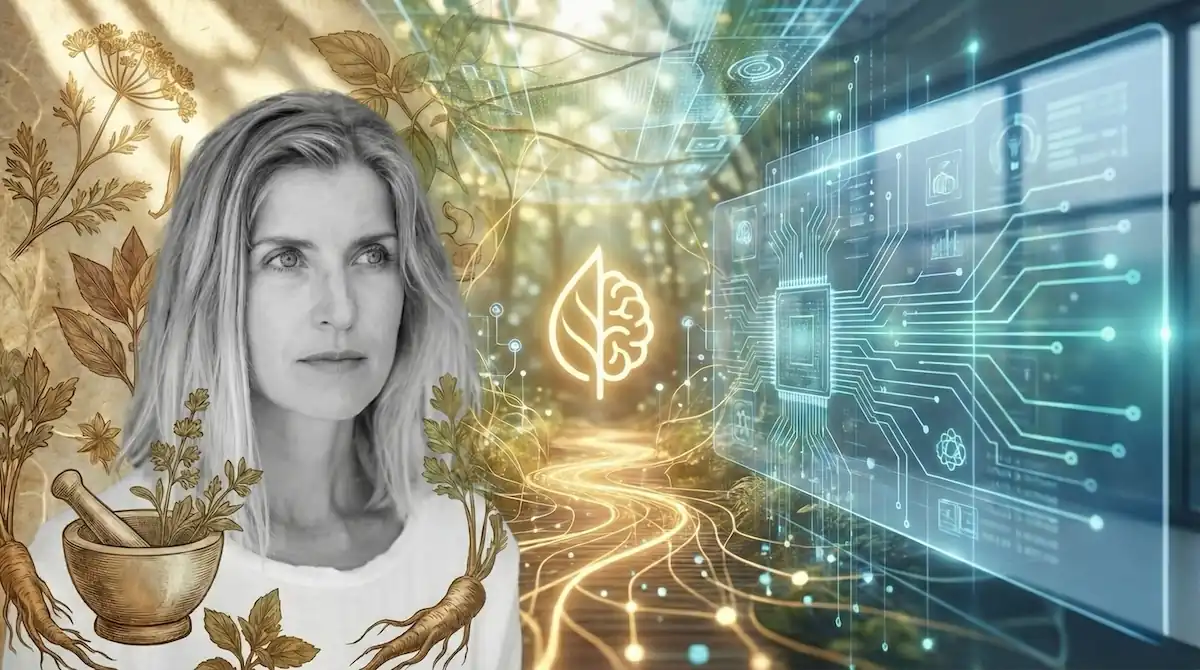
With researcher and guest contributor, naturopath, Sofia Silchenko
Your naturopathic or nutritional practice stands at a pivotal moment in the history of natural health. The question isn’t whether AI will transform how you work – it’s whether you’ll shape that transformation or be shaped by it.
According to Sofia Silchenko, Chair of the AI & Technology Special Interest Group at NHAA and Master’s candidate in Advanced Naturopathy, “The future of healthcare lies not in choosing between tradition and technology, but in thoughtfully combining both, to bring a better quality of care to patients.”
This perspective offers natural health practitioners a strategic pathway through what Sofia calls the profession’s “huge crossroads, caught between its traditional roots and a future that’s all about digital tech.”
Naturopathy in the Age of AI
Watch the video presentation below, based on Sofia’s current Master’s studies and in-depth research, to explore this critical juncture, then continue reading for practical strategies to position your practice for sustainable growth.
What Is the Core Challenge Facing Natural Health Practitioners Today?
The fundamental challenge facing practitioners isn’t simply learning new technology – it’s reconciling timeless healing wisdom with systems built on entirely different foundations. As Sofia’s research articulates in this presentation…
“How do you scientifically measure a vital force? How do you quantify the health of a whole system? Wrestling with these almost unanswerable questions created a real identity crisis for the profession.”
This identity crisis becomes particularly acute when you consider that AI systems are trained on reductionist models – separate biomarkers, linear relationships, and isolated variables.
Your practice, however, operates from a fundamentally different paradigm: whole-person care, interconnected systems, and the vital force that conventional research struggles to acknowledge.
For practice growth, this creates both challenge and opportunity.
Potential clients increasingly use AI to research health solutions, yet these same AI systems may not understand or accurately represent what makes your approach uniquely valuable.
How Can Practitioners Bridge the Timeless Wisdom-Modern Technology Gap?
Sofia proposes a transformative solution: evolving from practitioners of natural medicine into digital health navigators.
Rather than viewing AI as a replacement for clinical expertise, this perspective positions technology as an amplification tool.
“Instead of replacing the practitioner, AI could be an incredibly powerful tool,” Sofia explains.
“Imagine it automating all the boring stuff like note-taking and admin, while also analysing complex data from wearables and lab tests to find patterns a human might miss.”
This frees up the practitioner’s time to focus on the most important thing – that deep human connection and patient care.”
This approach directly addresses what James Burgin calls “the visibility gap” – being clinically excellent but digitally invisible.
By embracing the role of digital health navigator, you’re not abandoning your therapeutic principles; you’re extending your reach and relevance.
Practical Applications for Your Practice
Administrative Liberation: AI tools can handle appointment reminders, basic intake questions, and documentation, reclaiming 10-15 hours weekly for actual client care. This directly affects your capacity to serve more clients without burning out.
Data Integration: Modern clients arrive with wearable device data, previous test results, and research from multiple sources. As a digital health navigator, you become the essential interpreter, placing this information within a holistic framework. This positions you as irreplaceable rather than redundant.
Educational Authority: By understanding how AI systems work and what they recommend, you can create content that both educates clients and establishes your authority. When clients ask ChatGPT or Perplexity about natural health solutions, your practice should be part of the answer.
What Are the Critical Questions Practitioners Must Address?
Sofia considers three defining questions that will determine whether AI becomes a tool, a threat, or a transformation catalyst:
1. Can Technology Support Nuanced, Individualised Care?
Sofia asks an important question:
“Can technology, which is built on data and algorithms, truly be used to support the kind of nuanced, individualised care that naturopathy champions? Or is it just going to push practitioners back towards that green allopathic reductionist model?”
The practice growth implication: Your ability to differentiate yourself depends on maintaining holistic principles whilst leveraging technological efficiency.
Clients seeking truly personalised care will increasingly value practitioners who use technology thoughtfully rather than those who either avoid it completely or allow it to compromise therapeutic relationships.
2. How Do We Preserve the Therapeutic Relationship?
Sofia asks, “So much of naturopathy is built on that therapeutic relationship between a practitioner and a patient. In a world of automated analysis and AI-driven insights, is there a real risk that this core connection could be weakened or maybe even lost?”
The strategic response: Rather than viewing AI as a competitor for human connection, position it as a tool that enables deeper therapeutic relationships.
When administrative tasks are automated, and data analysis is streamlined, you have more capacity for the irreplaceable elements of healing – listening, empathy, and individualised care that no algorithm can replicate.
3. What Becomes of the Practitioner's Role?
Perhaps most critically, Sofia poses the question: “As AI makes health data accessible to pretty much everyone, what is the role of the practitioner? Do they become essential navigators of this new world, or do they risk becoming redundant if they fail to adapt?”
The opportunity: Clients drowning in health information need practitioners more than ever – not as information gatekeepers, but as trusted guides who can contextualise, prioritise, and personalise recommendations. This is where your clinical training, experience, and holistic perspective become increasingly valuable, not diminished.
How Does This Connect to Evidence-Based Practice Concerns?
Sofia’s research-based video presentation traces how the 1970s push for evidence-based practice created similar tensions:
“How on earth do you prove timeless, holistic wisdom with modern tools?”
The profession responded by developing whole-systems research – evaluating entire care packages rather than isolated interventions.
The AI revolution presents a parallel challenge and a similar opportunity. Rather than abandoning holistic principles to fit AI’s reductionist frameworks, practitioners can help shape how AI understands and represents whole-person care.
James Burgin’s insight… “Now is the time for natural health practitioners to reclaim their voice and visibility in an AI-dominated world. Currently, there is a golden opportunity to train the AI language models with quality, holistic content, and to influence what our prospective clients are discovering online.”
Learn about AEO – Answer Engine Optimisation…
Building Your Digital Evidence Base
Document Your Methodology: Create clear, structured explanations of your assessment and treatment approach. AI systems favour well-organised, explicit information over implicit knowledge.
Share Your Clinical Reasoning: Blog posts, FAQs, and educational content that explain your decision-making process help AI systems understand the sophistication of holistic practice.
Establish Your Authority Markers: Professional registrations (ANTA, NHAA, ATMS, ARONAH), continuing education, and specialty certifications provide the credibility signals that AI systems look for when determining which practitioners to recommend.
What Specific Actions Support Practice Growth in This New Landscape?
Based on both Sofia’s insights and the Thriving Practitioners methodology, here are concrete steps:
Immediate Actions (This Week)
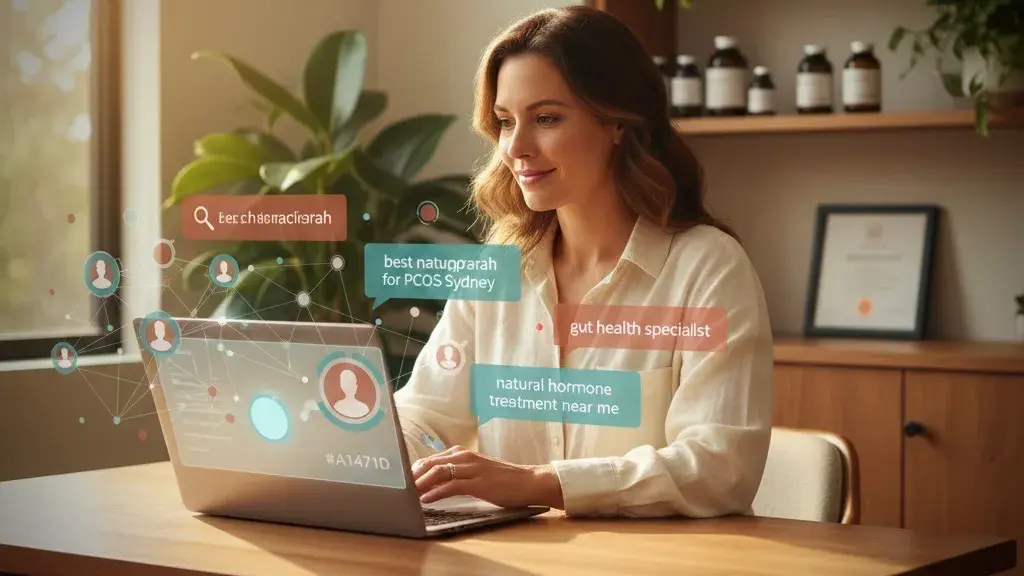
- Audit Your AI Visibility: Test how ChatGPT, Gemini, and Perplexity respond when asked about practitioners in your specialty and location. Document whether your practice appears and how it’s described.
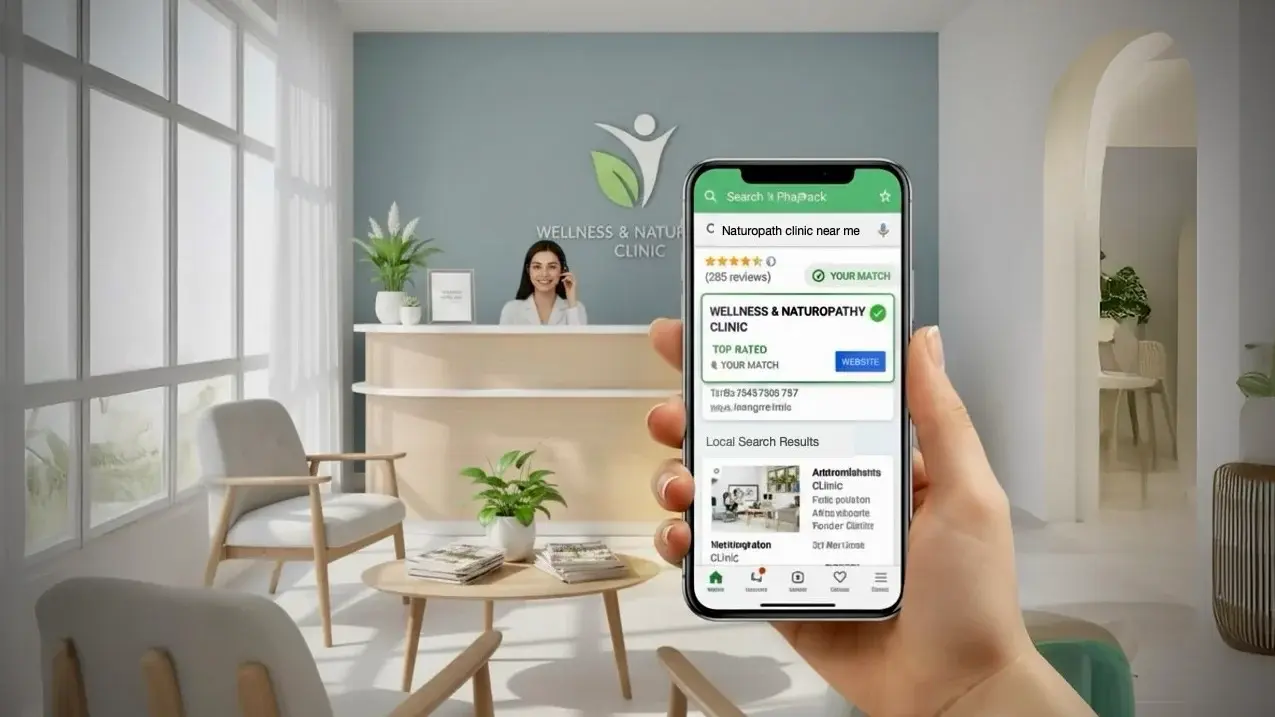
- Complete Your Digital Presence: Ensure your Google Business Profile, professional directory listings, and website clearly communicate your qualifications, approach, and what makes you different.
- Start Your Question Bank: Document the 20 most common questions new clients ask. These become the foundation for content that positions you as the authority AI systems cite.
Ongoing Strategy (This Month)
- Develop Your Digital Navigator Skills: Take Sofia’s advice and learn about the AI tools your clients are using. Understand their capabilities and limitations to guide clients effectively.
- Create Bridge Content: Write blog posts, record videos, or develop resources that explicitly connect ancient wisdom with modern evidence. Example: “How Naturopathic Vitalism Explains What Wearable Devices Measure.”
- Build Your Authority Ecosystem: Establish presence across platforms where potential clients search for health information – not just your website, but also professional directories, social media, and community health resources.
Long-Term Positioning (This Quarter)
- Define Your Digital Health Navigator Specialty: What specific aspect of the technology-tradition intersection will you claim? You may specialise in interpreting functional testing for gut health or in translating hormone-tracking data into holistic treatment plans.
- Develop Professional Recognition: Speak at local and practitioner events, contribute to professional publications, or join special interest groups like Sofia’s AI & Technology SIG. These activities establish you as a thought leader who bridges both worlds.
- Create Educational Programs: Consider group programs, online courses, or community workshops that position you as the guide helping clients navigate health technology whilst receiving holistic care.
How Should Practitioners Think About the "$6 Trillion Global Wellness Technology Market"?
Sofia highlights the scale of disruption:
“We’re talking about a $6 trillion global wellness technology market. Consumers are diving headfirst into AI-powered health trackers and direct-to-consumer testing. This isn’t some far-off future trend. This is happening right now.”
Yet she also notes the professional gap: “A 2023 survey of Australian health professionals found that while only about a quarter are using AI in their practice, a massive 75% want to be educated on it.”
The strategic insight: You don’t need to become a technology expert – you need to become strategically competent. Understanding enough to guide clients, interpret data, and integrate technology into holistic practice puts you in the valuable 25% whilst meeting the 75%’s educational needs.
This creates multiple revenue opportunities:
- Premium consultations for technology integration
- Educational workshops on understanding health data
- Group programs combining tech tools with holistic protocols
- Professional mentoring for other practitioners navigating this transition
What Does "Green Allopathy" Mean for Practice Growth?
Sofia introduces a critical concept: the risk of “green allopathy” – losing naturopathy’s holistic soul by simply prescribing natural remedies for symptoms.
“Instead of digging deep to figure out why a patient has chronic migraines, a practitioner might just prescribe a feverfew supplement. That’s just treating a symptom with a natural product. It’s like a green aspirin, and it completely misses the holistic goal of finding the root cause.”
This warning applies equally to AI integration. Using technology to streamline symptom-matching without maintaining holistic inquiry creates practices that are efficient but therapeutically hollow.
The Natural Health Practitioner's Differentiation Strategy
Clients can get symptom-based recommendations from AI for free. What they can’t get is your clinical reasoning, pattern recognition, and individualised treatment strategy. Position your practice around the irreplaceable value of whole-person assessment and relationship-based care, supported by – not replaced by – technology.
What Makes a Practitioner "AI-Ready" Without Compromising Values?
According to Sofia’s presentation, becoming AI-ready whilst maintaining therapeutic integrity requires:
Philosophical Clarity: Understand and articulate what vitalism and holistic practice mean in practical terms. When you can clearly explain your methodology, both clients and AI systems better understand your unique value.
Strategic Technology Adoption: Choose tools that genuinely serve holistic care rather than adopting technology for its own sake. AI that helps you see patterns across multiple systems supports your work. AI that reduces clients to symptom checklists undermines it.
Educational Leadership: Position yourself as the bridge-builder between technology and tradition. Share your learning process, discuss challenges openly, and demonstrate how thoughtful integration works in practice.
Ethical Boundaries: Maintain clear professional boundaries around what AI can and cannot do. Be transparent about when you’re using AI tools and how they support (not replace) your clinical judgment.
How Does This Connect to the Thriving Practitioners Philosophy?
James Burgin’s principle that “Where Timeless Wisdom Meets Cutting-Edge Technology” finds perfect expression in Sofia’s work. Both perspectives recognise that the future belongs to practitioners who can honour therapeutic traditions whilst embracing technological possibilities.
The key distinction: Technology should amplify your authentic voice, not replace it. AI should enable you to serve more clients more effectively, not change the fundamental nature of what makes your work valuable.
As James emphasises, practitioners often invest up to 95% of their education in clinical skills. The challenge isn’t learning everything about AI – it’s learning enough to leverage it for the 5% you spend on practice building, so that 95% can reach more people who need it.
What Should Your Next Steps Be?
Based on Sofia’s presentation and the Thriving Practitioners methodology:
This Week: Complete the AI Audit Action Plan. Test your current visibility, document gaps, and identify opportunities.
This Month: Begin positioning yourself as a digital health navigator. Update your website and professional profiles to reflect this expanded role.
This Quarter: Develop your first bridge content – resources that help clients understand how to combine technology with holistic care, positioning you as the essential guide.
This Year: Establish thought leadership in the technology-tradition integration space within your specialty. Speak, write, teach, and demonstrate how this combination serves clients better than either approach alone.
Conclusion: Shaping Transformation Rather Than Being Shaped By It
Sofia concludes her presentation with a powerful reminder: “For naturopathy, a profession that has already weathered the storm of scientific scrutiny, this may be its defining test. The next chapter is still unwritten.”
Your practice stands at this exact moment – the opportunity to help write that next chapter. The practitioners who will thrive aren’t those who resist technology or abandon holistic principles, but those who thoughtfully integrate both, as Sofia demonstrates through her own work.
The question Sofia poses – “Is AI a tool, a threat, or the catalyst for a total transformation?” – ultimately depends on the choices you make today.
Will you become a digital health navigator who bridges timeless wisdom and cutting-edge technology? Or will you risk becoming invisible in the very systems your ideal clients use to find help?
The choice, and the opportunity, are yours.
Ready to position your practice for sustainable growth at this critical crossroads?
Join the Thriving Practitioners community for practical guidance on becoming AI-visible whilst maintaining your therapeutic integrity. Together, we’re helping natural health practitioners navigate this transformation with clarity, strategy, and authentic purpose.
Share your thoughts: How do you see AI impacting your practice? What concerns or opportunities do you recognise? Join the conversation in the Thriving Practitioners Facebook group.
About Sofia Silchenko
Sofia Silchenko serves as Chair of the AI & Technology Special Interest Group at NHAA, where she leads discussions on the ethical integration of AI into naturopathic practice. Currently pursuing her Master’s in Advanced Naturopathy, Sofia bridges traditional healing wisdom with health-tech innovation, empowering practitioners to navigate the evolving digital landscape with responsibility and purpose. Her unique combination of clinical expertise and technological insight makes her an essential voice for practitioners facing this critical crossroads.