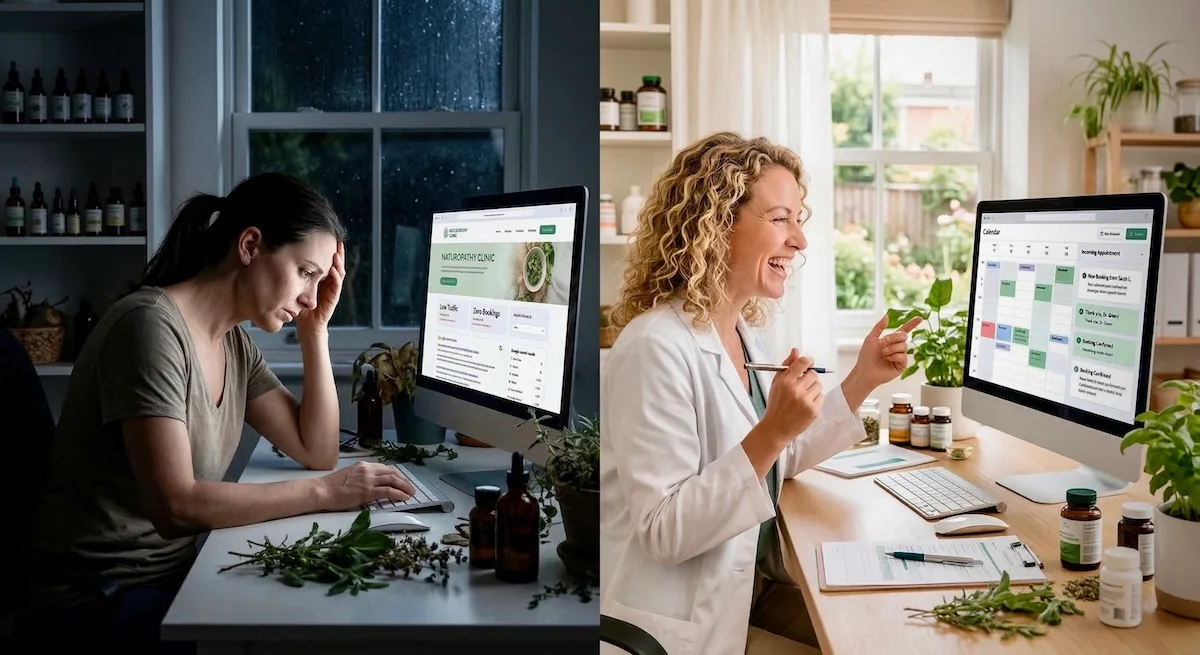

You wouldn’t treat a patient without understanding their symptoms and running diagnostic tests first. Yet most natural health practitioners are making critical decisions about their online presence based on guesswork, generic advice, and what worked for someone else’s business.
The irony? Your website is already generating diagnostic data. You’re just not looking at it.
Google Search Console: The Goldmine You're Not Using
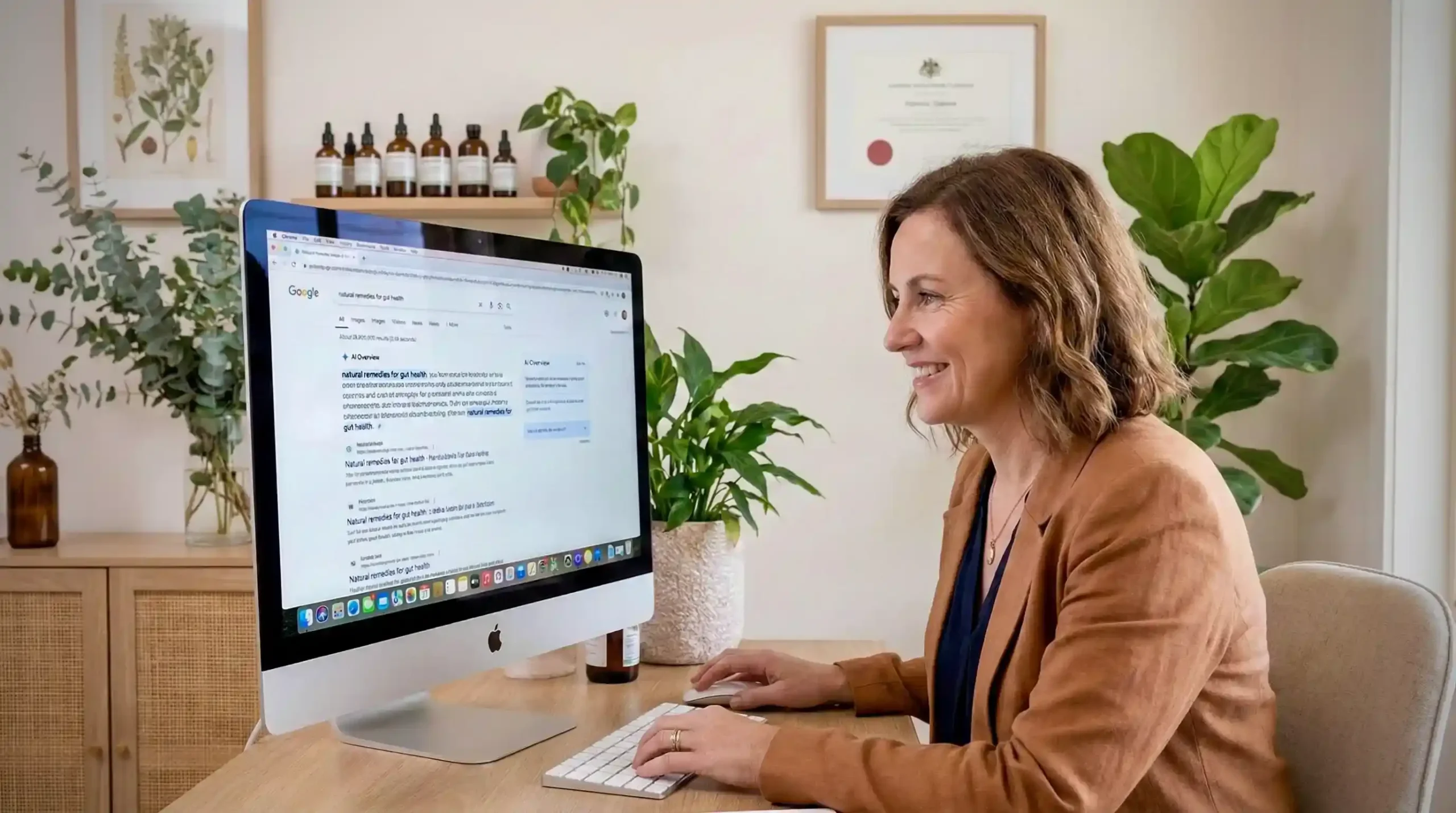
Every practitioner website connected to Google has access to Google Search Console (GSC) – a free tool that records exactly how people are finding (or not finding) you online.
The problem isn’t a lack of data. It’s that the raw data is overwhelming and meaningless without interpretation.
Here’s what Google Search Console shows you:
- The exact phrases people type into Google before landing on your site
- Which pages get shown in search results (and how often)
- Your ranking position for each keyword
- Which queries get impressions but zero clicks (missed opportunities)
- Which content is working and which is invisible
Most practitioners glance at this data once, feel overwhelmed, and then never look at it again.
But here’s what I’ve discovered: When you analyse Google Search Console data systematically using AI, patterns emerge that reveal exactly where to focus your energy for maximum impact.
What the Data Actually Reveals
Let me show you three real patterns I’ve uncovered recently (details anonymised):
Pattern 1: The Invisible Authority
The data showed:
- 1,902 monthly impressions for “dysbiosis”
- Average position: 82 (page 8-9 of Google)
- Clicks: 0
- Click-through rate: 0.00%
What this means: Google is showing this practitioner’s content nearly 2,000 times per month for a high-value clinical term. People searching for “dysbiosis” are problem-aware and actively seeking solutions. But ranking on page 8 means this content is completely invisible.
The insight: This isn’t a “write more content” problem. The content already exists and Google recognises its relevance. This is an optimisation problem. With targeted improvements (better title tags, structured content, internal linking, and possibly some backlinks), this page could move from position 82 to the first page.
The maths: Even capturing just 5% of those 1,902 impressions at a 3% click-through rate means 95 targeted monthly clicks from people actively searching for expertise in dysbiosis. For a specialised practitioner, that’s 10-15 qualified consultation requests per month from just one keyword.
P2: The Mismatch
The data showed:
- Query: “naturopath near me”
- Impressions: 4
- Clicks: 1
- CTR: 25%
- Average position: 6.8
Compared to:
- Homepage: 723 impressions
- Clicks: 67
- CTR: 9.27%
- Average position: 22
What this means: When this practitioner appears in local “near me” searches (position 6-7), they get a 25% click-through rate – excellent conversion. However, they appear only four times per month for local searches, while their homepage receives 72 impressions at a much lower position (22) with a 9% CTR.
The insight: The homepage is getting traffic, but it’s not optimised for local search intent. The business is losing hundreds of potential local clients because Google doesn’t clearly understand that this is a local service provider.
The opportunity: Local SEO optimisation (Google Business Profile, location-specific content, local schema markup) could shift hundreds of those homepage impressions into high-converting “near me” territory. The conversion data is already proven – they just need more visibility in the right searches.
Pattern 3: The Brand Strength Hidden in Plain Sight
The data showed:
- “Mary Rose*”: 30 impressions, 13 clicks, 43.33% CTR
- Position: 3.0
Compared to:
- 1,000 other queries: 2 total clicks combined
- Average CTR: 0.20%
What this means: When people search for this practitioner by name, they appear in position 3 and get an exceptional click-through rate – exceptional. However, the result is that only 30 people per month search by name.
Meanwhile, 998 other keyword opportunities are generating almost zero engagement. The practitioner has strong brand recognition amongst people who know them, but virtually no visibility to new prospects.
The insight: This is a classic “known by few, invisible to many” scenario. The brand has authority signals (evidenced by the strong performance of branded searches), but the content strategy isn’t capturing broader search intent.
The strategic shift: Instead of generic blog posts, create content that bridges from high-volume searches (like “gut health Brisbane” or “IBS treatment”) to the practitioner’s name and methodology. Utilise the proven brand strength as the conversion mechanism, but establish visibility pathways for individuals who are not yet familiar with the name.
* Practitioner name is changed
Why This Changes Everything
These aren’t hypothetical examples or generic advice. This is what happens when you actually analyse the data your website generates.
Every practitioner’s Google Search Console data tells a different story:
- Where Google already sees you as relevant (but you’re not visible enough)
- Where you’re getting impressions but losing clicks (conversion problems)
- Where you have unexpected authority (capitalise on it)
- Where content gaps are costing you qualified traffic
- Which one or two changes would create the biggest impact
The power word insight often emerges from this analysis – one keyword where you already have momentum, search volume is strong, and a focused content strategy could shift you from invisible to prominent.
For the dysbiosis example above, that’s the power word. 1,902 monthly searches, existing Google recognition, zero competition from the practitioner’s own content. One optimised pillar page could transform that entire practice’s pipeline.
Why This Matters Now
With AI-driven search and Answer Engine Optimisation gaining traction, visibility is no longer about publishing random blog posts. It’s about focusing your energy where the search engines already want to reward you.
A data-driven roadmap stops the guessing game and shows you:
- What’s already working (double down)
- What’s almost working (quick wins)
- What’s missing (strategic gaps)
- What to ignore (low-value distractions)
What's Next
I’ll be sharing more about these Visibility Roadmaps inside the Thriving Practitioners community and using them as the foundation for mentoring sessions.
If you’d like to see what your own Google Search Console data reveals about your practice’s visibility, stay tuned – I’ll soon be offering a limited number of personal Website Diagnostic Roadmaps each month.
For now, ask yourself: What would change if you knew exactly where to focus your online energy – backed by your own website’s data, not generic advice?
That’s what a Visibility Roadmap provides: clarity, direction, and a data-driven growth strategy tailored to your practice.