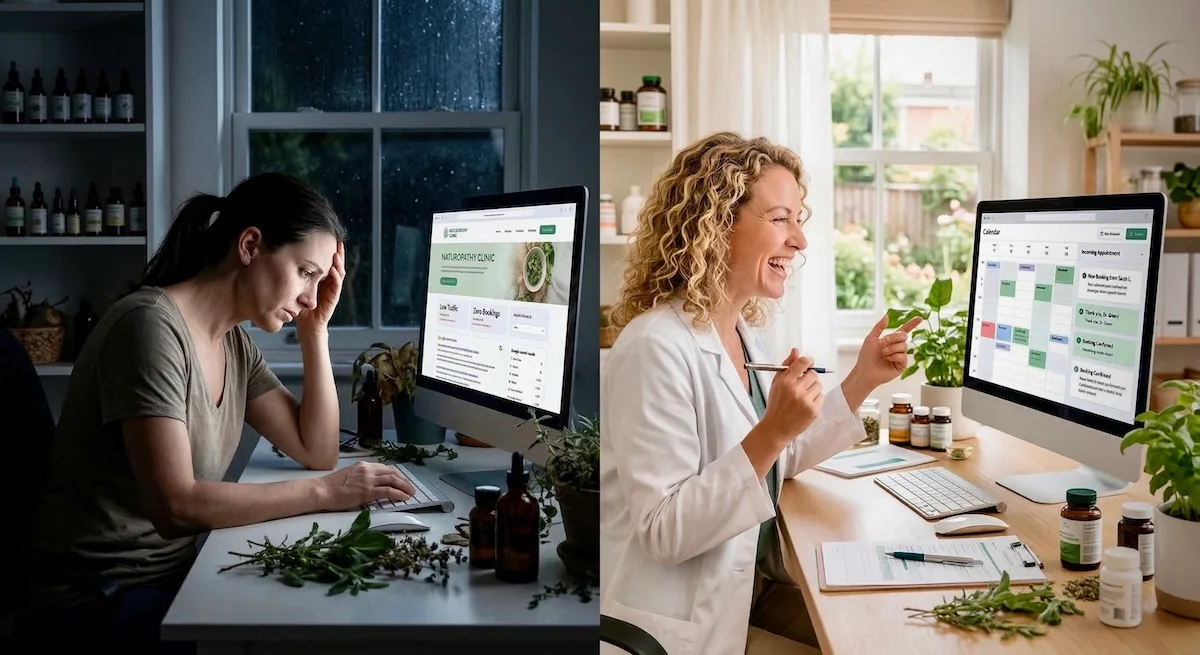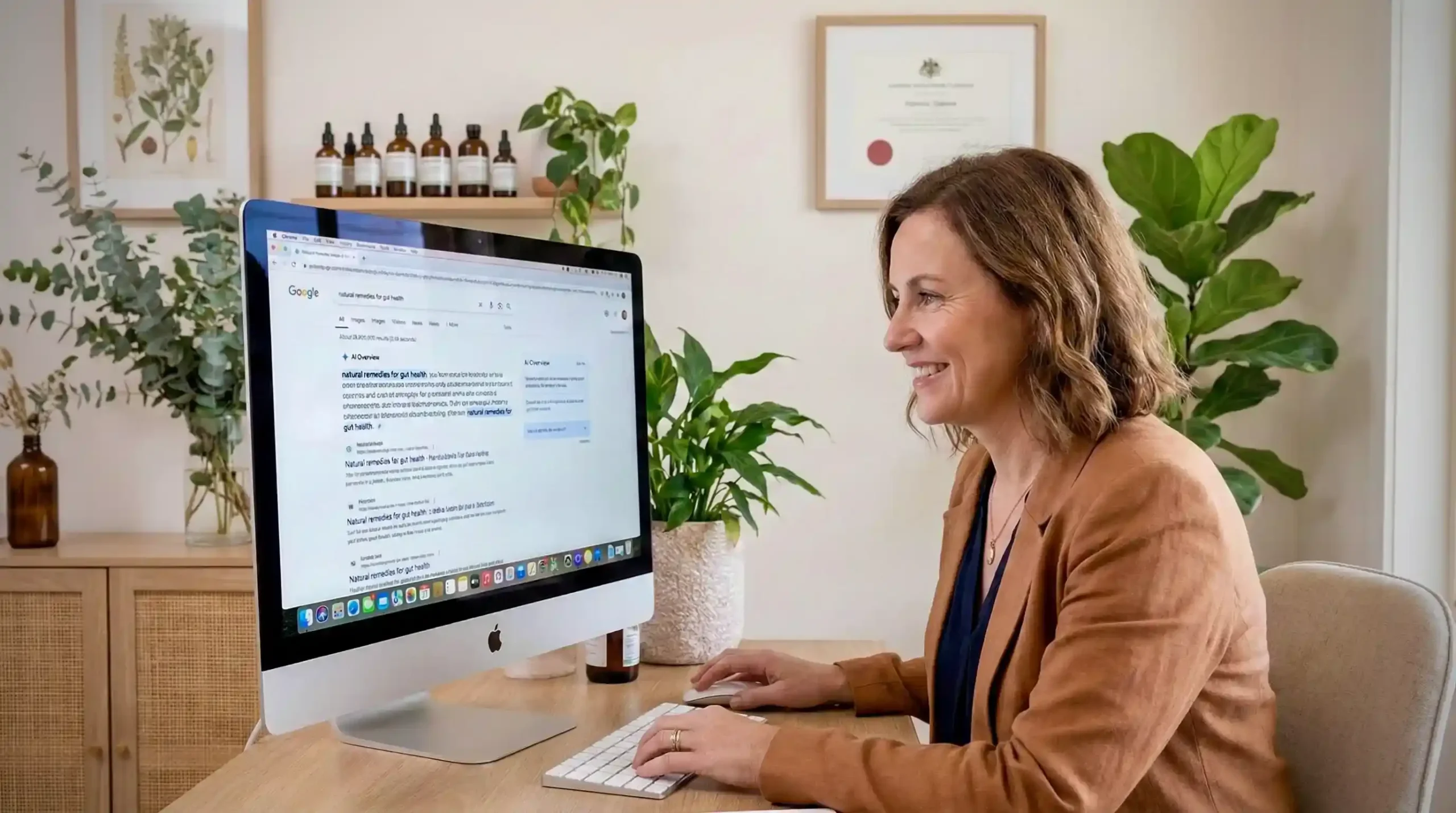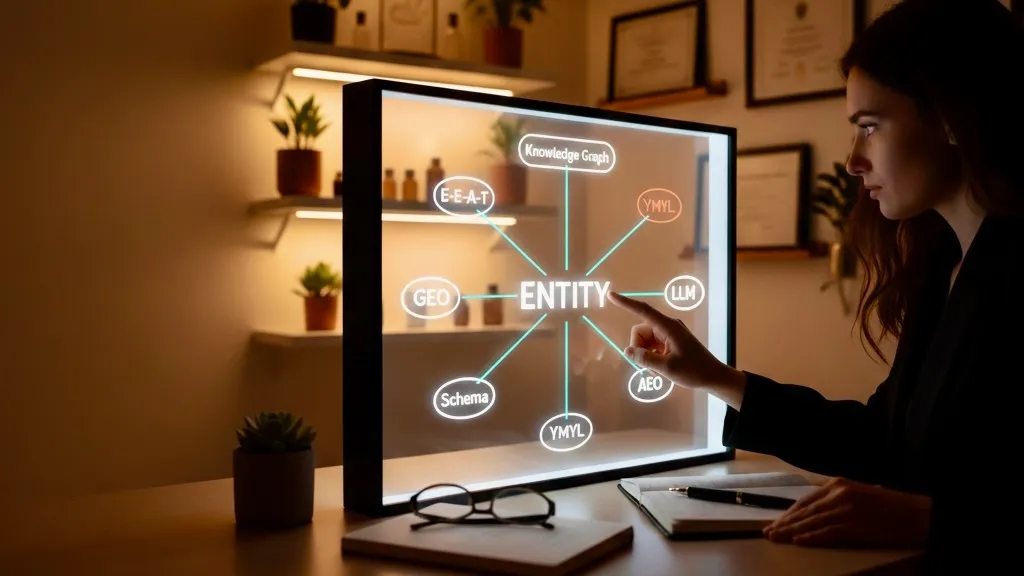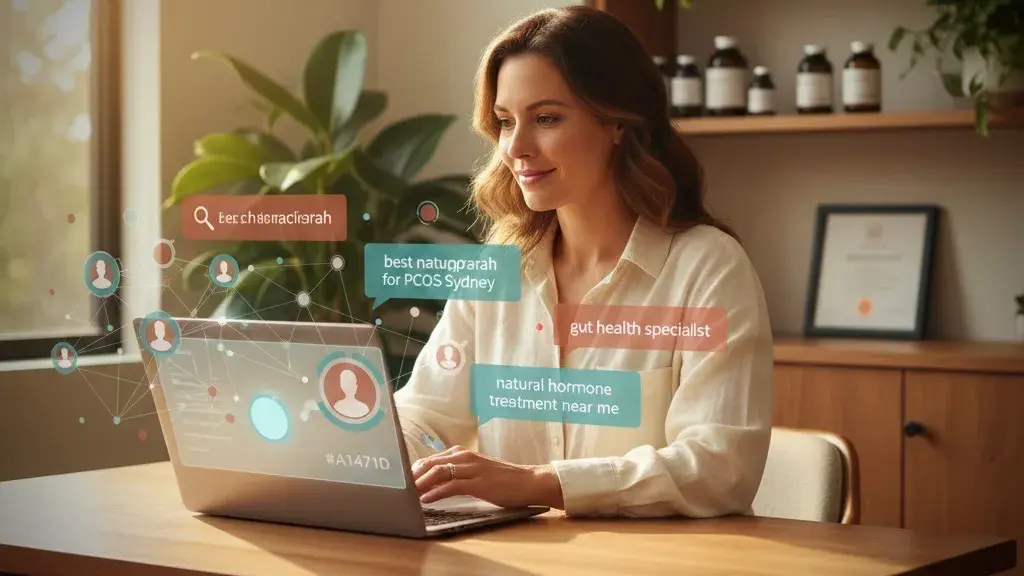
The practitioner is now the artist, tasked with creating content that resonates with AI search engines.
To ensure your practice appears in AI-generated health answers, you need to implement answer engine optimisation for natural health practitioners — also known as Answer Engine Optimisation (AEO).
This strategy focuses on answering hyper-specific patient questions, structuring content so AI systems can extract and cite it, and building authority through mentions rather than backlinks — all core principles of answer engine optimisation for natural health practitioners.
According to James Burgin, a former naturopath and founder of Thriving Practitioners, practitioners who master answer engine optimisation for natural health practitioners now will have an enormous competitive advantage, as by 2028, the majority of health-related searches will come from AI systems like ChatGPT, Claude, and Perplexity, rather than traditional search engines.
TLDR: Key Takeaways
When Search Engines Started Having Conversations
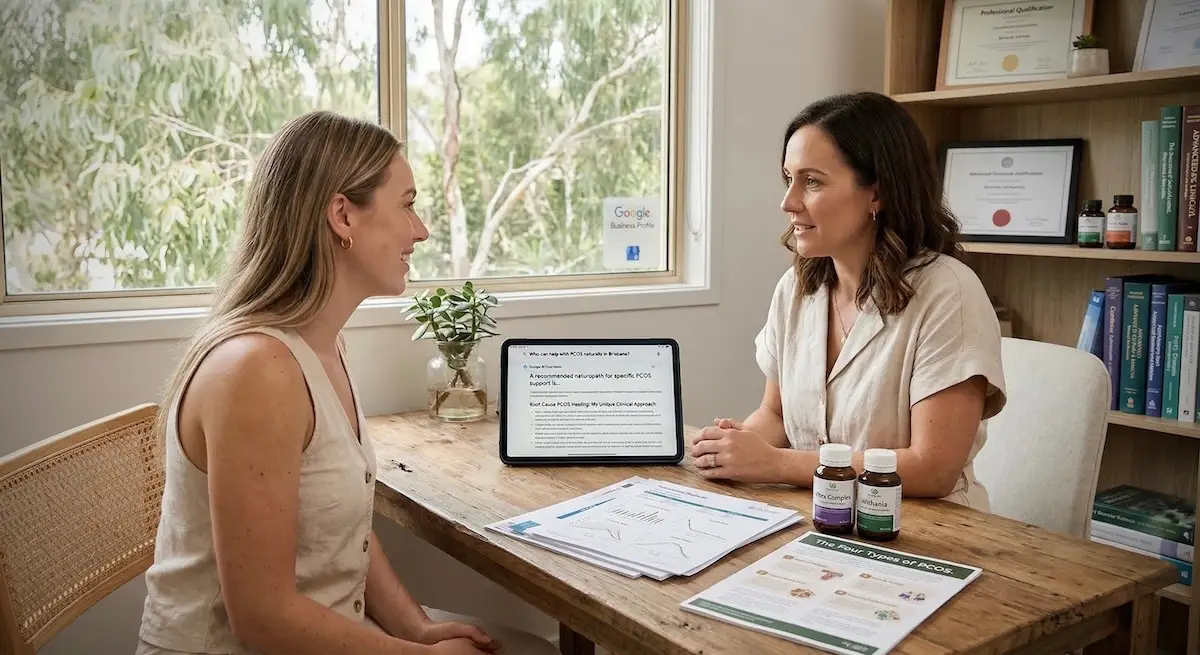
Picture this: A worried parent sits down at their kitchen table late one evening, opens ChatGPT, and types, “My daughter’s eczema keeps getting worse despite everything we’ve tried. What am I missing?”
The AI doesn’t send them to a search results page. It gives them an answer. A complete, personalised answer. And here’s the critical question: is your practice part of that answer?
If you’ve been pouring your heart into traditional SEO, creating those comprehensive blog posts, carefully choosing keywords, building backlinks, I need you to take a deep breath. Because the game just changed. Completely.
And this shift is exactly why answer engine optimisation for natural health practitioners now matters more than traditional rankings.
How I Created This Content - And How You Can Too
Here’s something fascinating: the video I’m sharing with you today wasn’t created with expensive software or a professional production team. I created it using Google’s free tool called NotebookLM.
Yes, free. And incredibly powerful. Here is the link: notebooklm.google.com
NotebookLM allows you to upload your expertise, research, add patient insights, then generates engaging audio and/or video content that sounds remarkably natural and conversational.
The video you can watch on this page was created with this tool – and during the forthcoming Pathway to Practice Growth workshop, I’ll be sharing exactly how to use NotebookLM to support you to grow your practice, create content consistently, and position yourself as an AI-discoverable authority. (Yes, I’d prefer an Aussie accent, I’m sure that will come!)
This is the perfect example of what I mean when we’re entering an era where timeless wisdom meets cutting-edge technology. You don’t need a massive marketing budget. You need to understand the tools and strategies that actually work in 2025.
The Shift Every Practitioner Needs to Understand
For over 20 years, we’ve played by Google’s rules. We’ve optimised for search engine results pages, competed for position one, and measured success by website traffic. But here’s what’s happening right now, beneath the surface: by 2028, the majority of search traffic will come from AI-powered answer engines like ChatGPT, Claude, Perplexity and Google AI overviews which is why answer engine optimisation for natural health practitioners is no longer optional.
The challenge? These AI systems don’t work like Google. They don’t send people to your website to browse 10 different articles. They synthesise information from across the web and deliver one comprehensive answer.
My Journey from SEO to AEO
When I first started exploring AI tools in 2022, I immediately saw both the opportunity and the threat for practitioners.
When I first started exploring AI tools in 2022, I immediately saw both the opportunity and the threat for practitioners.
The opportunity: finally, a way to cut through the noise and connect with people who genuinely need your help.
The threat: practitioners who don’t adapt will become invisible.
The Four Pillars of Answer Engine Optimisation
1. Understanding How AI “Thinks”
– The Query Fan-Out
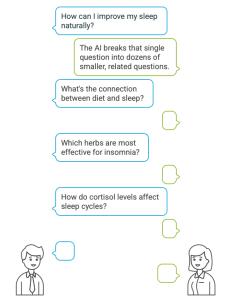
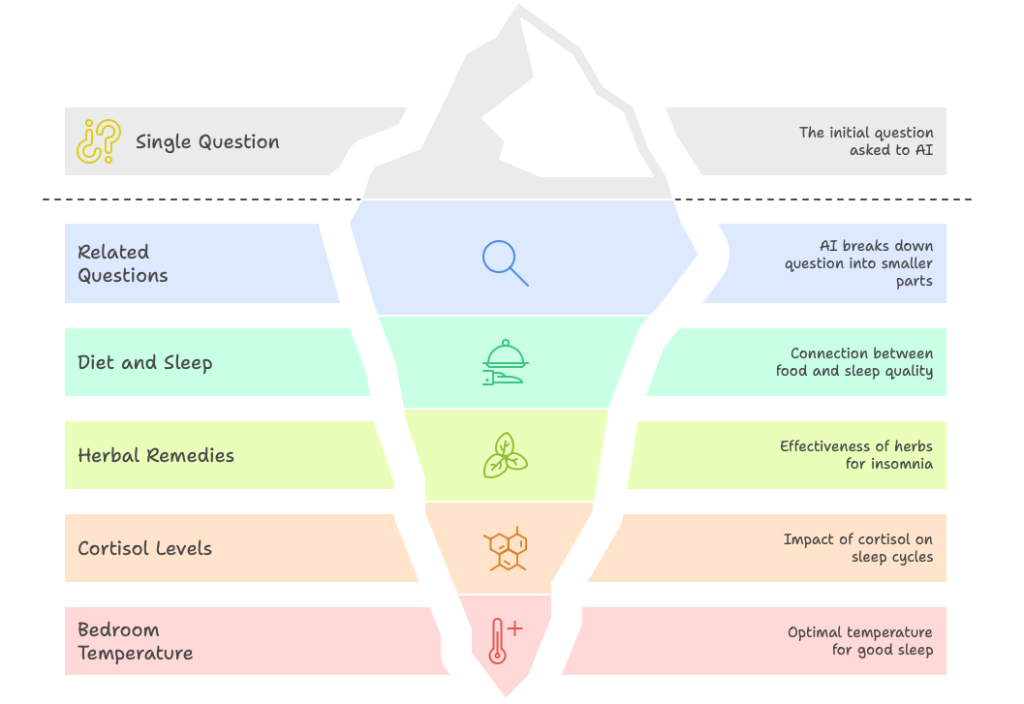
When someone asks an AI a question, something fascinating happens called “query fan-out”. The AI breaks that single question into dozens of smaller, related questions.
For example, “How can I improve my sleep naturally?” becomes:
- What’s the connection between diet and sleep?
- Which herbs are most effective for insomnia?
- How do cortisol levels affect sleep cycles?
- What’s the optimal bedroom temperature for sleep?
Your job isn’t to write one massive guide about sleep. It’s to be the best answer for multiple specific sub-questions. This is where being a specialist, not a generalist, becomes crucial.
AI Query Fan-Out:
Unveiling the Depth of AI Thinking
2. The 3×4 Patient Question Grid
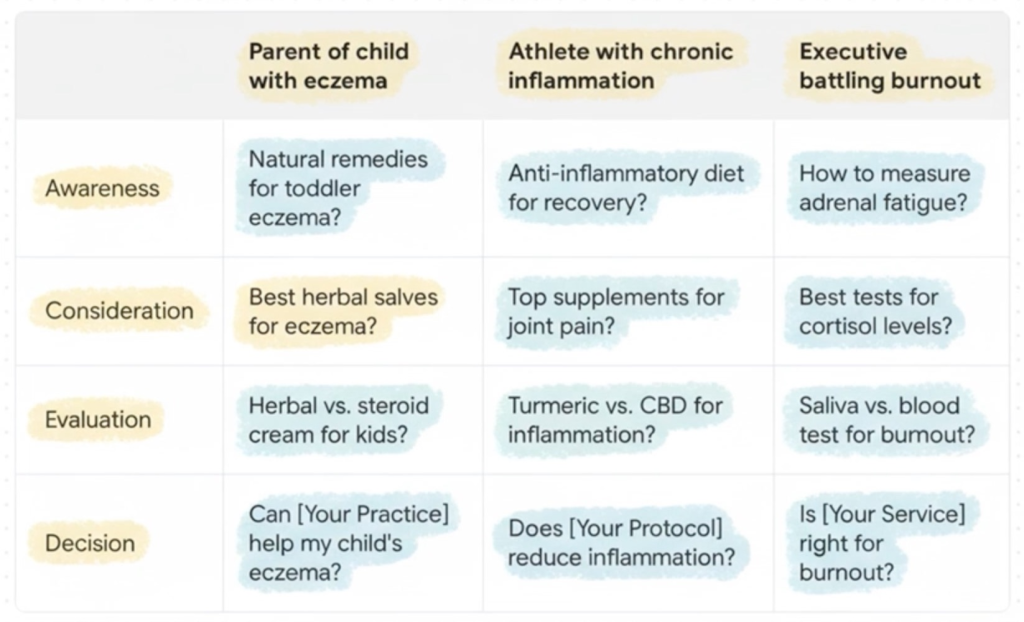
This is your new content roadmap. Across the top, you map out three hyper-specific patient personas (not “someone with skin issues” but “a parent of a child with eczema”). Down the side, you track their journey from awareness to decision.
Your mission: fill every box with the exact questions that person is asking at that exact moment. And the goldmine for these questions? Your own patient intake forms and consultation notes. These are the highest-intent questions you could ever answer.
3. The “Taco Test” for Content Structure
Here’s a crucial insight: AI doesn’t read your content top to bottom like a human does. It scans and extracts individual sections, like ingredients in a taco. Every section needs to stand alone and make complete sense without context.
This means:
Answer the question immediately in the first sentence
Make every section independently valuable
Use clear structure with bullets and tables
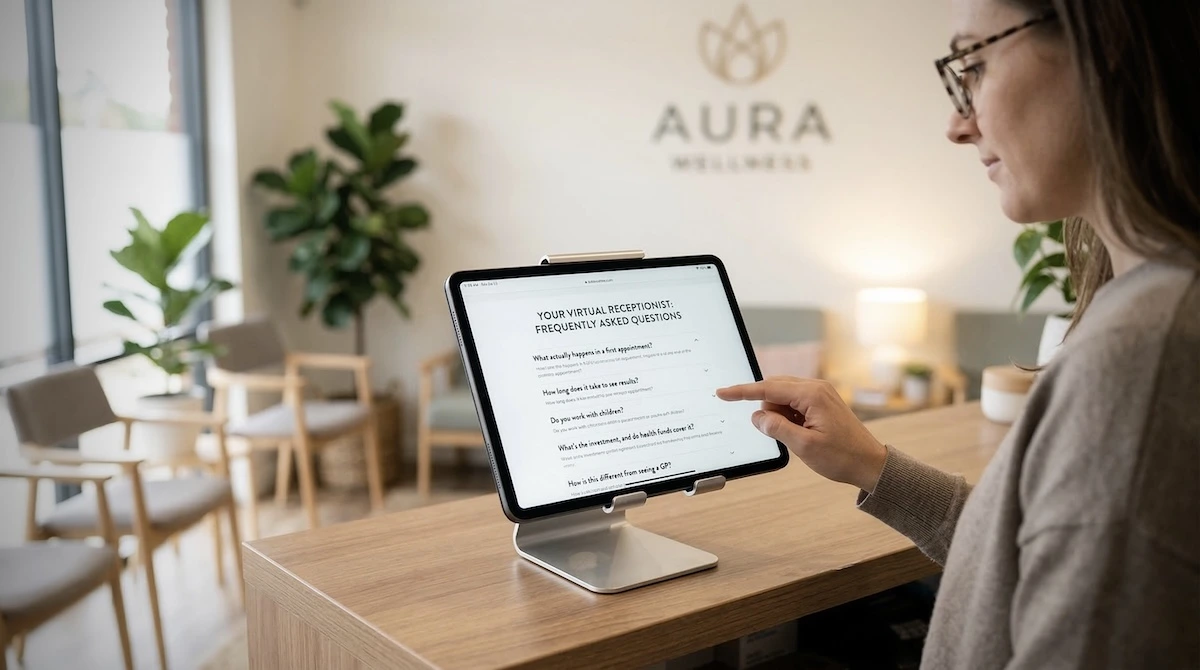
Include FAQ sections for sub-questions
Include explicit credentials and professional markers
Always tie insights back to your practice and expertise
That last point is critical. You’re not just educating the AI about eczema remedies. You’re teaching it that your practice is the solution.
4. Building Authority Through Mentions
Forget backlinks. In the AEO world, it’s all about mentions. Who is talking about you? Where are you being cited? The quality and context of these mentions build real AI authority.
The easiest strategy: find the articles that AI is already citing for your key topics, then work to get your practice mentioned in those articles. You’re going where the authority already exists.
From Theory to Practice: The NotebookLM Advantage
I know what you’re thinking: “This sounds complex, James. I’m already overwhelmed with running my practice.”
I get it. I really do. That’s why tools like NotebookLM are game-changers for time-poor practitioners. Instead of staring at a blank page trying to write content, you can upload your patient notes, clinical insights, and research, then let AI help you create engaging, educational content that positions you as an authority.
Why Answer Engine Optimisation for Natural Health Practitioners Relies on Mentions, Not Backlinks
In the Pathway to Practice Growth workshop, I’ll show you:
How to set up NotebookLM for your practice
How to transform your clinical knowledge into AI-friendly content
How to create audio content, blog posts, and social media content from your existing expertise
How to ensure everything you create is optimised for AI discovery
This is about working smarter, not harder. It’s about utilising free tools that are currently available.
Real Results from Real Implementation
In the video, I reference some remarkable results: HubSpot implemented this AEO playbook and saw their citations increase by over 400%, with actual business leads jumping by almost 2,000%. Now, I’m not promising those exact numbers for your practice, but I am demonstrating that answer engine optimisation for natural health practitioners is an effective, proven approach.
Practitioners who start implementing answer engine optimisation for natural health practitioners now will have a significant advantage. While your competitors are still playing the old SEO game, you’ll be positioned exactly where your ideal patients are looking for answers.
Your Next Steps
Right now, I want you to:
1. Watch the full NotebookLM video
where I break down each of these AEO concepts in detail with practical examples
2. Write down three specific patient questions
you get asked repeatedly in your practice
3. Check if your current content actually answers these questions
in the first sentence (most don't)
4. Register your interest
for the Pathway to Practice Growth workshop, where we'll implement these strategies together AND learn to use NotebookLM.
The future of practice visibility is here. It’s no longer about having the best website or the most backlinks. It’s about being the answer when someone asks the question.
And here’s the beautiful part: as natural health practitioners, we’re already experts at answering questions, at understanding nuanced, individualised problems, at providing specific, tailored solutions. These are precisely the skills that matter in the age of AEO.
We just need to translate them to this new medium – and use the right tools to do it efficiently.
Join the Conversation
Have you noticed AI systems, such as ChatGPT, appearing in your patient conversations yet? Are people coming to appointments saying, “ChatGPT suggested I ask you about…”? I’d love to hear your experiences in the Thriving Practitioners community.
The practitioners who thrive in the next five years will be those who embrace these changes now, while maintaining the heart and authenticity of their healing practice.
Watch the full Answer Engine Optimisation video created with NotebookLM
Register your interest for the Pathway to Practice Growth workshop
Frequently Asked Questions About Answer Engine Optimisation
What's the difference between SEO and AEO?
SEO (Search Engine Optimisation) focuses on ranking in traditional search engine results pages. In contrast, AEO (Answer Engine Optimisation) focuses on being cited and referenced by AI systems when they generate answers to user questions.
Do I need to stop doing traditional SEO?
No, but you need to add AEO strategies alongside your existing SEO efforts. Traditional search isn't disappearing overnight, but AI-powered search is growing rapidly.
How long does it take to see results from Answer Engine Optimisation for Natural Health Practitioners?
Many practitioners report being cited by AI systems within 2-3 months of implementing AEO strategies, although results vary based on your niche and level of competition.
Is NotebookLM really free?
Yes, NotebookLM is currently a free tool from Google. We'll cover exactly how to use it in the Pathway to Practice Growth workshop.
Can I use AI to create content without losing my authentic voice?
Absolutely. Tools like NotebookLM amplify your existing expertise rather than replacing it. Your clinical insights and patient experiences remain at the core - AI simply helps you communicate them more efficiently.
How do I get AI systems to specifically mention and cite my practice?
AI systems cite practices and practitioners that demonstrate clear expertise on specific topics. Focus on answering hyper-specific patient questions, include your credentials in content, ensure each section stands alone with complete context, and get mentioned in articles AI already trusts. The key is becoming the specialist answer to specific questions rather than a generalist resource.
How do you structure a blog post using AEO Principles?
We figured we should walk our talk and practice AEO principles…
- Question as headline ✓
- Immediate answer in the first paragraph ✓
- TLDR (Too Long, Didn’t Read) section for key points ✓
- NotebookLM acknowledgment and workshop tease ✓
- FAQ section for query fan-out ✓
- Clear structure with standalone sections ✓
You're not just educating the AI about health topics – you're actively teaching it that you – and your practice is the authoritative source." "
Join the Thriving Practitioners Community
Ready to implement these principles in your practice with expert guidance and peer support?
Connect
Thriving Practitioners Growth Hub membership
Connect
Thriving Practitioners Facebook community
Learn
Monthly workshops on practice growth and AI visibility