Your Website Has One Job: Make Sure the Right People Can Find You
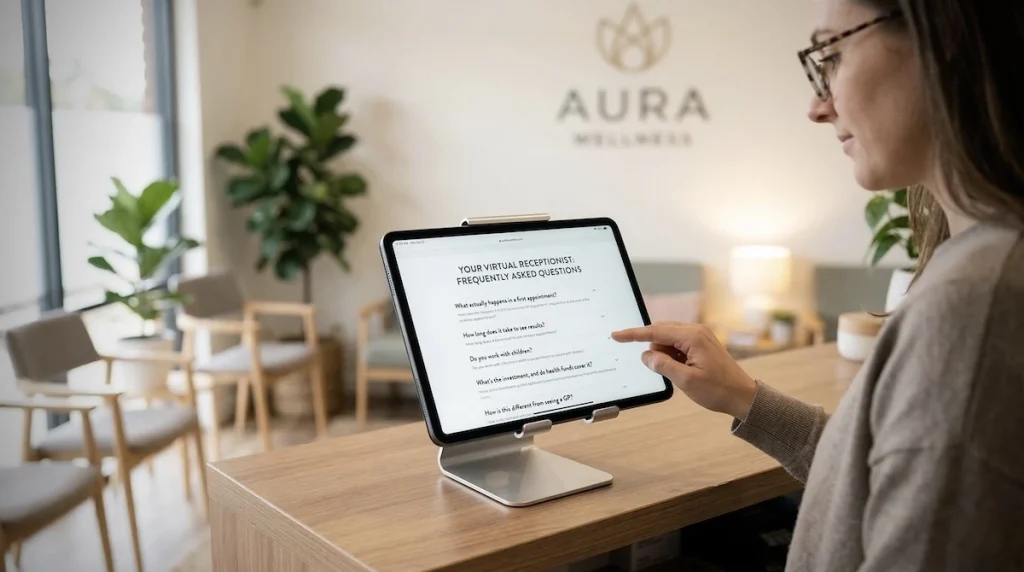
And right now, it’s probably failing – not because of your content, but because of your structure. Here’s something worth sitting with for a moment. You went through years of study. You completed your clinical hours. You built a practice that genuinely helps people. And every week, people in your area are searching online for exactly what you offer – and walking right past you to find someone else. Not because that someone else is more qualified. Not because they care more. But because their website is structured in a way that makes it easy for both Google and AI tools to understand what they do. That’s a fixable problem. And it starts with understanding one simple principle: your website isn’t for you. It’s for the person who doesn’t know you yet. The Way AI Searches Has Changed Everything When a potential client types “natural health support for hormonal issues in Brisbane” into ChatGPT or Google, the AI doesn’t browse your whole website and make a judgement call. It scans for specific signals – structured pages, clear answers, detailed service information – and recommends the practitioners whose websites give it the clearest picture. “Here’s the truth I share with every practitioner I work with: if AI doesn’t know you exist, then for all intents and purposes, you don’t. The practitioners who show up in AI recommendations aren’t necessarily the most talented – they’re the ones whose websites are structured so AI can actually read them.” The good news? The structure AI is looking for also happens to be what your prospective clients are looking for when they land on your site. You win on both fronts. Start With a Clean Services Directory – Then Go Deep Here’s the mistake many practitioners make: one long “Services” page that lists everything they offer in one big block of text. “I offer naturopathy, herbal medicine, nutrition, iridology, flower essences, and live blood analysis.” That’s a list of modalities. It tells a prospective client almost nothing. And it tells AI even less. What you need instead is a two-level approach: Level 1 – Your Services Directory Page This is the clean, simple page that lives in your main navigation. Its job is to give visitors an at-a-glance overview of your services and direct them to the detail they need. Think of it as a menu, not a meal. Keep it uncluttered. Keep it human-friendly. And make every single service a clickable link. Level 2 – Individual Service Pages This is where the depth lives. Each service you offer deserves its own dedicated page – a full explanation of what it is, how it works, who it helps, what a session looks like, and what someone can realistically expect. If you offer naturopathy, herbal medicine, and nutrition, those are three separate pages. If you offer naturopathy for children as well as adults, that might be two separate pages. Each one is an opportunity to answer the specific questions a prospective client has before they’ll ever pick up the phone. “I think of your services directory like a clean, well-lit reception area. Welcoming, easy to navigate, nothing overwhelming. But the rooms behind that reception? Each one is detailed, specific, and built to answer every question a patient might have before they even walk through your door.” A Critical Distinction: Conditions Are Not Services This is one of the most common structural mistakes on practitioner websites, and it quietly undermines your visibility every single day. Your services are what you – do. Naturopathy is a service. Herbal medicine is a service. Remedial massage is a service. Conditions are what your clients have. Fatigue is a condition. Hormonal imbalance is a condition. Digestive issues are a condition. These are different things – and they need different pages. When you write a service page for naturopathy, you explain the modality: what a consultation involves, how you work, your approach, your qualifications. When you write a conditions page (or a “who I help” page) for hormonal health, you speak directly to a person who is lying awake at 2am with symptoms they can’t quite explain, wondering if there’s a natural approach that might help them. Both pages matter. But they serve different purposes and different moments in the client journey. Mixing them together – or leaving conditions completely off your site – means you’re invisible to people who are actively searching for the solution you provide. A simple way to think about it: Your service pages explain how you work. Your conditions or “I help with” pages speak directly to who you help and why they’re looking for you. Your Virtual Receptionist: The FAQ Page Here’s a question worth asking yourself honestly: what does a prospective client need to know before they’ll feel comfortable booking with you? They probably want to know: What actually happens in a first appointment? How long does it take to see results? Do you work with children? Teenagers? Pregnancy? What’s the investment, and do health funds cover it? How is this different from seeing a GP? Is this going to work for what I’m dealing with? These are the questions they’re either finding answers to on your website – or finding answers to somewhere else. Every unanswered question is a reason to hesitate. Every hesitation is a lost booking. Build a dedicated FAQ page that addresses every question a prospective client raises before they book. Not a short, surface-level list of five generic questions. A real, comprehensive page that functions like a virtual receptionist – anticipating concerns, building confidence, and making the next step feel obvious. Practical tip: Keep a notepad beside you for the next month. Every time a new client asks you something on the phone or at their first appointment, write it down. By the end of the month, you’ll have the content for a FAQ page that’s genuinely useful – because it’s drawn from real questions real people are asking. Case Studies: Your Most Powerful Trust Signal AI tools are
Why “Showing Up Everywhere” Is the New SEO – and How Practitioners Can Do It Without the Overwhelm
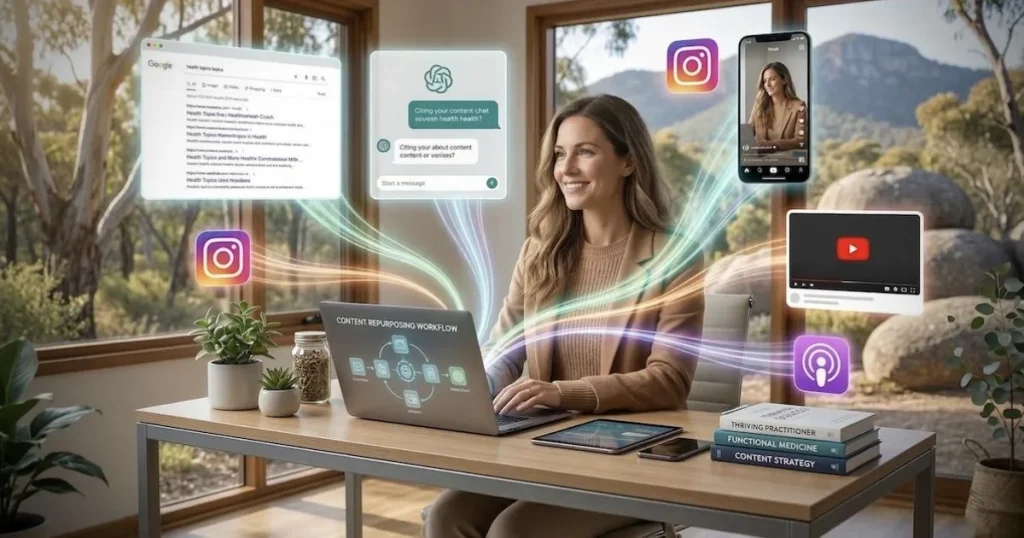
Google still matters. But your clients are now searching on YouTube, Instagram, and AI tools like ChatGPT too. Here’s a simple way to think about visibility in 2026. If you built your website a few years ago, wrote some blog posts, and have been leaving it untouched, you’re not alone. But the way people find health practitioners online has quietly shifted. Here’s what’s changed, and what actually matters now. 13.7 Billion Google searches happen every day – it’s not going anywhere 95% of AI-cited content is less than 10 months old – freshness now matters The biggest mistake right now? Practitioners (and marketers) picking sides – either ignoring AI search entirely, or abandoning Google to chase ChatGPT. Both extremes miss the point. The reality is simpler: SEO in 2026 = traditional SEO + being visible to AI tools. You don’t have to master both overnight. But you do need to understand what’s changed. 1. Think “Show Up Everywhere,” Not Just Google Your prospective clients aren’t only searching on Google. They’re asking ChatGPT “what’s the best approach for IBS?”, watching YouTube videos about adrenal fatigue, and scrolling Instagram for content about hormone health. If your only presence is a website, you’re invisible to a large portion of people who are actively looking for what you offer. You don’t need to be everywhere at once. But it’s worth asking: where are my ideal clients actually searching? WHERE PRACTITIONERS CAN SHOW UP Google (website, Google Business Profile, blog posts) Instagram and Facebook (Reels, carousels) AI tools like ChatGPT and Perplexity (via well-structured content on your site) Podcast platforms (as a guest or host) YouTube (short educational videos, Q&As) 2. Turn One Piece of Content Into Many This is where it starts to feel less overwhelming. You don’t need to create unique content for every platform – you need to get more mileage out of what you already create. One solid blog post about, say, the gut-hormone connection can become a short Instagram carousel, a 2-minute YouTube video, an email to your list, and three social media captions. That’s five pieces of content from one idea. SIMPLE CONTENT REPURPOSING FLOW Write one good blog post (800–1,200 words) on a topic your clients ask about Pull 3 key points → make them an Instagram carousel Record a short video summarising the main message → post to YouTube or Reels Send a version to your email list with a link back to the post 3. Refresh Your Content – Don’t Just Publish and Forget The old SEO playbook was: write something good, rank, move on. That’s no longer how it works – especially with AI tools, which strongly favour recent content. A quarterly content refresh doesn’t mean rewriting from scratch. It means reviewing your top posts, updating stats, adding a new FAQ, or tweaking the intro. Twenty minutes of work on an old post can breathe new life into it. Consistency also matters more than volume. Three blog posts a month, published regularly, will outperform a burst of ten posts followed by six months of silence. 4. Use AI to Help – But Keep Your Voice in the Mix AI writing tools can save you real time – drafting outlines, turning notes into paragraphs, and suggesting topic variations. There’s no reason not to use them. The catch: AI-generated content that goes straight to publish, unedited, tends to read flat and generic. Your clients chose you because of your expertise and perspective. That’s what needs to come through. A useful rule of thumb: let AI do the scaffolding, you provide the insight and personality. Fact-check anything clinical. Add a real example from your practice (anonymised). That’s what makes content genuinely useful – and what AI search tools are more likely to surface. 5. Play the Long Game SEO has always compounded over time. The practitioner who shows up consistently for a year will always outperform the one who goes hard for a fortnight and disappears. Months 1–3 Build the foundation. Optimise your key service pages. Set up your Google Business Profile. Start publishing regularly. Months 4–6 Start seeing traction. Old posts get picked up. You begin appearing in more searches and occasionally in AI results. Months 7–12 Compounding kicks in. New content ranks faster. Your site builds authority. Referrals start coming from people who found you through content. And what you’re measuring is evolving too. Rankings and traffic still matter – but so does whether your name appears when someone asks an AI tool for a naturopath recommendation, or whether your content gets cited in an AI-generated health overview. The short version You don’t need a complicated strategy. You need: a well-structured website with genuinely helpful content, a consistent publishing habit, and a simple system for repurposing what you create. That’s enough to show up – on Google, on social, and increasingly in AI tools – for the clients who need what you offer Frequently Asked Questions Is Google still important for SEO in 2026? Yes — Google still processes 13.7 billion searches per day and remains the dominant search engine. The shift in 2026 is that SEO now means both traditional Google optimisation and visibility on AI tools like ChatGPT and Perplexity. Practitioners need both, not one or the other. How often should I update my health blog content? A quarterly content refresh is enough for most practitioners. This means reviewing your top posts and updating stats, adding a new FAQ, or tweaking the intro. AI tools strongly favour content published within the last 10 months, so consistent updates matter more than volume. You do not need to change much – reviewing with a fresh perspective can make a big difference. Can natural health practitioners use AI to write blog content? Yes, with care. AI tools are useful for drafting outlines and turning notes into paragraphs – but raw AI output often reads as flat and generic. The best approach is to let AI handle the scaffolding, then add your own clinical insights, real examples
The AI Search Revolution Has Already Started: Here’s Why Your Practice Needs to be Visible Now
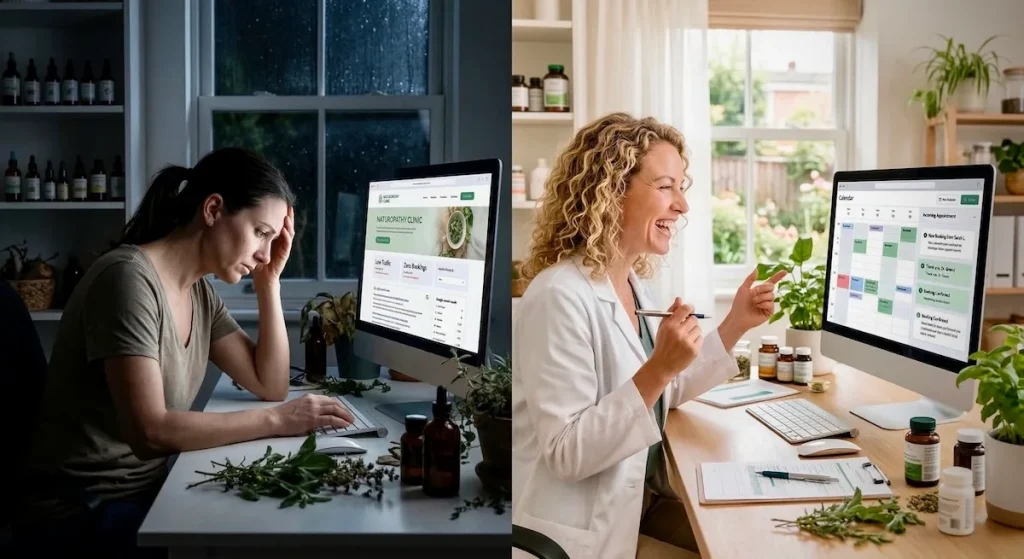
From Invisible to AI-Recommended: Why Now is the Critical Moment You spent years mastering your craft. Naturopathy. Nutrition. Herbal medicine. Health coaching. You know you can help people. You’ve transformed countless clients’ lives. But online? You’re practically invisible. Your ideal clients are searching for someone exactly like you right now. They’re asking ChatGPT, Perplexity, and Gemini specific questions about their health concerns. They’re looking for a trusted natural health practitioner to guide them. And AI is answering those questions – but it’s not recommending you. The window for natural health practitioners to establish themselves as trusted AI sources is open right now. But it won’t stay open forever. AI Search is Reshaping How Clients Find Practitioners The healthcare discovery landscape has fundamentally shifted. A few years ago, most people would find practitioners through Google search, word-of-mouth, or Facebook recommendations. Today? They’re asking AI systems. When someone types “What’s the best natural approach for reducing inflammation?” into ChatGPT, they’re not searching Google anymore. When they ask Perplexity about hormone balance protocols, they’re not scrolling social media. They’re speaking directly to an AI system, and that system is making recommendations based on the content it’s been trained on – and the websites it can currently cite. Here’s the critical part: if your website isn’t structured for AI discovery, you won’t be recommended. Even if you’re brilliant at what you do. Even if you have glowing reviews. Even if you’ve built a loyal local client base. AI systems need specific signals to cite you by name. They need content structures they understand. They need evidence that you’re an authority on the topics your ideal clients care about. And right now, most natural health practitioners’ websites aren’t optimised for any of that. The Data Tells a Sobering Story Imagine this: a well-established naturopath with a solid local reputation. When we analysed their website data, here’s what we discovered. Their website received 16,000 monthly search impressions – people were finding them when they searched. But their click-through rate? Just 1.6%. That meant only 264 clicks were leading to their site. The other 15,700+ potential clients were scrolling past them. Why? Because their page titles didn’t match the actual search intent. Their content wasn’t structured to answer the specific questions clients were asking. Their Authority positioning wasn’t clear. This practitioner had the traffic opportunity staring them in the face. But the “plumbing” of their website – the SEO and content architecture – wasn’t optimised to convert that traffic. And this is before we even consider AI search. This practitioner had massive untapped visibility. You might too. Meet the 4-Step Framework That Changes Everything There’s a proven methodology for transforming invisible practitioners into ones AI actually recommends. We call it the BoFu Framework – and we’ve built it specifically for natural health practices. It’s not vague theory. It’s not “post more on Instagram.” It’s a step-by-step implementation system that turns your knowledge into discoverable, AI-citeable content. Week 1: Foundations & Quick Wins Start by building the infrastructure AI needs to find you and trust you. We dig into your Question Goldmine – the actual searches your ideal clients are making – and build your first three Authority Answer pages. You’ll optimise your Author Bio so AI systems recognise you as a credible expert. You complete your Visibility Audit to pinpoint exactly where you’re losing clients online. Week 2: Content Engine Now we build the content structures that make AI cite you by name. You’ll master comparison content – the format AI systems absolutely love when recommending practitioners. We refresh your existing pages for immediate visibility gains. You learn AI prompt workflows that let you create a month of content in a single session. And you align your Google Business Profile with your new authority positioning. Week 3: Scale & Systems We turn your growing visibility into a sustainable, low-effort system. You build How-To guides that establish long-term topical authority. You develop a 30–60 minute weekly content routine that keeps momentum going. And we map out your complete Topical Authority structure – designed specifically for AI discovery. Week 4: Roadmap & Launch This is where everything comes together. You receive your personalised SEO + AEO Roadmap, prepared by James and his team based on a deep dive into your actual website data. You get a 90-day content calendar showing exactly what to publish and when. You develop your ongoing measurement plan. And you’re clear on the next steps for compounding growth beyond the four weeks. The result? Authority content already live on your site. Not planned. Not “in development.” Actually published and working for you. What Makes This Different This isn’t another “how to be visible online” course. There’s no fluff. No “post three times a week on social media” advice that practitioners have already tried. Pathway to Practice Visibility is done-with-you implementation. You’re not just learning theory. You’re setting up systems. You’re creating content. You’re publishing during the course. By the end of Week 4, you’ll have: A complete AI visibility foundation Your personalised SEO + AEO Roadmap (valued at $500 – this alone is a game-changer) A sustainable 30–60 minute weekly content routine Authority content already published on your site Absolute clarity on where your ideal clients are searching and how to show up there You also get access to the complete AEO Template Library, course platform with all recordings and resources, and James’ ongoing commitment to keeping everything step-by-step to reduce overwhelm. The Investment: $399 (or $137 × 3) The value you’re receiving is $997+. You get four weeks of guided implementation, three live group sessions with James, the complete template library, and that personalised SEO + AEO Roadmap valued at $500 on its own. Your investment is just $399. Or, if you prefer flexibility, three payments of $137. Plus, you can also get two months of Growth Hub Membership free (value $98). Your Ideal Clients Are Searching Right Now Here’s the truth: this window won’t stay open forever. As more practitioners catch onto
“I Honestly Can’t Believe How Simple It Was” — A Naturopath’s Breakthrough from Invisible to AI-Recommended

There’s a specific moment every practitioner dreams about. The moment when their phone shows a new enquiry, and the person says: “I found you through Google.” For Ayelet Center — a paediatric and women’s naturopath practising in Sydney through her practice Botanic Artisan Bespoke Holistic Health — that moment happened recently. And her reaction, shared in the Thriving Practitioners community, captures something important about what is changing in how practitioners get found. Ayelet Do you guys remember when I wasn’t showing up on Google? I just had a discovery call, and they found me through Google! @James Burgin thank you so much for your support ❤️ The reason this message resonated so strongly with other practitioners in the community is that almost everyone there remembered their own version of the invisible period. The time when you had the skills, the passion, the clinical depth — and nobody online could find you. Where Ayelet Started Before working through the Thriving Practitioners Visibility Sprint, Ayelet described feeling completely stuck. She wasn’t showing up on Google. She didn’t understand her own website. Her content didn’t feel like her. And she had no clear picture of what her ideal clients — the parents of children with complex health challenges, or women navigating perimenopause — were actually searching for. Without that clarity, everything felt directionless. Not just digitally, but in how she was positioning her practice overall. Her work was exceptional. Her online presence didn’t reflect that. The Framework That Changed Things What shifted for Ayelet wasn’t one magic tactic. It was a structured process — a systematic rebuild of her digital foundation guided step by step through the Sprint. She clarified her niche first. Ayelet’s practice is genuinely specialised: paediatric naturopathy including complex PANS/PANDAS cases, alongside women’s hormonal health and perimenopause support. Once that specificity was clearly expressed on her website, everything else sharpened. She rewrote her copy in her own voice, applied the GEO Trinity framework so her content would be recognised and cited by AI search tools, fixed her booking page, and refined her visual brand. The technical and the authentic, working together. The Breakthrough — And What It Actually Looked Like When the results came, they came in layers. First came the Google ranking. Ayelet I think I’ve had a breakthrough! I published a new blog post, updated the SEO and GEO, added backlinks, and now I’m showing up on the first half of the Google results page. I’m even appearing twice in the AI summary! I’m so happy. I honestly can’t believe how simple it was. Appearing twice in the AI summary — meaning Google’s AI Overview was citing her content twice in a single search result — is a significant achievement for any practitioner. It means the AI system has assessed her content as credible, relevant, and authoritative enough to feature prominently. But it was the discovery call message that landed most powerfully. Because rankings are metrics. A client booking a call because they found you on Google is a practice-changing outcome. Why This Matters Beyond Ayelet’s Story One of the most affecting parts of Ayelet’s journey is the ripple effect it created. Another practitioner in the Thriving Practitioners community, Mariangela Parodi, watched Ayelet’s breakthroughs unfold in real time. A web designer had told Mariangela the previous year that blogging was pointless — that her content would never be found. She had spent years writing blogs that reached only her existing email list. After applying similar frameworks to her own practice — writing FAQ content and a new blog post targeting chronic fatigue — Mariangela checked her AI search presence and found she had ranked number one on ChatGPT for her niche in her area. This is the compounding effect that early movers in AI visibility are beginning to experience. One practitioner’s breakthrough demonstrates the path to another. The Lesson for Practitioners Ayelet’s story is not about extraordinary technical ability. She is a clinician, not a marketer. What she had was a clear process, the right frameworks, and the commitment to implement step by step. The GEO Trinity — embedding expert voice, credible statistics, and authoritative sources into content — is not complicated. The niche clarity work is not complicated. The booking page optimisation is not complicated. What makes the difference is doing it systematically, with guidance from someone who understands both the practitioner world and the way AI search actually works. Ayelet describes her biggest shift as moving from confusion and overwhelm to clarity, confidence, and focused action. Her practice now feels aligned with her digital presence — and she can clearly see the path forward. That clarity is what the Visibility Sprint is designed to create. “My website and practice now feel aligned, visible, and purposeful, and I can clearly see the path forward.” — Ayelet Center, Botanic Artisan Bespoke Holistic Health If Ayelet’s before sounds like your right now, the pathway she followed is the Thriving Practitioners Visibility Sprint. The window for natural health practitioners to establish AI visibility is open — but it won’t stay open indefinitely. Read Ayelet’s full case study or join the next Sprint at ThrivingPractitioners.com.
Can You Spot AI-Generated Health Content?
Take The Quiz

How to Use AI Effectively – Refine Your Website Content to Get More Bookings Your blog post looks professional. Your information is accurate. But it’s not bringing in bookings. And there’s a reason: it sounds like every other health article on the internet. Google’s E-E-A-T algorithm doesn’t just penalise bad information anymore — it actively suppresses content that lacks first-hand expertise. When your content reads like a generic AI output, you’re not competing for Google’s first page. You’re fighting to be noticed at all. And your patients can tell the difference. According to the 2024 Edelman Trust Barometer, 74% of people trust health content significantly more when they can identify a real person behind it. When your writing sounds like it could be anyone, patients scroll past. They call someone else instead. Why This Matters More in 2026 Than Ever Before AI search is reshaping how people find health information. Perplexity, ChatGPT search, and Google’s AI Overviews now surface content based on E-E-A-T signals — and they prioritise sources with clear expertise and real-world experience. Google’s March 2024 core update specifically targeted generic, AI-generated content lacking first-hand insight. If your content reads like the next AI update could replace it entirely, the algorithm knows. And it deprioritises you accordingly. The practitioners winning right now aren’t the ones writing more content. They’re the ones writing content that sounds unmistakably like them — with their voice, their stories, their clinical observations. Content that AI can’t replicate. This isn’t about rejecting AI. It’s about using it as a tool, not a replacement. The question isn’t whether you should use AI to help you write. The question is whether you’re willing to spend 20 minutes editing it into something that sounds like you. “AI is the best starting point practitioners have ever had. But it’s only a starting point. The practitioners who are winning right now are the ones who use AI for the draft and their own voice for the finish.” — James Burgin, Founder of Thriving Practitioners What AI Health Content Actually Costs You The real cost isn’t in how long it takes to write. It’s in the bookings you don’t get. Quality AI-Sounding Content Humanised Content Patient Trust Generic → “this could be anyone” Personal → “this person understands me” Google E-E-A-T No experience signals → lower rankings First-hand expertise → higher rankings Bounce Rate High — readers skim and leave Low — readers engage and explore Conversion to Bookings Weak — no emotional connection Strong — built on trust before they call Content Lifespan Short — easily replaced by next AI update Long — your unique voice can’t be replicated AI Search Visibility Ignored — no unique value to cite Cited — real expertise gets referenced So where do you stand? This quick 5-question quiz tests whether you can spot the most common AI content traps in natural health writing — and whether you know how to fix them. It takes 90 seconds. 5 Signs Your Content Sounds Like AI (And What to Do Instead) 🚩 Filler phrases everywhere “In today’s fast-paced world”, “harness the power”, “embark on a journey”, “revolutionary approach” FIX: Read it aloud. If you wouldn’t say it to a patient in a consultation, cut it. Your voice is not generic. 🚩 No first-hand experience Generic advice with no clinic stories, case examples, or personal observations FIX: Add one specific thing you’ve seen in practice for every claim you make. “I’ve noticed…” and “In my clinic…” change everything. 🚩 Predictable structure Every section follows: broad claim → generic explanation → vague CTA FIX: Start with a patient scenario or question instead of a claim. “Last week a client asked me…” beats “Understanding magnesium is important.” 🚩 Missing E-E-A-T signals No author name, no credentials, no “in my experience” FIX: Add your name, your qualifications, and your clinical perspective to every piece. Google rewards authorship. So do patients. 🚩 Hedging language on everything “may help”, “could potentially”, “is believed to”, “some studies suggest” FIX: Be direct. “In my clinic, I see this work for most women within 3 weeks” is stronger than “may be beneficial for some individuals.” 📤 Share this with a colleague who needs it thrivingpractitioners.com How Familiar Are You With AI Content? This quick 5-question quiz tests whether you can spot the most common AI content traps in natural health writing — and whether you know how to fix them. It takes 90 seconds. Can You Spot AI-Generated Health Content? 5 questions. 90 seconds. Can you spot what’s wrong — and how to fix it? Read this paragraph from a naturopath’s blog: Gut health is incredibly important for overall wellness. In today’s fast-paced world, many individuals struggle with digestive issues that can significantly impact their quality of life. By harnessing the power of probiotics and embracing a holistic approach, you can unlock your body’s full potential and embark on a transformative journey toward optimal digestive wellness. Can you spot the problem? Click below to start the timed quiz and test yourself. Start the 90-Second Challenge → Question 1 of 5 20% Complete 1:30 Previous 0/5 answered Next How Did You Go? If you spotted those traps, you’re already ahead of most. The fact that you’re thinking about this means you’re serious about building a practice that stands out. What the Best Practitioners Do Differently They use AI as a draft, never a finish The best practitioners treat AI output like a rough sketch. They add their voice, their stories, and their clinical judgement before anything goes live. AI writes the first draft. You write the real one. They lead with experience, not information Anyone can list the benefits of magnesium. The practitioners who win are the ones who say “I’ve seen this work 200 times in clinic — here’s what I tell my patients.” Experience builds trust. Information gets forgotten. They have systems, not just intentions Writing great content consistently requires templates, workflows, and a community that keeps you accountable. Good intentions don’t publish
How AI Can Help Naturopaths Market Their Practice (Without Losing the Human Touch)
You became a naturopath to help people heal, not to spend your evenings agonising over Instagram captions or trying to decode Google’s latest algorithm update. And yet here you are, knowing your clinical skills are exceptional, wondering why your appointment book has gaps when so many people out there genuinely need your help. You are not alone in this. The gap between clinical excellence and a thriving practice is one that most natural health practitioners face at some point, and it is rarely talked about in our training. The good news? AI tools have matured to the point where they can genuinely help bridge that gap, and they are far more accessible than you might think. Your Consultation Skills Are Already AI Skills Here is something that might surprise you. The skills you use every day in clinic, asking the right questions, listening deeply, synthesising complex information into clear guidance, are exactly the skills that make someone effective with AI tools. Think about it. When a client sits in front of you with a complex case, you do not just blurt out a diagnosis. You ask targeted questions, consider the whole picture, and tailor your recommendations. Working with AI is remarkably similar. The practitioners who get the best results from AI are the ones who bring their clinical thinking to the conversation, guiding the tool with specificity and professional context. As James Burgin, former naturopath and founder of Thriving Practitioners, puts it: “AI isn’t about replacing the human touch in healthcare — it’s about amplifying your authentic voice so more people can discover your healing gifts.” Three Practical Ways AI Can Transform Your Naturopath Marketing 1. Turn Your Clinical Knowledge into Content That Attracts Clients Every consultation you run is full of the kind of educational content that potential clients are searching for. AI tools can help you turn your clinical expertise into blog posts, social media content, and website copy that speaks directly to the people you want to help. Rather than staring at a blank screen, you can use AI to draft a first version of a blog post about, say, the gut-brain connection or how functional testing differs from conventional blood work. You then refine it with your clinical voice, your philosophy, and your unique perspective. What used to take three hours can take 45 minutes, and the result sounds like you, not a textbook. 2. Become the Answer When People Ask AI Health Questions This is where things get genuinely exciting for natural health practitioner marketing. Many people now ask AI assistants like ChatGPT, Google Gemini, and Perplexity for health advice before they ever search Google. They are typing questions like “best naturopath for perimenopause in Melbourne” or “can a naturopath help with IBS?” If your website clearly answers those questions with transparent, well-structured content, AI systems can learn to recommend you. This is a shift from traditional SEO to what is now called Answer Engine Optimisation (AEO), and it rewards exactly what you already do well: providing clear, evidence-informed, personalised health education. Your action step? Go to ChatGPT or Perplexity today and ask the questions your ideal clients would ask. See what comes up. If you are not there, that is your opportunity. 3. Streamline the Admin That Steals Your Clinical Time Beyond content creation and digital marketing, AI can help with the operational tasks that quietly drain your energy: drafting client follow-up emails, creating intake form summaries, organising your newsletter content, or even planning your social media schedule for the month. The time you reclaim is time you can spend in clinic, in professional development, or simply resting, which, let us be honest, most practitioners could use more of. Getting Started Without Getting Overwhelmed If you are feeling a mix of curiosity and apprehension about AI, that is completely normal. Many practitioners find that the biggest barrier is not the technology itself but knowing where to begin. Here are two simple starting points: Start with what you know. Pick one topic you explain to clients regularly and use an AI tool to help you draft a short educational post about it. Edit it until it sounds like you. That is digital marketing that feels authentic because it is. Do your AI audit. Search for your specialty and location in ChatGPT or Perplexity. Document what you find. This gives you a clear picture of where you stand and where the opportunities are. You Do Not Have to Figure This Out Alone Building your AI skills for practice growth does not mean becoming a tech expert overnight. It means taking small, consistent steps that align with how you already think and work. The practitioners who are seeing the best results are the ones who approach AI with curiosity rather than pressure, and who have a supportive community around them. If you are ready to take the next step, the Thriving Practitioners Growth Hub offers easy-to-use Action Plans designed specifically for natural health practitioners. Each one walks you through a practical implementation, from running your first AI audit to creating content that positions you as a trusted authority, so you can spend less time on marketing and more time doing the work you love. This article is intended as general educational content for health practitioners exploring digital marketing strategies. For personalised guidance on growing your practice, consider connecting with a mentor or community that understands the unique challenges of natural health practice. Visit ThrivingPractitioners.com Connect Thriving Practitioners Growth Hub membership Connect Thriving Practitioners Facebook community Learn Monthly workshops on practice growth and AI visibility
3 Essential Elements AI Needs to Show You as an Authority in 2026
GEO: The 3-Part Framework to Build Your Authority in 2026 GEO stands for Generative Engine Optimisation – the practice of creating content that AI systems like ChatGPT, Perplexity, and Google’s AI Overviews want to cite when answering health questions. The GEO Framework (also called the GEO Trinity) is a simple formula for making every piece of content citation-worthy. When AI systems evaluate sources to reference, they’re essentially asking: Is this credible? Is this current? Is this from a real expert? The three elements of the GEO Framework answer all three questions in a single framework. Element 1: Expert Quote What it is: Your professional insight, attributed to you with your name and credentials. Why AI needs it: AI systems must attribute health information to qualified sources. They’re looking for named experts with verifiable credentials. Anonymous content or generic advice without attribution gets passed over for sources that clearly identify who is speaking and why they’re qualified. What it looks like: “In my clinical experience working with perimenopausal women, the first signs of hormonal shifts often appear five to seven years before periods actually stop. Many women are surprised to learn their symptoms at 42 are already perimenopause-related.” — Jeannette Scapens, Clinical Naturopath (Adv Dip Naturopathy), Adelaide Key components: First-person clinical insight (not generic information) Your full name Your credential/qualification Your location (for local search relevance) The principle: You’re not just sharing information. You’re positioning yourself as the source of that information. AI learns to associate your name with expertise in your topic area. Element 2: Recent Statistic What it is: Quantifiable data from the last three years, with its source clearly identified. Why AI needs it: AI systems prioritise current, evidence-informed content. Statistics signal that your content is grounded in research, not opinion. The recency matters because AI is trained to favour up-to-date information, particularly for health topics where guidelines and understanding evolve. What it looks like: Research from the Australasian Menopause Society indicates that approximately 80% of women experience vasomotor symptoms during the menopausal transition, with severity varying significantly based on individual factors (Australasian Menopause Society, 2024). Key components: Specific number or percentage Named source (research body, study, professional organisation) Publication year (ideally 2022 or later) Context for what the statistic means The principle: Statistics transform opinion into evidence. They give AI systems something concrete to reference and signal that you engage with current research in your field. Where to find statistics: Professional body publications (NHAA, ATMS, ANTA) Government health departments Peer-reviewed research (PubMed, Google Scholar) Industry reports and surveys Australian Bureau of Statistics health data Important: Always verify statistics before publishing. AI can hallucinate data, so never use an AI-generated statistic without confirming its accuracy from the original source. Element 3: Credible Source What it is: A reference to an authoritative body, institution, guideline, or publication that supports your content. Why AI needs it: AI systems evaluate trustworthiness partly through association. Content that references respected institutions inherits some of that credibility. For health content, especially, AI looks for alignment with established guidelines and recognised authorities. What it looks like: According to the Royal Australian College of General Practitioners (RACGP) guidelines on preventive health, adults should undergo cardiovascular risk assessment every two years from age 45, or from age 35 for Aboriginal and Torres Strait Islander peoples. Key components: Named organisation or institution Specific guideline, publication, or resource Direct relevance to your point Accurate representation of their position Types of credible sources for natural health practitioners: Professional associations (NHAA, ATMS, ANTA, ARONAH) Government health bodies (TGA, NHMRC, state health departments) Medical colleges (RACGP, RANZCOG, relevant specialty colleges) Research institutions (universities, CSIRO) International bodies (WHO, Cochrane) Peer-reviewed journals The principle: You’re borrowing authority from established institutions while adding your clinical expertise. This combination makes your content more trustworthy than either element alone. How the Three Elements Work Together Each element answers a different trust question: Element Trust Question It Answers Expert Quote “Who is saying this, and are they qualified?” Recent Statistic “Is this current and evidence-based?” Credible Source “Is this aligned with recognised authorities?” When all three appear together, AI systems have everything they need to confidently cite your content. You’ve demonstrated expertise, currency, and alignment with established knowledge. 💬 Expert Quote ✓ First-person clinical insight ✓ Full name with credentials ✓ Location for local relevance ✓ Your unique perspective 📊 Recent Statistic ✓ Data from last 3 years ✓ Source clearly identified ✓ Accurate & verifiable ✓ Adds genuine value 🏛️ Credible Source ✓ Professional associations ✓ Government health bodies ✓ Research institutions ✓ Peer-reviewed journals The GEO Trinity in Action A complete FAQ answer using all three elements: Q: How long does it take to see results from naturopathic treatment for digestive issues? Most clients notice initial improvements in digestive symptoms within two to four weeks of starting treatment, though complete resolution of chronic conditions typically requires three to six months of consistent care. “Gut healing doesn’t happen overnight. I tell my clients to expect the first month as a recalibration period – we’re changing dietary patterns, introducing supportive supplements, and allowing the microbiome to begin shifting. The real transformation usually becomes evident around the eight to twelve week mark.” Sonya Thorn, Gut Health Naturopath (AdvDip Naturopathy, MRC Certified Healthy Gut Practitioner), Barossa Valley, SA Research published in Science Daily found that dietary interventions for IBS led to clinically meaningful improvement in 76% of participants within six weeks (2023). The NHMRC guidelines on complementary medicine acknowledge that natural therapies often require longer treatment windows than pharmaceutical interventions to achieve sustained results. Individual response varies based on condition severity, treatment compliance, and underlying factors. Your naturopath will establish realistic expectations during your initial consultation and adjust protocols based on your progress. Quick Reference Checklist Before publishing any content, verify: Expert Quote Includes first-person clinical insight Names you with full credentials Adds something only a practitioner would know Sounds like you (not generic AI voice) Recent Statistic Data is from 2022 or later Source is named and verifiable
Imagination Meets Creative Freedom And Discovery

Creative AI Play for Practitioners: Holiday Season Exploration Guide How about a different approach to this year’s holiday season? Here’s a relaxed approach to self-care with a season of creative exploration rather than strategic planning. This article has become something of a manifesto for me as we enter 2026 with excitement. There is now an incredible – and far easier way – for health practitioners to share their creative vision. ~ James Burgin Pro Tip: Yep, I know this is a long post! Pick one thing to explore (chill for the holidays 🧘🏽) Key Points For Creative AI Play Prevents Burnout: Creative AI play shifts focus from obligation to “wonder,” helping practitioners maintain curiosity and prevent burnout. Sparks New Insights: Explore AI tools for the joy of discovery to generate unexpected insights that strategic business planning cannot reveal. Find Joy Again: Creative play reminds practitioners of their original enthusiasm and passion for natural health and the joy of discovery. Better Marketing Ideas: Genuine enthusiasm from creative play leads to the most authentic and effective marketing ideas, not obligation. Why Creative Play Matters (Especially Now) We’ve spent 2025 building the foundations of AEO (Answer Engine Optimisation), optimising websites, implementing new copywriting clarity, and establishing our authority in AI systems. Important work. Essential work. And also… intense work. Now, practitioners who thrive in the long term are those who maintain curiosity, joy, and creative energy in their practice. Creative AI play serves a different purpose than strategic implementation: It prevents burnout by shifting from “should” to “wonder” It sparks unexpected insights that strategic thinking alone never reveals It reminds us why we fell in love with natural health – the exploration, the discovery, the possibility It often leads to the best marketing ideas because they come from genuine enthusiasm rather than obligation 🍄 Here’s your permission slip… This December and New Year season, you’re allowed to explore AI tools purely for the joy of discovery. No implementation pressure. No ROI calculations. Just curiosity. 1. Image Generation: Bringing Your Vision to Life Holiday-Themed Healing Content One of the most delightful aspects of modern AI is its ability to create beautiful, unique images from simple descriptions. This opens entirely new possibilities for practitioners who want visual content but lack design skills or big budgets. Christmas & New Year Wellness Cards: Imagine sending clients cards with imagery that perfectly captures your approach: “Wishing you balanced hormones and holiday harmony” with serene, botanical imagery “May your gut be merry and bright” with whimsical digestive health illustrations “Here’s to nervous system regulation in 2026” with calming neural pathway art These aren’t stock photos that scream “generic health business.” They’re unique, branded, and authentically you. Creative Tools to Explore The latest image magician is NanoBanana Pro by Google. It is incredibly creative and opens many possibilities for practitioners. There is also Midjourney – another a power tool, DALL-E, and ChatGPT’s image generation. Each has different strengths. Midjourney excels at artistic, ethereal images perfect for flower essences or energy work. DALL-E handles realistic imagery well. ChatGPT is convenient if you’re already there for other work. And our faithful creative buddy, Canva keeps getting better (and playing catch-up!) 🥇 My new favourite by a looong shot is NanoBanana 🍌 James Burgin Play prompt: “Create a warm, botanical Christmas card design featuring native Australian plants with the text ‘Wishing you natural wellness this season’ in an elegant, hand-lettered style.” 2. Vision Boards for Your Practice Evolution What does your dream practice actually look like? Not in words – in images. This is where AI image generation becomes powerful for visualisation: Your ideal clinic or consultation space The apothecary you’d love to create Workshop or retreat environments you dream of hosting Product lines or remedy collections you imagine developing Book covers for the health guides you’ll write someday Creative exercise: Spend 30 minutes generating images of your 2026 dream practice. Don’t limit yourself to “realistic” thinking. What would genuinely light you up? Example prompts: “A serene naturopathic consultation room with floor-to-ceiling windows overlooking a garden, natural timber finishes, comfortable seating, shelves of herbal remedies, soft natural lighting” “A wellness workshop space with circle seating, plants, natural materials, warm lighting, people engaged in learning” “An apothecary shelf display featuring beautiful glass bottles of flower essences, organised by colour, botanical labels, soft lighting” 3. Creative Resources for Client Empowerment Children’s Health Education Illustrations If you are working with families, AI can generate delightful educational imagery: Friendly gut bacteria characters explaining digestive health Illustrated guides to immune system support for kids Visual stories about healthy eating that engage rather than lecture Anatomical diagrams that aren’t intimidating This type of content not only helps your current clients but also becomes shareable, authority-building material that positions you as the go-to family wellness expert. Infographics Make the Invisible Visible It’s now possible to produce infographics with creative illustrations and accurate typography, in any style you can dream up. Some examples: Illustrations for protocols you prescribe Lifestyle advice Explanations of body processes or metabolism How probiotics work This is a fantastic opportunity to make invisible visible for effective client education. Infographic created by Naturopath Caro Uttley Social Content That Actually Reflects Your Practitioner Life Let’s be honest – much of health practitioner social media is either overly clinical or generically inspirational. What if you could create content that was authentic, relatable, and visually distinctive? Ideas to explore: “Practitioner Holiday Survival Kit” imagery (humorous, honest) (Those white supplements are Magnesium, of course!) Visual representations of the practitioner journey (the messiness and magic) Behind-the-scenes practice life (illustrated, not photographed – for privacy) Wellness memes that don’t feel cringey because the imagery is original 4. Audio & Voice Exploration: NotebookLM and Beyond NotebookLM: Your Research Companion If you haven’t discovered NotebookLM yet, the holidays are a great time to explore. You are in for a treat – and it’s free!. This Google tool transforms static documents into interactive conversations. What makes it extraordinary for practitioners: Upload clinical papers and have conversations
The Natural Health Practitioner’s Essential AI Marketing Glossary

It’s time we started getting to know and using the terminology and jargon that’s appropriate for growing our practices. Here’s an overview of terminology for health practitioners. It’s worthwhile to get to know these and start using them in your vocabulary and marketing thinking. Understanding the terminology of AI-powered search is crucial to modern marketing for natural health practitioners. PRO TIP: get to know a few at a time – just like our clients, it’s easy to get overwhelmed, so start simple! Remember when you thought learning the difference between adaptogens and tonics was complicated? Or when you had to memorize the contraindications for St John’s Wort? Welcome to marketing jargon—it’s like pharmacognosy all over again, except instead of herb-drug interactions, you’re learning algorithm-practitioner interactions. The good news? At least this terminology won’t cause adverse reactions if you get it slightly wrong. Marketing for Natural Health Practitioners in the AI Era AI Changes Search: Traditional SEO is failing, as over 60% of searches now result in “zero clicks,” with AI providing the answer directly. Be a Verified Entity: If AI systems do not recognise you as a credible, verified practitioner entity, you will be invisible to potential clients. E-E-A-T is Key: Health is YMYL content, demanding a higher trust threshold. Strong Experience, Expertise, Authoritativeness, and Trustworthiness are essential. Act Now for Visibility: Shift your marketing from keywords to entity-focused authority within the next 12-24 months to gain a competitive advantage. Think of this glossary as your marketing materia medica—except instead of therapeutic actions and traditional uses, you’re learning how to make Google actually understand what you do for a living. Here’s your comprehensive guide: AEO (Answer Engine Optimisation) The practice of optimising content to be selected and cited by AI systems that provide direct answers rather than lists of links. Unlike traditional SEO which aims for high rankings, AEO focuses on becoming the authoritative source AI systems quote and reference. For natural health practitioners, this means creating content that directly answers client questions in clear, credible, structured formats. Clinical Translation: Think of AEO as writing your patient education handouts, except your patient is an AI system with the reading comprehension of a very literal medical student who only remembers exactly what you tell them. Conversational Search Search queries phrased as natural questions rather than keywords. Instead of “naturopath Sydney PCOS,” users ask “What naturopath in Sydney specialises in PCOS treatment?” AI systems are designed to understand and respond to these human-like queries, requiring practitioners to optimise for natural language rather than keyword strings. Reality Check: Yes, you spent years learning to speak in precise clinical terminology (‘presenting with chronic relapsing-remitting inflammatory bowel syndrome’), and now you need to write for people asking ‘why does my tummy hurt all the time?’ Welcome to the wonderful world of meeting clients where they actually are. Data LLM The underlying AI language model (like GPT-5 or Google’s PaLM) has been trained on massive datasets of text from across the internet. This includes practitioner websites, health directories, research papers, and forum discussions. The Data LLM is the “brain” that generates responses based on patterns it learned during training. For practitioners, this means your online presence during the model’s training period affects how AI understands and references you. Clinical Parallel: The Data LLM is basically like your clinical reference library—except it read everything on the internet in about 3 weeks, retained most of it perfectly, but occasionally gets confused about which naturopath wrote which article about adrenal fatigue. Also, it has no bedside manner. E-E-A-T (Experience, Expertise, Authoritativeness, Trustworthiness) Google’s quality framework for evaluating content and websites, particularly critical for YMYL topics like health. The framework was updated to include “Experience” (first-hand knowledge) alongside the original E-A-T. For natural health practitioners, strong E-E-A-T signals include: Experience: Clinical practice history, patient case studies (anonymised), first-person practitioner content Expertise: Professional qualifications, certifications, specialty training Authoritativeness: Recognition by professional bodies, citations in directories, and professional memberships Trustworthiness: Verified credentials, transparent business information, secure website, professional standing Practitioner Translation: Remember how you built trust with that skeptical client who’d seen five doctors and three naturopaths before you? E-E-A-T is exactly that process—except you’re trying to convince a computer algorithm instead of a human with trust issues. At least the algorithm won’t cry in your clinic room. Cynical Reality: You need to prove your expertise to Google using the same credentials that conventional medicine spent decades dismissing. The irony is not lost on us. Entity In search and AI systems, an entity is a distinct, identifiable thing – a person, place, organisation, or concept – that exists independently and has specific attributes. For example, “Dr Sarah Johnson” is an entity with attributes like “naturopath,” “Sydney,” “women’s health specialist,” “ANTA-registered,” etc. Entity recognition is crucial because AI systems increasingly think in terms of entities and their relationships rather than just keywords. A practitioner who is recognised as an entity can be confidently cited by AI; one who isn’t may be invisible. Clinical Comparison: Being recognized as an entity is like being listed in the practitioner directory at your local health food store—except the directory is invisible, constantly updated by robots, and determines whether 60% of your potential clients ever know you exist. The Absurdity: You are a real person treating real patients, but until an algorithm agrees you’re ‘an entity,’ you might as well be practicing medicine in a parallel universe. Entity-Based Search A search approach where algorithms understand and retrieve information about specific entities and their relationships, rather than just matching keywords. For instance, understanding that “Dr Sarah Johnson” (entity) “specialises in” (relationship) “gut health” (entity) in “Bondi” (entity). This is foundational to how AI systems recommend practitioners. GEO (Generative Engine Optimisation) The practice of optimising content and online presence specifically for AI systems that generate original responses rather than just ranking existing pages. While SEO focused on ranking in search results, GEO focuses on being cited in AI-generated answers. This requires structured data, clear entity signals, verified credentials, and
The Future of Natural Health Practitioner Marketing: Why AI Search Changes Everything

How naturopaths, nutritionists, and natural health practitioners can stay visible in the age of ChatGPT and AI-powered search If you’re a natural health practitioner who’s built your practice on Google search visibility, I have news that’s both urgent and opportunistic: the rules of online marketing are changing faster than at any point in the last decade. Your prospective clients aren’t typing “naturopath near me” into Google and clicking through ten blue links anymore. They’re asking ChatGPT, Perplexity, and Google’s AI Overview for instant, conversational answers to questions like: ● “What natural approach works best for PCOS?” ● “How do I choose a qualified naturopath for gut health?” ● “Is hormone balancing through diet really effective?” Key Points: Natural Health Practitioner Marketing Entity Over Keywords: Clients now use AI for conversational answers. You must establish yourself as a verified entity, not just target keywords. Build Digital Trust: AI platforms require proof of your qualifications and experience (E-E-A-T) to confidently recommend you for health-related queries. Three Authority Pillars: Focus on discoverability across platforms, credibility through verified credentials, and deliverability by answering client questions with expert content. Become AI Recommended: Ensure your practice appears in AI answers by auditing your online presence, knowledge panels, and directory listings immediately. Here’s a critical part: if you’re not recognised as a verified entity in AI knowledge systems, you won’t be recommended to these potential clients. It’s that simple, and that serious. Urgent Practice Update: 2025-2027 The AI Diagnosis: From SEO to GEO Why natural health practitioners are disappearing from search, and the clinical strategy to become an authority in the age of Artificial Intelligence. 1. The Patient Trust Crisis For a decade, your prospective clients haven’t searched like traditional patients. They’ve researched everything online before booking. The Problem: Clients are no longer satisfied with surface-level Google results. They want instant, conversational answers – not 10 blue links to wade through. Enter AI search: chat-based, context-aware, and it feels more ‘human’ than clicking through websites ever did. “Your ideal client is using AI today. You’re going to want your practice showing up in their answers.” The “Zero-Click” Reality (2023-2027) Source: Industry Projections for Informational Queries 2. Your New “First Point of Contact” A client turns to ChatGPT or Perplexity to ask questions like: “What naturopath near me can help with perimenopause?” or “Best natural approach for gut health issues?” AI 1. Data LLM The “AI Model” The AI pulls information from its training data – web pages, directories, practitioner profiles – that it was ‘taught’ on up until its knowledge cutoff. KG 2. Knowledge Graph The “Fact Organizer” The AI’s ‘Knowledge Graph’ organises facts into a web of relationships: practitioners, specialties, locations, conditions, treatment approaches. SE 3. Search Engine The “Live Verifier” If current info is needed (e.g., “Is Dr. Sarah still practicing in Sydney?”), the AI searches live to verify details, clinic hours, or recent reviews. 3. YMYL = “Your Money or Your Life” (Google’s term for healthcare) Google considers health practitioners part of its YMYL (Your Money or Your Life) category. If you offer advice or services that impacts someone’s health or finances, you need to meet high trust standards – or stay invisible. ! Current Wellness Risk Without strong E-E-A-T signals, AI systems won’t confidently cite you. You’re a Practitioner Registered with ANTA/ATMS/ARONAH with verified credentials Your Expertise Matters AI needs proof of your qualifications, specialty training, clinical experience, and professional standing Visibility Risk Assessment 4. Prescription: From Keywords to Entities We are shifting from “spray-and-pray” keyword stuffing to becoming a “known entity” with clear expertise, authority, and trust signals. The Practitioner Skill Shift Clinical SEO vs. Practitioner Entity Focus Conversational Search “Near-human-sounding queries” “Best naturopath for PCOS in Melbourne” “How do I choose a practitioner for gut health?” “What qualifications should my naturopath have?” Educational Content “The new SEO = AI-friendly content that establishes authority” “What is SIBO and how is it treated naturally?” “When should I see a naturopath vs. a nutritionist?” “How long does natural hormone balancing take?” Practitioner Entity Markup “Structured data helps AI understand who you are” “Naturopath since 2015” “ANTA-registered, specializing in women’s health” “Clinic location: Bondi, Sydney + Telehealth available” 5. The 3 Pillars of Practitioner Authority Building digital trust for AI-powered discovery takes time, but starts here today Discoverability Practitioners have a digital presence across key platforms Google Business Profile optimized Listed on ANTA/ATMS directories Active professional social profiles Credibility Clear, verified info on who you are and what you do Professional registrations displayed Specialty areas clearly defined Years in practice and training documented Deliverability AI can easily cite you as a trusted source Website content answers common client questions Service pages clearly explain your approach Schema markup helps AI understand your practice 6. Practitioners Can Still Get Ahead By Moving Now How to Gain Visibility in the Knowledge Graph Quickly AI Citation Frequency (Monthly Mentions) Once an AI knowledge entity is cemented in the “Primary Authority” for Practitioner/E-E-A-T status (showing the same, repeated entity retrieval). © 2025 THRIVING PRACTITIONERS | STRATEGY CREATED BY JAMES BURGIN FOR NATURAL HEALTH PRACTITIONERS Understanding the Infographic Above The visual guide below explores what’s happening in the AI-powered search revolution and provides a step-by-step framework for adapting your natural health practitioner marketing strategy. Consider these ideas: ● The Patient Trust Crisis: Why clients are turning to AI instead of clicking search results ● Your New “First Point of Contact”: The three AI systems deciding whether to recommend you ● The YMYL Safety Filter: Why health practitioners face stricter verification requirements ● From Keywords to Entities: The fundamental shift in how you need to market your practice ● The 3 Pillars of Practitioner Authority: Specific actions to build AI-era visibility ● The 24-Month Window: Why acting now gives you a competitive advantage This isn’t about abandoning traditional SEO or the marketing methods you have found to work. It’s about evolving your natural health practitioner marketing to include entity building, AI optimisation