Health Practitioner Service Pages That Get Client Bookings in 2026
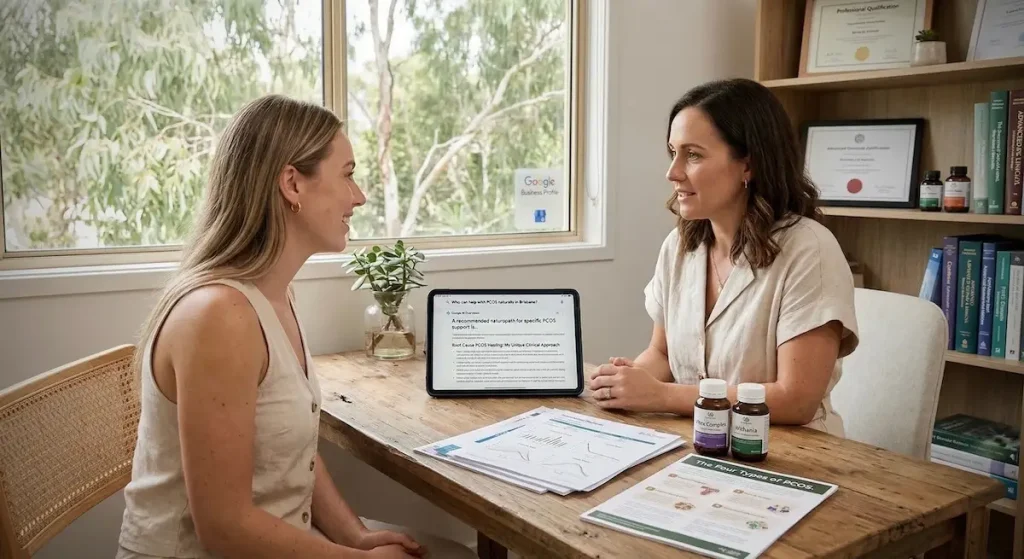
The Complete Guide for Natural Health Practitioners to Get More Bookings Quick Overview – The 60-second version Most practitioners make a critical mistake: putting all services on one page. This makes you nearly invisible to both Google and AI search engines. AI tools like ChatGPT and Perplexity recommend practitioners by name – but only if you have dedicated, detailed pages per condition. Each core condition you treat deserves its own page (most practitioners need 4-8 pages). The highest-converting pages follow a 7-section structure: headline, empathy, unique approach, inclusions, pricing, FAQs, and one clear CTA (call-to-action). Start with your top 1-2 conditions, build properly, then expand. Better content done right beats more content done fast. If you’re a naturopath, nutritionist, or health practitioner, wondering why your website isn’t generating enquiries, your service pages are almost certainly the problem. Not your qualifications. Not your clinical skills. Your service pages. Most practitioners list their offerings on a single page with a few bullet points and hope for the best. That approach hasn’t worked for years – and in 2026, with AI search engines like ChatGPT, Perplexity, and Google’s AI Overviews actively recommending practitioners by name, it’s costing you clients every single day. This guide breaks down exactly how to structure service pages that convert browsers into booked clients, while positioning your practice for both traditional search and AI-powered answer engines. Why Do Most Practitioner Service Pages Fail to Generate Enquiries? Most natural health practitioner service pages fail because they list services generically rather than speaking to specific conditions – which means neither Google nor AI search tools can confidently recommend you to someone searching for help. Here’s what typically happens. A practitioner builds their website, creates a single “Services” page, and lists everything they offer: naturopathy, nutrition, herbal medicine, functional testing. Maybe a sentence or two about each. It looks tidy. It feels complete. But from a search engine’s perspective, it’s almost invisible. When someone searches “natural treatment for PCOS in Brisbane” or asks ChatGPT “who can help with perimenopause symptoms naturally,” those systems need dedicated, detailed content about that specific condition to feel confident enough to surface your practice. A bullet point on a generic services page doesn’t give them anything to work with. Why this matters A 2023 survey by BrightLocal found that 98% of consumers used the internet to find information about local businesses. If your service pages don’t match the specific language your ideal clients are using, you’re not even in the conversation. This is one of the most common issues I see in my work with natural health practitioners: brilliant clinicians with websites that simply don’t reflect the depth of what they actually do. How Does AI Search Change What Your Service Pages Need? AI search systems like ChatGPT, Perplexity, and Google’s AI Overviews work conversationally, matching specific questions to specific answers. Practitioners with detailed, condition-focused service pages are the ones getting recommended. Traditional SEO rewarded keywords on a page. AI search is different. These systems synthesise information across your entire website to determine whether you’re a credible authority on a topic. They’re looking for depth, specificity, and topical authority. Think of it this way. If someone asks an AI assistant “Who can help with thyroid problems naturally in Melbourne?”, the AI scans practitioner websites looking for: A dedicated page about thyroid support (not a bullet point) A detailed explanation of the practitioner’s approach Credentials and experience signals Location information Evidence of expertise – blog posts, FAQs, case-study-style content Research snapshot According to research from Ahrefs, AI Overviews in Google tend to cite pages with comprehensive, well-structured content significantly more than thin pages. If your service page is 150 words of generic copy, you’re not getting cited. “The practices that invest in detailed service pages now will dominate AI search results for years to come. AI search visitors are actively looking for a practitioner to book – and they convert at significantly higher rates than traditional search traffic.” – James Burgin, Founder, Thriving Practitioners How Many Service Pages Should a Natural Health Practitioner Have? Create a separate, dedicated service page for each core condition or treatment approach that represents your clinical focus. Most practitioners need between 4 and 8 individual service pages to properly cover their scope of practice. The answer depends on your clinical focus, but the principle is straightforward: if a potential client might search for it specifically, it deserves its own page. Create an individual page when… Keep it as a sub-section when… The condition has its own search demand (people Google it directly) It’s a minor add-on to a primary service You have a distinct clinical approach to that condition There isn’t enough search volume to justify a standalone page You could write 800+ words about your methodology for treating it Your approach is identical to another service you’ve already detailed It represents a meaningful portion of your caseload Example: A hormone-focused naturopath might create individual pages for perimenopause support, PCOS management, thyroid health, fertility support, and adrenal fatigue and stress recovery. Example: A gut health practitioner might have pages for SIBO, IBS, food intolerance investigation, and digestive restoration. The key is mapping your pages to how your ideal clients actually search – not how you were taught to categorise modalities. What Structure Should Each Service Page Follow? The highest-converting service pages for health practitioners follow a seven-section structure: headline, empathy/agitation, unique approach, inclusions and timeline, pricing transparency, FAQ, and a single clear call to action. Let me walk through each section using PCOS as a working example. 1. Start with a Headline That Bridges Pain and Possibility Your headline needs to acknowledge the frustration your client is feeling AND point toward the transformation you offer. Generic headlines like “Naturopathy Services” do nothing. Aim for contrast, benefit, or a clear problem-solution signal. The Contrast Headline: “Stop Just Managing Your PCOS. Start Healing the Root Cause.” The Benefit-Driven Headline: “Reclaim Your Rhythm: Natural PCOS Support for Predictable Cycles and Renewed Energy” The SEO and