Is SEO Dead in 2026? Not for Practitioners Who Adapt
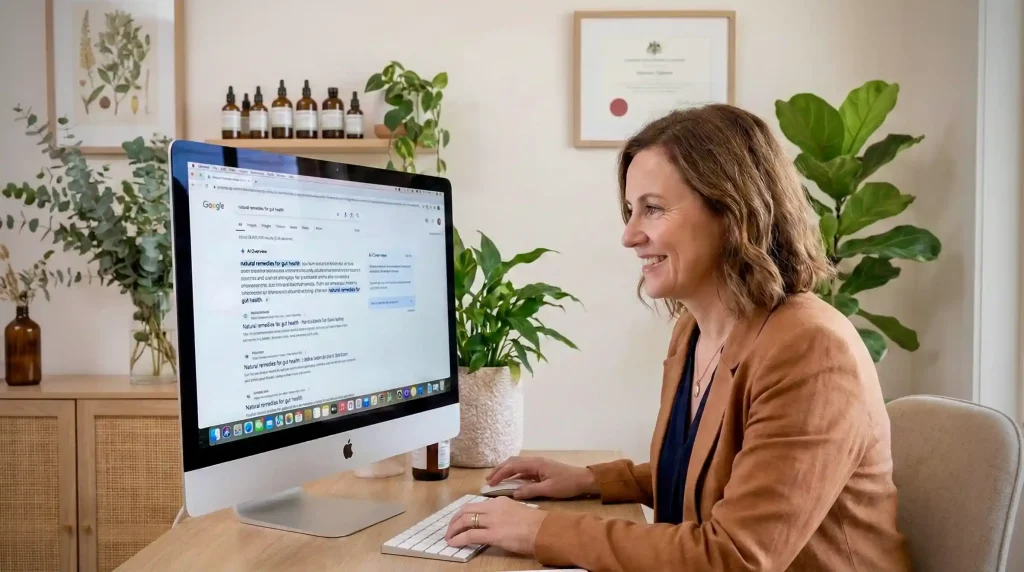
How natural health practitioners can stay visible in the age of AI search If you’ve noticed fewer people finding your practice website through Google lately, you’re not imagining things. The way people search for health information is changing fast, and AI is driving that shift. Google now uses AI to answer many health questions directly at the top of the page. That means potential patients often get their answer without ever clicking through to your website. For practitioners who rely on content marketing and SEO to attract new patients, this feels like the ground is shifting beneath your feet. But here’s the good news: SEO isn’t dead. It’s evolved. And the practitioners who understand this shift are going to thrive. What’s Actually Changed? Traditional SEO was straightforward: create helpful content around the keywords your ideal patients search for, optimise your website, and earn a spot on page one. That system still works, but there’s now an extra layer. Google’s AI Overview now summarises answers at the top of many search results. In the second quarter of 2025, AI summaries appeared in roughly one-third of Australian Google searches, particularly for informational queries like “what is naturopathy” or “natural remedies for gut health.” On top of that, people are increasingly turning to ChatGPT, Perplexity and other AI tools to research health topics. They’re asking conversational questions like “What’s the best naturopath for hormonal issues near me?” instead of typing short keyword phrases. “The practitioners who will thrive in 2026 and beyond are those who embrace AI as a tool to amplify their authentic voice. The fundamentals haven’t changed – you still need great content that helps real people. You just need to make sure AI can find it and trust it too.” – James Burgin, Founder, Thriving Practitioners Why SEO Still Matters for Your Practice Despite all the noise about AI, nearly one-third of all website traffic still comes from organic search. Less than one per cent comes from AI tools directly. Traditional SEO remains the single biggest driver of new visitors to practice websites. The key shift? SEO is no longer enough on its own. Think of it as evolving from Search Engine Optimisation to Search Everywhere Optimisation. Your practice now needs to be visible across multiple channels: organic Google results, AI-generated answers inside search engines, standalone AI tools like ChatGPT and Perplexity, and even social media platforms where people research health topics. Five Simple Shifts for Practitioners The good news? If you’re already creating helpful content for your patients, you’re most of the way there. Here are five practical shifts to make your existing efforts work harder in the age of AI. 1. Answer the questions your patients actually ask People are searching in full sentences now, not just keywords. Instead of optimising only for “naturopath Melbourne,” also create content that answers questions like “What should I expect at my first naturopathy appointment?” or “Can a naturopath help with perimenopause symptoms?” Think about the questions your patients ask during consultations. Those are gold for content creation, because they’re exactly what potential patients are asking AI. 2. Write in clear, bite-sized chunks AI tools pull content in passages, not entire pages. Keep your paragraphs short, focused on one idea each. Lead with your key point. Include clear summaries, specific details and FAQs on your service pages. This isn’t just good for AI – it’s good for your patients too. People scanning health information on their phones appreciate clear, well-structured content. 3. Build your authority beyond your website AI tools place high value on brand mentions and citations across the web, even without clickable links. Make sure your practice is listed with professional bodies like ANTA, ATMS or ARONAH. Consider contributing expert commentary through platforms like SourceBottle, where journalists seek health professionals for stories. Consistent credentials matter too. Use the same professional bio across your website, directory listings and social profiles so AI recognises you as a credible, trustworthy source. 4. Show up on more than just Google AI pulls information from many platforms. If you’re only focused on your website, you’re missing opportunities. YouTube is the second-largest search engine. Instagram and Facebook are where many patients discover health practitioners. Community forums like Reddit are frequently cited by AI tools. You don’t need to be everywhere; choose one or two platforms beyond your website and show up consistently. 5. Track new metrics alongside your traditional ones Keep measuring your search traffic, but also pay attention to branded search growth (are more people searching for your practice name?), direct traffic trends, and engagement signals like time on page. These indicators show whether AI mentions and social visibility are building awareness for your practice. “I’ve learnt that the most successful practitioners aren’t necessarily the most talented clinically – they’re the ones who understand that helping people find you is just as important as helping them heal. AI hasn’t changed that truth. It’s just given us new ways to be found.” – James Burgin, Former Naturopath & Digital Marketing Strategist The Practitioner Opportunity SEO isn’t dead – it’s growing up. The core principles that have always worked for practice growth still apply: create genuinely helpful content, make it easy to find, and build trust through consistency and credentials. The difference now is that you’re not just optimising for Google’s algorithms. You’re making your expertise accessible to every AI tool that potential patients use to find their next practitioner. Start small. Pick one of the five shifts above and implement it this week. Your future patients are already searching – let’s make sure they find you. Want to learn more about growing your practice with AI? Join the Thriving Practitioners community at ThrivingPractitioners.com